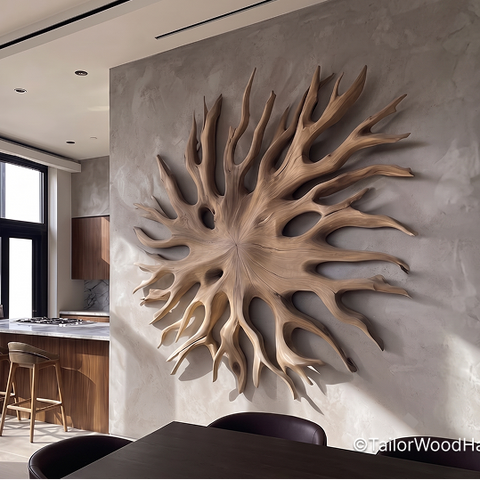
There's no single best wood for wall art, only the best wood for your specific priorities, budget, design, and the room a piece is headed for. Oak, walnut, pine, teak, and several other species each bring a different balance of cost, durability, and character to a finished piece. Rather than naming one universal winner, here's how to think through the choice based on what actually matters for your project.
Hardwood vs Softwood: The Two Main Categories
Every wood used for wall art falls into one of two broad categories, and the split comes from the tree type, not actual hardness.
-
Hardwood comes from broadleaf trees like oak, walnut, and maple. It's generally harder, more durable, and more expensive.
-
Softwood comes from conifers like pine, cedar, and fir. It's generally more affordable and easier to work with, though more prone to dents and scratches. Some species, like cedar, bring their own advantage too, natural resistance to rot and insects, which has nothing to do with hardness at all.
Most people land on hardwood for a long-term statement piece and softwood for a budget-friendly or rustic project, but both categories include excellent options depending on what you need.
Deciphering botanical classifications to balance project durability against material costs
Top Wood Species for Wall Art, Ranked by Priority
Rather than one overall "best," here's which species leads depending on what you're actually optimizing for.
Best Overall for Durability and Versatility: Oak
Oak strikes an unusually good balance of hardness, affordability, and bold, attractive grain, which is why it shows up so often in wood wall art across a wide range of styles. It resists dents and wear better than most alternatives, costs less than walnut or teak, and its warm, mid-range color pairs reasonably well with a broad mix of existing furniture tones. For anyone without a strong reason to choose something else, oak is a dependable default.
Best for a Modern, Refined Statement Piece: Walnut
Walnut's dark, rich color and fine, subtle grain give it a polished, deliberate look that suits modern, minimalist, and mid-century interiors especially well. It costs more than oak, and it does lighten somewhat with age, but for a piece meant to anchor a sophisticated space, walnut's depth of color is hard to match with a lighter wood.
Anchoring minimalist spaces with deep chocolate tones and sophisticated straight grain
>>> Read more: Walnut vs Oak Wall Art: A Detailed Comparison
Best Budget Option: Pine
Pine is the most accessible wood on this list, both in cost and availability, and it's forgiving enough for a first DIY attempt. Its pale color and visible knots suit rustic and farmhouse-style designs particularly well, though it needs a pre-stain conditioner to avoid blotchy color absorption. For a larger piece on a tighter budget, pine stretches further than almost anything else here.
Best for Humid Rooms: Teak or Cedar
Teak and cedar both bring natural oil content that resists moisture, rot, and insects without relying entirely on an applied finish. Teak leans more refined and is commonly used in furniture and marine applications, while cedar is more affordable and brings its own aromatic, rustic character. Either is a stronger starting point than oak, walnut, or pine for a piece headed into a bathroom, a covered porch, or anywhere with regular moisture exposure.
Deploying natural aromatic oils to prevent structural warping in damp bathroom environments
Best for Fine Carved Detail: Walnut or Basswood
Walnut's tight, straight grain carves cleanly without fighting against intricate cuts, which makes it a favorite for detailed relief work. Basswood, a hardwood despite its softness, is the classic choice specifically for beginner-friendly carving, since its even, forgiving grain is about as predictable as wood gets under a chisel. Oak and other bold-grained woods can still be carved beautifully, but their pronounced grain pattern shows through fine detail more visibly than walnut or basswood's subtler texture does.
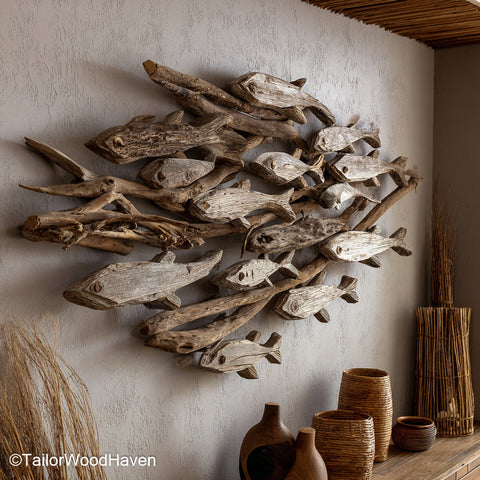
Best Natural, Weathered Look: Driftwood
Driftwood isn't a species so much as a category of naturally weathered wood, shaped and softened by years of exposure to water and salt before it's ever crafted into art. It brings an irregular, organic texture and pale, sun-bleached tone that no fresh-cut lumber can fully replicate, making it the clear choice for coastal, boho, or eco-inspired designs specifically. Properly sealed driftwood pieces also tend to tolerate humidity reasonably well, since the wood has already been through extensive moisture cycling before being finished.
Embracing organic sun-bleached textures for relaxed coastal and bohemian interiors
>>> Read more: What is Driftwood Wall Art? Types and How To Choose
How to Decide Which Wood Is Right for You
A few quick questions narrow the field fast.
-
What's your budget? Pine, ash, and oak offer the most value; walnut, teak, and mahogany sit at the premium end.
-
Where will it hang? A stable, dry room gives you the most flexibility; a humid bathroom or covered porch points toward teak, cedar, or redwood.
-
What's your room's style? Dark, refined spaces favor walnut or cherry; rustic or farmhouse spaces favor oak or pine; coastal or boho spaces favor driftwood.
-
Will it see regular handling? A hallway or entryway benefits from a harder wood like oak or maple; a quiet, undisturbed wall gives softer woods like pine or walnut more room to work.
-
Are you buying or building? A DIY project benefits from pine or basswood's forgiving workability; a piece you're buying finished removes that constraint entirely, since the maker has already done the hard part.
Filtering options through financial constraints room humidity and required maintenance
Frequently Asked Questions About Choosing Wood for Wall Art
Is hardwood always better than softwood for wall art?
Not necessarily. Hardwood generally offers more durability and refinement, but softwood is more affordable, easier to work with for DIY projects, and in the case of cedar or redwood, can actually outperform many hardwoods in moisture resistance.
What wood holds up best in a humid climate?
Teak and cedar are the strongest overall choices, thanks to natural oils that resist moisture without relying entirely on an applied finish, though any properly sealed hardwood or softwood can perform reasonably well in moderate humidity.
Which wood is cheapest for a large wall art piece?
Pine is generally the most budget-friendly option at larger sizes, both because of its lower base cost and its wide commercial availability in a range of board widths.
What wood species ages the most noticeably over time?
Cherry darkens substantially with age and light exposure, more dramatically than most other common species, while walnut tends to lighten slightly and oak stays relatively stable by comparison.
Does the best wood depend on the style of the piece, or just the room?
Both matter. A piece's design, carved detail, bold geometric shapes, a rustic organic form, often suits certain woods better than others regardless of the room, while the room's humidity and existing color palette narrow the choice further.
The best wood for wall art depends on what you're weighing most: oak offers the most balanced all-around choice, walnut delivers a refined, modern statement, pine keeps costs down, teak and cedar handle humidity, and driftwood brings a naturally weathered character nothing else quite matches. Our carved wood wall art collection spans several of these hardwood species, and our driftwood wall art collection showcases that naturally weathered look built from genuine reclaimed material.
If you're still weighing your options, the team at Tailor Wood Haven can help match a species to your space, budget, and style before you commit to a piece.
|
TAILOR WOOD HAVEN
Address 1: 412 Palmetto Dr, Columbia, SC 29201
Address 2: 1201 Hillside Avenue, Victoria, British Columbia V8T 2B1, Canada
Address 3: Phu Thai Town, Hai Phong 03306, Vietnam
Call us: +1 (647)-608-1571
Email: hello@tailorwoodhaven.com
|
 Skip to content


 Farmhouse Floating Shelves – Perfect handcrafted furniture
 Farmhouse Narrow Console Table with Storage for Entryway or Living Room
 Custom Rustic Console – Natural Wood, Made to Order