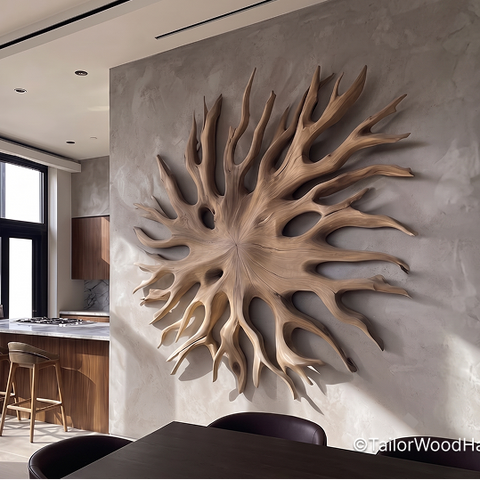
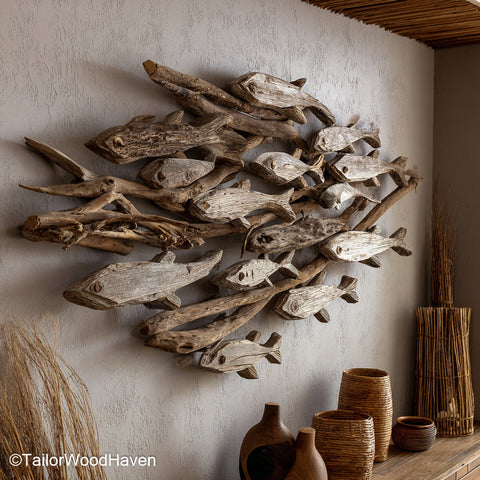
Light and dark wood wall art create genuinely different effects in a room, well beyond just looking different side by side. Tone affects how a space feels, how a piece interacts with surrounding light, and even how visible everyday wear becomes over time. Neither is the better choice universally, since the right one depends heavily on your room's existing palette and the mood you're going for. Here's a detailed look at how the two compare.
Quick Comparison: Light Wood vs Dark Wood Wall Art
|
Factor
|
Light Wood
|
Dark Wood
|
|
Common species/tones
|
Pine, maple, ash, birch, whitewashed oak
|
Walnut, espresso-stained oak, ebony, dark mahogany
|
|
Visual effect on a room
|
Opens up and brightens a space
|
Adds depth, grounds a space
|
|
Style pairing
|
Scandinavian, coastal, modern minimalist
|
Moody, traditional, mid-century, luxe modern
|
|
Visibility of dust and wear
|
Shows dust less, shows stains/scratches more
|
Shows dust more, hides minor scratches better
|
|
Pairs best with
|
Light or neutral walls, bold accent colors
|
Neutral or deep wall colors, metallic accents
|
|
Small space impact
|
Tends to make a space feel larger
|
Can feel cozy or cramped if overused
|
|
Color stability
|
Generally stable or lightens slightly over time
|
Some darken further, others (walnut) lighten slightly
|
How Light and Dark Wood Wall Art Compare, Category by Category
The table above gives the quick version. Here's what's actually behind each of those differences.
Visual Impact on a Room
Light wood reflects more ambient light than dark wood, which tends to make a room feel brighter, airier, and more open. This effect is especially noticeable in a room with limited natural light, where a light wood piece can help counteract a dim or closed-in feeling.
Dark wood absorbs more light than it reflects, which adds visual weight and depth to a space. Used well, this grounds a room and gives it a more dramatic, intentional feel, though overusing dark tones in an already dim room can make the space feel heavier or smaller than it actually is.
Manipulating ambient light to open up cramped spaces or ground airy rooms
Style Pairing
Light wood suits Scandinavian, coastal, and modern minimalist interiors particularly well, where its pale tone complements a generally airy, uncluttered aesthetic. It also plays nicely as a neutral backdrop for bolder accent colors elsewhere in the room.
Dark wood fits moody, traditional, mid-century, and luxe modern spaces especially well, where its richness reads as sophisticated rather than heavy. It pairs naturally with deep wall colors and metallic accents like black iron or brass.
Visibility of Dust, Wear, and Imperfections
Light wood tends to show dust less obviously than dark wood, since pale surfaces don't contrast as sharply with light-colored dust and debris. It does show certain stains and scratches more visibly, though, since any mark that exposes a slightly different tone stands out against the lighter base.
Dark wood shows dust and fingerprints more readily, since the contrast against a dark surface makes even light buildup noticeable sooner. On the other hand, minor scratches and small surface imperfections tend to blend in better against a dark tone than they would against pale wood.
Hiding daily fingerprints on pale boards versus masking deep scratches on dark timber
>>> Read more: How to Darken Wood Wall Art: Techniques for a Richer, Deeper Tone
Pairing with Walls and Decor
Light wood generally pairs best against light or neutral walls, letting the wood's subtle tone and grain stand out without competing for attention, though it also works as a soft contrast against a bold, saturated wall color.
Dark wood tends to pair best against neutral or deeper wall colors, since a dark piece can get visually lost against an equally dark wall without enough contrast, while a lighter wall gives it room to stand out as a clear focal point.
Impact in Small Spaces
Light wood tends to make a small room feel larger and less closed-in, which is part of why it's a popular choice for compact apartments, small bedrooms, or narrow hallways.
Dark wood can work beautifully in a small space too, but it benefits from being used more sparingly there, as an accent rather than the dominant tone, since too much dark wood in a tight room risks feeling cramped rather than cozy.
Expanding narrow hallways visually or creating cozy accent focal points
>>> Read more: 11+ Wood Wall Art for Entryway Small Space: Sizing and Styling Tips
Color Stability Over Time
Light wood, depending on species, generally stays fairly stable or lightens slightly further with age and light exposure, with pine and ash both common examples of this gradual, subtle shift.
Dark wood behaves less predictably across species: some, like dark-stained oak, hold their color fairly consistently, while natural walnut can actually lighten somewhat over time, moving away from its initial deep tone rather than deepening further.
If your room is on the smaller or darker side, or you're working with a bright, airy, Scandinavian-leaning aesthetic, light wood is generally the stronger choice, since it reflects more light and keeps the space feeling open. If your room has good natural light already, or you want a piece with real visual weight and a more dramatic, grounded presence, dark wood tends to deliver a richer, more sophisticated result. Many well-designed spaces also mix both, using a dark wood statement piece against lighter walls and furniture, or the reverse, to create intentional contrast rather than choosing one tone exclusively.
Aligning your final timber selection with natural room lighting and design goals
Frequently Asked Questions About Light vs Dark Wood Wall Art
Does dark wood make a room feel smaller?
It can, particularly if overused in a space with limited natural light, but used as an accent rather than the dominant tone, dark wood adds depth without necessarily shrinking the room's perceived size.
Is light wood better for a modern minimalist space?
Generally, yes, since light wood's pale, understated tone complements the clean, airy feel most minimalist interiors are built around, though a dark wood piece with simple, clean lines can still work well in that context.
Which shows dirt and dust more, light or dark wood?
Dark wood tends to show dust and fingerprints more readily due to contrast, while light wood shows certain stains and scratches more visibly instead. Neither is maintenance-free, just differently so.
Can I mix light and dark wood wall art in the same room?
Yes, and it's a common, effective way to add visual interest, as long as one tone clearly leads and the other plays a supporting accent role rather than splitting the room evenly between the two.
Does wood tone affect how a piece should be lit?
To some degree. Dark wood benefits more from deliberate lighting, like a picture light or angled lamp, since its grain and texture need light to read clearly, while light wood tends to show its detail reasonably well even under more general, ambient lighting.
Light and dark wood wall art both have real strengths, and the right choice comes down to your room's existing light levels, color palette, and the mood you're after. Light wood opens up a space and suits airy, minimalist styles, while dark wood adds depth and drama to a room that can support it. Our carved wood wall art collection spans both tonal ranges, and our driftwood wall art leans toward that naturally pale, sun-bleached end of the spectrum if a lighter look is what you're after.
If you're deciding between tones for a specific room, the team at Tailor Wood Haven can help you weigh the options before you commit to a piece.
|
TAILOR WOOD HAVEN
Address 1: 412 Palmetto Dr, Columbia, SC 29201
Address 2: 1201 Hillside Avenue, Victoria, British Columbia V8T 2B1, Canada
Address 3: Phu Thai Town, Hai Phong 03306, Vietnam
Call us: +1 (647)-608-1571
Email: hello@tailorwoodhaven.com
|
 Skip to content


 Farmhouse Floating Shelves – Perfect handcrafted furniture
 Farmhouse Narrow Console Table with Storage for Entryway or Living Room
 Custom Rustic Console – Natural Wood, Made to Order