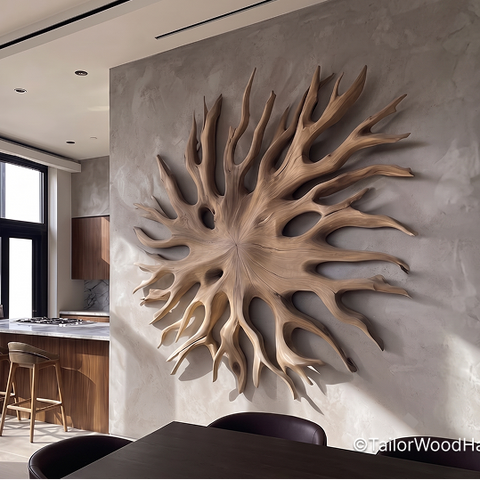
Walnut and oak are two of the most popular hardwoods for wood wall art, and they bring genuinely different character to a piece. Walnut leans dark, smooth, and refined, while oak leans lighter, bolder-grained, and more rustic. Beyond looks, the two woods also differ in hardness, cost, and how they age over time, all of which matter for choosing the right one for a specific room and budget. Here's a detailed look at how they compare.
Quick Comparison: Walnut vs Oak Wall Art
|
Factor
|
Walnut
|
Oak
|
|
Color
|
Rich dark brown, chocolate tones
|
Light golden to medium brown
|
|
Grain pattern
|
Fine, straighter, subtler
|
Bold, pronounced, often with visible rays
|
|
Hardness
|
Moderately hard
|
Harder, more impact-resistant
|
|
Color stability
|
Can lighten slightly with age
|
Stays relatively stable, darkens slowly
|
|
Typical cost
|
Higher
|
Generally more affordable
|
|
Carving detail
|
Takes fine detail well
|
Takes detail well but shows grain through cuts more
|
|
Style fit
|
Modern, refined, mid-century
|
Rustic, traditional, farmhouse
|
|
Weight
|
Moderate
|
Moderate to heavier
|
How Walnut and Oak Wall Art Compare, Category by Category
The table above gives the quick version. Here's what's actually behind each of those differences.
Color and Overall Appearance
Walnut carries a rich, dark brown color, often with warm chocolate or purplish undertones, that reads as refined and a little dramatic on a wall. It pairs naturally with modern, minimalist, or mid-century interiors where a deep, saturated wood tone anchors the space.
Oak runs noticeably lighter, from pale gold to a medium honey brown, giving it a warmer, more casual presence. It suits farmhouse, traditional, and rustic interiors especially well, where a lighter, more approachable wood tone fits the room's overall feel.
Grain Pattern and Texture
Walnut has a finer, straighter grain with less dramatic variation, which gives a walnut piece a smoother, more uniform visual texture. This subtlety is part of why walnut suits clean, modern designs where the wood shouldn't compete with the piece's shape or carving.
Oak has a bold, open grain, often with visible medullary rays, the distinctive flecked pattern that shows up especially in quartersawn oak. That pronounced texture gives oak pieces more visual activity on their own, which works well for a design that wants the wood grain itself to be part of the visual interest.
Choosing between subtle straight lines and bold pronounced medullary rays
Hardness and Durability
Walnut is a moderately hard wood, durable enough for wall art that sees normal handling, though somewhat more prone to dents and surface marks than oak under heavy impact.
Oak is harder and more impact-resistant than walnut, which is part of why it's historically been a favorite for furniture and flooring that needs to withstand regular wear. For wall art specifically, this added hardness mostly matters if a piece is likely to be bumped or handled often.
Color Stability Over Time
Walnut can lighten somewhat as it ages and is exposed to light, gradually moving away from its initial deep brown toward a slightly warmer, less saturated tone. This shift happens gradually over years rather than suddenly.
Oak tends to stay relatively stable in color compared to walnut, though it will still slowly deepen under prolonged UV exposure like most wood species. If consistent, predictable color over time matters to you, oak generally holds its appearance a bit more reliably.
Anticipating how ultraviolet exposure fades dark timber and deepens light wood
Cost
Walnut typically costs more than oak, reflecting both its relative scarcity compared to oak and its popularity in high-end furniture and design work, which keeps demand, and price, elevated.
Oak is generally more widely available and more affordable, making it an easier entry point for a larger statement piece without the premium walnut commands at a comparable size.
Carving and Detail Work
Walnut takes fine carved detail cleanly, since its tighter, straighter grain doesn't fight against intricate cuts the way a bolder-grained wood can.
Oak also carves well, but its pronounced grain pattern shows through carved details more visibly, which can either enhance a design that wants that texture or compete with very fine, delicate carving that's meant to stand on its own.
Style Fit
Walnut suits modern, minimalist, Scandinavian, and mid-century interiors, where its dark, refined tone and subtle grain complement clean lines and a more restrained overall palette.
Oak suits farmhouse, rustic, traditional, and transitional interiors, where its lighter tone and bold grain pattern feel warm and approachable rather than formal.
Aligning mid-century modern refinement with rustic farmhouse aesthetics
If your space leans modern, minimalist, or sophisticated, and you want a piece with a smooth, dark, refined presence, walnut is generally the stronger fit, provided the higher cost works within your budget. If your space leans rustic, traditional, or farmhouse, or you want a lighter wood tone with more visible grain character at a more accessible price point, oak is usually the better choice. Neither wood is objectively superior; the decision comes down to the room's existing palette, your style direction, and how much you're looking to spend.
Finalizing your timber selection based on room decor and financial goals
>>> Read more: 20+ Carved Wood Wall Art For Living Room Ideas to Transform Your Space
Frequently Asked Questions About Walnut vs Oak Wall Art
Which wood is more durable for wall art, walnut or oak?
Oak is generally harder and more resistant to dents and surface marks, though both woods hold up well under the fairly light handling typical of wall art compared to furniture or flooring.
Does walnut really get lighter over time?
Yes, to a noticeable degree. Walnut tends to lighten gradually with light exposure, moving away from its initial deep brown tone, which is the opposite of how many other woods age.
Is oak or walnut better for a modern interior?
Walnut generally suits modern and minimalist spaces better, thanks to its dark, refined tone and subtler grain, though a cleanly designed oak piece can work in a modern space too, particularly one with other warm, natural elements.
Why does walnut cost more than oak?
Walnut is relatively less abundant than oak and has long been favored in high-end furniture and design work, which keeps demand, and price, higher than more widely available oak.
Can walnut and oak be used together in the same room?
Yes, and mixing the two is a common way to add warmth and contrast, pairing a dark walnut piece with lighter oak furniture, or the reverse, as long as one tone clearly leads and the other plays a supporting role.
Walnut and oak both make beautiful wood wall art, but they lead with different strengths: walnut offers a dark, refined tone with subtle grain suited to modern spaces, while oak brings a lighter, bolder-grained, more rustic character at a generally lower cost. Our carved wood wall art collection includes pieces across both tonal ranges, and a piece like our branching horizon panel shows how a clean, modern design can let either wood's grain speak for itself.
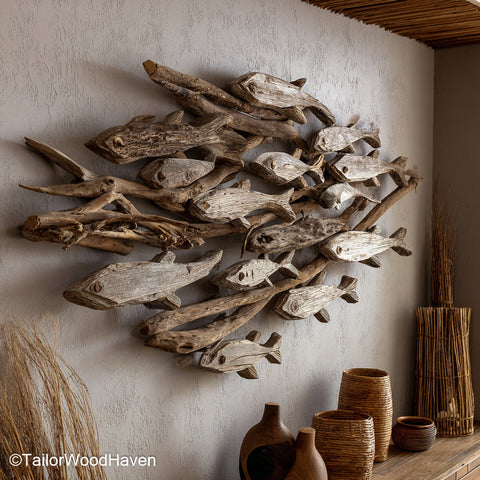
If you're choosing between the two for a specific room, the team at Tailor Wood Haven can help match a species to your space, and our driftwood wall art is worth a look too if neither walnut nor oak's cleaner look is quite what you're after.
|
TAILOR WOOD HAVEN
Address 1: 412 Palmetto Dr, Columbia, SC 29201
Address 2: 1201 Hillside Avenue, Victoria, British Columbia V8T 2B1, Canada
Address 3: Phu Thai Town, Hai Phong 03306, Vietnam
Call us: +1 (647)-608-1571
Email: hello@tailorwoodhaven.com
|
 Skip to content


 Farmhouse Floating Shelves – Perfect handcrafted furniture
 Farmhouse Narrow Console Table with Storage for Entryway or Living Room
 Custom Rustic Console – Natural Wood, Made to Order