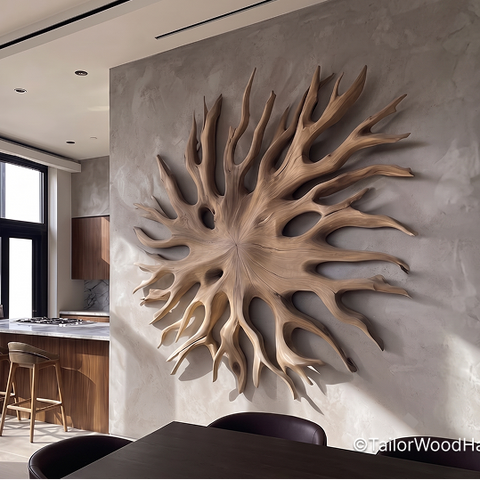
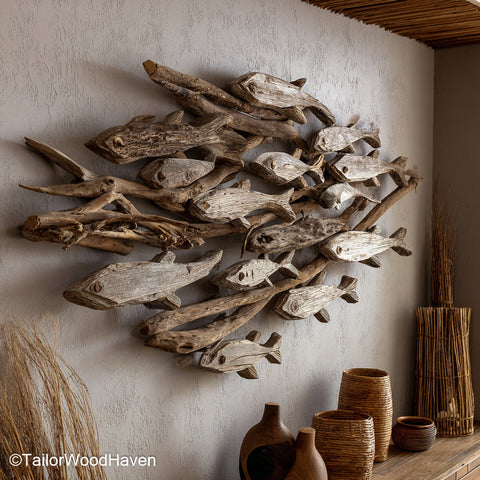
Hardwood and softwood aren't actually defined by how hard the wood feels, despite the names. The real distinction is botanical: hardwoods come from broadleaf, deciduous trees, while softwoods come from conifers. In practice, though, hardwoods usually are harder and more durable, while softwoods tend to be more affordable and easier to work with, which makes the distinction genuinely useful when choosing wood for wall art even if the names are a bit misleading. Here's a detailed look at how the two categories actually compare.
Quick Comparison: Hardwood vs Softwood Wall Art
|
Factor
|
Hardwood
|
Softwood
|
|
Source
|
Broadleaf, deciduous trees (oak, walnut, maple)
|
Coniferous trees (pine, cedar, fir)
|
|
Typical hardness
|
Generally harder, more durable
|
Generally softer, more prone to dents
|
|
Grain character
|
Often bold or fine, varies by species
|
Often straighter, simpler grain, frequent knots
|
|
Cost
|
Generally higher
|
Generally more affordable
|
|
Workability
|
Harder to cut and carve, more tool wear
|
Easier to cut, carve, and sand
|
|
Stain behavior
|
Mostly even absorption
|
Some species (pine) prone to blotching
|
|
Natural durability
|
Varies by species; generally strong
|
Varies; cedar and redwood naturally rot-resistant
|
|
Best for
|
Statement pieces, fine detail, long-term durability
|
Budget projects, rustic looks, beginner-friendly builds
|
How Hardwood and Softwood Wall Art Compare, Category by Category
The table above gives the quick version. Here's what's actually behind each of those differences.
What Actually Makes Wood "Hard" or "Soft"
Hardwood comes from broadleaf, deciduous trees, oak, walnut, maple, cherry, and similar species, which generally grow more slowly and produce denser wood as a result. This is why hardwoods tend to be, well, harder, though it's the tree type driving the classification, not a universal rule about density.
Softwood comes from coniferous trees, pine, cedar, fir, spruce, and similar species, which typically grow faster and produce less dense wood. There are exceptions on both sides, Douglas fir is a notably hard softwood, and balsa is technically a very soft hardwood, but as a general rule, the botanical categories do track reasonably well with actual physical hardness.
Distinguishing slow-growing broadleaf deciduous trees from coniferous evergreens
Durability and Everyday Wear
Hardwood generally resists dents, scratches, and general handling better than softwood, which matters most for a piece that's likely to get bumped, moved, or handled more than the average wall-mounted art. Species like oak and maple rank among the most durable options for this reason.
Softwood dents and marks more easily, though for wall art specifically, which typically sees far less handling than furniture or flooring, this difference matters less in practice than it would elsewhere. Cedar and redwood offer a different kind of durability advantage, natural resistance to rot and insects, that has nothing to do with surface hardness at all.
>>> Read more: Best Softwood for Wall Art: A Guide to Choosing the Right Species
Cost
Hardwood typically costs more, reflecting slower tree growth, denser material, and in the case of species like walnut or teak, higher demand relative to supply.
Softwood is generally more affordable and more widely available, since conifers grow faster and are harvested on a larger commercial scale, which keeps supply steady and pricing accessible even for larger pieces.
Grain Character and Appearance
Hardwood grain varies widely by species, from walnut's fine, subtle pattern to oak's bold, pronounced rays, giving a broad range of visual character to choose from within the category itself.
Softwood tends toward straighter, simpler grain patterns, often punctuated by visible knots, particularly in pine, which gives softwood pieces a more casual, rustic quality by default compared to the generally more refined look of hardwood grain.
Comparing bold refined rays against rustic knotty straight patterns
Workability for DIY Projects
Hardwood is harder to cut, carve, and sand, demanding sharper tools and more effort, with mistakes generally less forgiving to correct than on a softer material.
Softwood is easier to work with across the board, making it the more beginner-friendly choice for a first DIY project, though some species, pine especially, require extra care during staining to avoid a blotchy result.
>>> Read more: Best Hardwood for Wall Art: A Guide to Choosing the Right Species
Stain and Finish Behavior
Hardwood species generally take stain more evenly, thanks to more consistent density across the grain, though exceptions exist, and testing on scrap wood is still worth doing regardless of category.
Softwood, particularly pine, is more prone to uneven, blotchy stain absorption because of how its density varies between growth rings, usually requiring a pre-stain conditioner for a clean, even result.
If you want a long-lasting statement piece with fine detail, bold or refined grain, and you're comfortable with a higher price point, hardwood is generally the stronger choice. If you're working with a tighter budget, tackling a DIY project as a beginner, or specifically want a rustic, knottier look, softwood offers real practical advantages, and species like cedar or redwood even outperform most hardwoods in moisture resistance. Many finished pieces also mix the two, using a hardwood accent against a softwood base, or vice versa, to balance cost and character.
Aligning your long-term aesthetic goals with the correct structural timber
Frequently Asked Questions About Hardwood vs Softwood Wall Art
Is hardwood always harder than softwood?
Not always, though it's true in most common cases. Douglas fir, a softwood, is harder than some hardwoods like basswood, so the botanical classification doesn't perfectly predict actual physical hardness in every instance.
Is softwood durable enough for wall art?
Generally yes, since wall-mounted art sees far less handling than furniture. Softwood's lower hardness matters more for pieces that will be touched, moved, or bumped regularly than for something hanging undisturbed on a wall.
Which is better for a humid room, hardwood or softwood?
It depends more on the specific species than the broad category. Teak, a hardwood, and cedar or redwood, both softwoods, all offer strong natural moisture resistance, while plenty of species in both categories need proper sealing to handle humidity well.
Why does hardwood cost more than softwood?
Hardwood trees generally grow more slowly than conifers, producing denser wood over a longer timeline, and some hardwood species also face higher demand relative to available supply, both of which push cost upward compared to more abundant, faster-growing softwoods.
Can hardwood and softwood be combined in the same piece?
Yes, and it's a common way to balance cost, character, and durability, using a hardwood frame or accent with a softwood body, or layering different species together for contrast in both color and grain.
Hardwood and softwood aren't a simple better-or-worse choice, they're two categories with genuinely different strengths: hardwood generally wins on durability, fine detail, and refined grain, while softwood wins on cost, workability, and accessibility for a DIY build. Our carved wood wall art collection leans on hardwood species for detail and longevity, while our driftwood wall art brings naturally weathered character that sits somewhere between the two categories in feel.
If you're deciding which route fits your project or purchase, the team at Tailor Wood Haven can help you weigh the options before you commit.
|
TAILOR WOOD HAVEN
Address 1: 412 Palmetto Dr, Columbia, SC 29201
Address 2: 1201 Hillside Avenue, Victoria, British Columbia V8T 2B1, Canada
Address 3: Phu Thai Town, Hai Phong 03306, Vietnam
Call us: +1 (647)-608-1571
Email: hello@tailorwoodhaven.com
|
 Skip to content


 Farmhouse Floating Shelves – Perfect handcrafted furniture
 Farmhouse Narrow Console Table with Storage for Entryway or Living Room
 Custom Rustic Console – Natural Wood, Made to Order