Bathrooms present a challenge most other rooms don't: humidity. A piece of wall art that looks perfect in a living room can warp, peel, or grow mold within a year if it ends up above a bathtub or across from a hot shower, so choosing what to hang in a bathroom takes a bit more thought than picking whatever catches your eye. The good news is that plenty of styles and materials genuinely thrive in a bathroom setting, as long as you know what to look for and where the higher-risk spots in the room actually are.
Here's how to choose wall art for a bathroom that looks good and actually holds up.
Quick Reference: Best Materials for Bathroom Wall Art
|
Material
|
Humidity Resistance
|
Best Placement
|
|
Ceramic or tile art
|
Excellent
|
Anywhere, including near the shower
|
|
Metal wall art
|
Excellent
|
Anywhere, including humid full baths
|
|
Mirrors (quality, sealed edge)
|
Good
|
Anywhere with reasonable ventilation
|
|
Framed prints behind glass/acrylic
|
Good
|
Away from direct water spray
|
|
Fully sealed wood
|
Moderate
|
Well-ventilated walls, away from shower
|
|
Unframed canvas or paper
|
Poor
|
Half baths or low-humidity rooms only
|
|
Unsealed or raw wood
|
Poor
|
Avoid in humid bathrooms
|
Understand Your Bathroom's Humidity Level First
Not every bathroom faces the same risk. A half bath with no shower or tub sees very little humidity and can handle almost any type of art safely, similar to any other room in the house. A full bathroom with a shower or tub, especially one without a strong exhaust fan, is a different story, and humidity there can spike significantly every time hot water runs, then take a while to fully clear. If your bathroom tends to stay steamy for a while after a shower, or if you notice condensation on the mirror lingering, that's a sign to lean toward more moisture-resistant materials and to keep anything more delicate further from the wet zone.
Evaluating your ventilation to determine which pieces can safely hang
Materials That Hold Up Well in a Bathroom
Framed Prints Behind Glass or Acrylic
A framed print sealed behind glass or acrylic is one of the safest choices for a humid bathroom, since the glazing protects the paper or canvas print underneath from direct moisture exposure. Look for a frame with a tight seal around the back as well, not just glass on the front, since moisture can otherwise creep in around the edges over time.
Creating a protective barrier for delicate paper and canvas artwork
Metal pieces, whether a modern abstract design or a simple metal-frame mirror, are naturally resistant to humidity and don't warp, peel, or absorb moisture the way paper or unsealed wood can. The main thing to watch for with metal is corrosion on lower-quality finishes, so a piece with a genuine powder coat or a naturally rust-resistant metal like aluminum tends to hold up best.
Choosing rust-resistant finishes for a worry-free decorative accent
Ceramic and Tile Art
Ceramic tiles, whether a single decorative piece or a small grouped mosaic, are essentially immune to humidity, since they're fired at high heat and built to handle wet environments in the first place, the same way bathroom floor and shower tile is. This makes ceramic one of the most worry-free choices for a bathroom that sees heavy daily steam.
Utilizing kiln-fired pieces that effortlessly withstand heavy daily steam
Mirrors
A decorative mirror does double duty as both wall art and a functional piece, and most quality mirrors, particularly those with a sealed or beveled edge, handle bathroom humidity well. The main risk is with the mirror's backing, which can develop black spots or "desilvering" over years of humidity exposure if it's a lower-quality mirror, so it's worth choosing one from a reputable maker if it's going in a consistently steamy spot.
Balancing function and decor with sealed edges to prevent desilvering
Sealed, Finished Wood
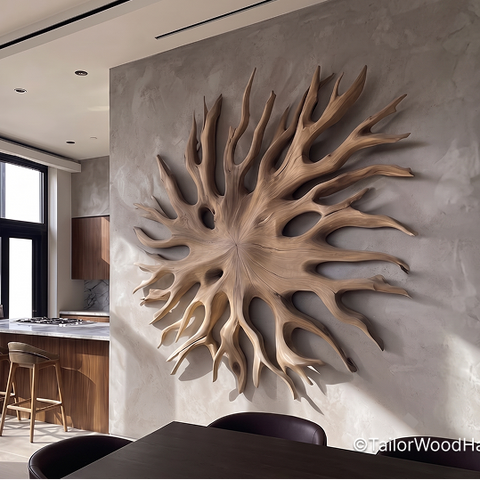
Wood wall art can absolutely work in a bathroom, but it needs to be fully sealed on every surface, not just the front, and it's safest kept away from the immediate area right around a shower or tub where moisture is heaviest. A well-sealed piece on a wall with decent ventilation, away from direct water spray, tends to do fine. Adding a heavily textured, properly coated focal point like the Layered Strata Wood Wall Panel for Organic Modern Interiors brings much-needed natural warmth to cold bathroom tiles, while an unsealed or only partially finished piece remains a much bigger gamble in a room this humid.
Protecting natural wood grain with comprehensive waterproof coatings
Materials to Avoid or Use with Caution
-
Unframed canvas or paper prints absorb moisture readily and are prone to warping, mildew, or color bleeding in a consistently humid bathroom
-
Unsealed or raw wood is one of the higher-risk choices, since exposed wood absorbs ambient moisture unevenly and is genuinely more likely to warp or crack in a bathroom than almost anywhere else in the house
-
Anything with exposed adhesive backing, like a lightweight peel-and-stick decal, can lose its hold over time as humidity weakens the adhesive bond
>>> Read more: How to Prevent Wood Wall Art from Fading
Style Ideas by Bathroom Type
A spa-style or minimalist bathroom pairs well with simple framed botanical prints, abstract line art, or a single oversized mirror as the main focal point, keeping the wall relatively uncluttered to match the calm, streamlined feel of the space. A coastal or beach-themed bathroom leans naturally toward metal or ceramic pieces with wave, shell, or water motifs, since those materials already echo the room's overall theme.
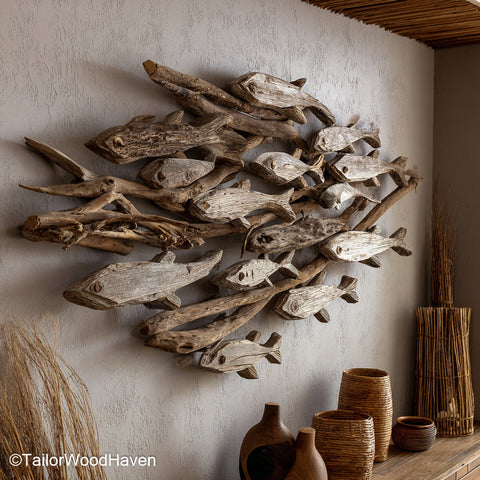
If your space is well-ventilated, incorporating a properly sealed thematic piece like the Handcrafted Driftwood Sea Turtle Wall Art Sculpture perfectly captures that breezy, beachside energy without the risk of warping. A moody, dark powder room, which typically sees far less humidity than a full bath, has more flexibility and can handle richer materials like framed art, gallery-style groupings, or even a well-sealed wood piece without much added risk. A kids' bathroom benefits from durable, wipeable materials like framed prints behind acrylic rather than glass, which is safer around younger kids and just as moisture-resistant.
Tailoring your decor choices to complement spa coastal or moody themes
Keep any more delicate piece, glass-framed or otherwise, at a reasonable distance from the direct spray zone of a shower, and avoid mounting anything directly above a tub where splashing is common. For a small powder room or half bath, a single well-chosen piece, sized to roughly two-thirds the width of the vanity or the wall it's centered on, tends to look more intentional than several small, scattered pieces. In a larger bathroom, a grouped gallery arrangement above the toilet or on an open wall works well, provided the room has decent ventilation and the individual pieces are chosen with humidity in mind.
Positioning your artwork to minimize exposure to direct water spray
Frequently Asked Questions About Bathroom Wall Art
A few questions come up often once people start choosing pieces specifically for a bathroom.
Is it safe to hang any wall art near a shower?
It depends heavily on the material and how well-ventilated the bathroom is. Ceramic, metal, and glass-sealed pieces tend to handle proximity to a shower reasonably well, while paper, canvas, and unsealed wood are much better kept farther away, ideally on a wall that doesn't get direct steam exposure.
Does a bathroom exhaust fan really make a difference?
Yes, significantly. A bathroom with a strong, regularly used exhaust fan clears humidity much faster after a shower than one without, which meaningfully widens the range of materials that will hold up safely over time.
Can I hang wood wall art in a bathroom?
You can, as long as it's fully sealed on every surface, including the back and edges, and positioned away from direct water spray. A bathroom with good ventilation is a safer environment for a sealed wood piece than one that stays steamy for long periods after every shower.
How often should bathroom wall art be inspected for moisture damage?
Checking every few months is a reasonable habit, particularly for anything framed, where moisture can sometimes build up behind the glass without being immediately obvious from the front. Catching early signs like slight warping, a musty smell, or fogging behind glass lets you address the issue before it becomes permanent damage.
What's the safest wall art option for a very humid bathroom with no fan?
Ceramic tile art and metal pieces are the safest bets in a bathroom with limited ventilation, since both materials are essentially unaffected by ambient humidity. If you want a framed print in that kind of space, look for one specifically sealed against moisture on all sides, not just protected by glass on the front.
Choosing wall art for a bathroom really comes down to matching the material to how humid the specific room actually gets, rather than picking based on style alone. A well-ventilated half bath has almost the same flexibility as any other room in the house, while a steamy full bathroom calls for materials like ceramic, metal, or properly sealed and glass-protected pieces that can handle repeated moisture exposure without warping, peeling, or growing mold. Get that match right, and a bathroom can have just as much personality on its walls as anywhere else in the home.
Looking for a piece with the natural warmth of wood, properly finished for lasting durability? Visit Tailor Wood Haven to explore our full range of handcrafted wood wall art, or browse the Carved Wood Wall Art, Driftwood Wall Art, and Wood Wall Art collections for pieces best suited to a well-ventilated bathroom or any other room in your home.
|
TAILOR WOOD HAVEN
Address 1: 412 Palmetto Dr, Columbia, SC 29201
Address 2: 1201 Hillside Avenue, Victoria, British Columbia V8T 2B1, Canada
Address 3: Phu Thai Town, Hai Phong 03306, Vietnam
Call us: +1 (647)-608-1571
Email: hello@tailorwoodhaven.com
|
 Skip to content


 Farmhouse Floating Shelves – Perfect handcrafted furniture
 Farmhouse Narrow Console Table with Storage for Entryway or Living Room
 Custom Rustic Console – Natural Wood, Made to Order