Fading is one of the more gradual ways wood wall art loses its character, and it's easy to miss until a piece is moved and the color underneath turns out to be noticeably richer than what's been on display. Unlike a crack or a warp, fading doesn't come from moisture stress, it comes almost entirely from light exposure breaking down the wood's natural pigments and the compounds in any stain or finish applied on top. The good news is that fading is one of the more predictable and preventable forms of wear, since it responds directly to a handful of environmental choices rather than anything unpredictable about the wood itself.
Here's what causes wood wall art to fade, and what actually slows it down.
Why Wood Wall Art Fades in the First Place
Wood color comes from a mix of natural pigments in the grain and, in many pieces, added stain or dye. Both are vulnerable to ultraviolet light, which breaks down the molecular structure of those pigments over time, a process called photodegradation. UV light doesn't need to be strong to cause damage either, since even indirect daylight through a window delivers enough UV exposure over months and years to visibly lighten or shift the color of exposed wood. Heat and, to a lesser degree, general visible light also play a role, but UV exposure is by far the biggest driver of fading in most homes.
Fading tends to happen unevenly too, which is often what makes it most noticeable. A piece that sits partially behind furniture, or one with any object resting against it, often shows a visible line or shadow once it's moved, the untouched wood underneath still holding its original color while the exposed section has visibly lightened.
Understanding how UV light breaks down natural wood pigments and finishes
Keep Pieces Out of Direct Sunlight
This is the single most effective step, and everything else is really secondary to it.
- Hang wood wall art on interior walls rather than walls with large windows or direct southern or western exposure, which tends to get the strongest and most prolonged sun
- If a piece has to hang near a window, position it so it's out of the sun's direct path during peak hours rather than directly in the light
- Keep in mind that sunlight moves throughout the day and across seasons, so a spot that looks shaded in winter may see hours of direct light in summer
Strategic placement to minimize exposure during peak daylight hours
Use Window Treatments to Cut UV Exposure
Blocking UV before it ever reaches the wood is more effective than trying to protect the wood after the fact.
- UV-blocking window film is one of the most effective options, since it filters out the majority of ultraviolet light while still letting visible light through
- Sheer curtains, blinds, or shades reduce direct exposure meaningfully, even if they don't block UV as completely as specialized film
- Rotating or adjusting blinds throughout the day, particularly during the hours when the sun lines up directly with a piece, adds an easy layer of protection without any real cost
Applying films and curtains to filter harmful rays before they reach your art
Choose a UV-Protective Finish
The right sealant does more than protect against moisture, it also slows how quickly color breaks down under light exposure.
-
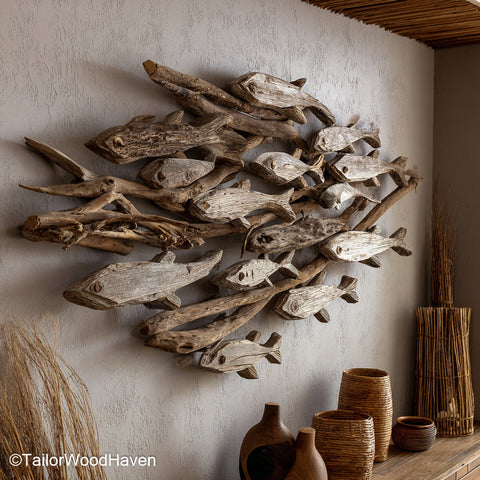
Look for a finish labeled as UV-resistant or UV-inhibiting, which contains additives specifically formulated to absorb or block ultraviolet light before it reaches the pigment underneath. This is especially crucial for pieces with applied color, such as the Hand-Painted Driftwood Wall Art with Woven Branch Design, where UV protection helps maintain both the natural wood tones and the delicate painted accents over time.
- Spar urethane and certain exterior-grade polyurethanes tend to include stronger UV protection than standard interior finishes, since they're formulated with more sun exposure in mind
- No finish blocks UV completely, so this step slows fading rather than preventing it outright, which is why pairing a good finish with sensible placement matters more than either step alone
Selecting the right sealants to block ultraviolet light and preserve color
Rotate or Reposition Pieces Occasionally
Since fading happens unevenly based on light exposure, evening it out over time helps keep the color more consistent across the whole piece.
-
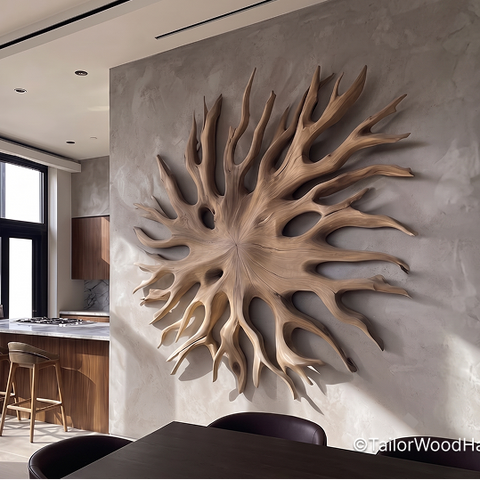
Rotating a piece 180 degrees every year or two, if its design allows for it, exposes different sections to the light pattern in the room and can even out fading over the long run. However, if you are displaying a massive, fixed focal point like the Oversized Open-Center Driftwood Wall Sculpture for Feature Walls, rotating isn't always practical, making window treatments and UV finishes much more important to prioritize.
- For a grouped or gallery-style arrangement, occasionally swapping the position of individual pieces spreads light exposure more evenly across the whole collection rather than always concentrating it on the pieces closest to a window
- This isn't practical for every design, especially anything with a clear top and bottom, but it's worth considering for symmetrical or abstract pieces where reorientation wouldn't be obvious
Evening out light exposure to prevent noticeable shadow lines over time
Buildup on the surface doesn't cause fading directly, but it does dull the finish in a way that can look similar to fading and makes existing color loss more noticeable.
- Dust with a soft, dry cloth every few weeks to keep the surface clear and let the finish show its true color
- Avoid cleaning products with harsh chemicals or strong solvents, which can strip or dull a UV-protective finish faster than normal wear would
- A light coat of appropriate wax or oil, reapplied on the schedule recommended for your specific finish, keeps the surface looking rich and can help mask minor, early fading
Maintaining the surface to keep finishes looking rich and vibrant
>>> Read more: How to Clean Driftwood Wall Art: Safe Maintenance & Care Guide
Frequently Asked Questions About Wood Wall Art Fading
A few questions come up often once people start noticing color changes in their wood wall art.
How long does it take for wood wall art to visibly fade?
It varies widely based on light exposure, wood species, and finish, but noticeable fading in a sunny spot can start within months, while a piece on a shaded interior wall might show little to no change for years. Direct, prolonged sun exposure is by far the biggest factor in how quickly fading becomes visible.
Can faded wood wall art be restored?
To some degree, yes. A light sanding followed by a fresh coat of stain or oil can often restore much of the original color and depth, particularly if the fading is limited to the surface finish rather than deep into the wood grain itself. Severe, long-term fading is harder to fully reverse, but refinishing usually improves the appearance significantly.
Does the type of wood affect how much it fades?
Yes. Lighter woods and those with less natural pigment, like pine or ash, tend to show fading more visibly than darker, more richly colored woods like walnut, since there's less inherent color to lose contrast against. Stained pieces can also fade differently depending on the type of dye or pigment used in the stain itself.
Is LED lighting a fading risk too?
Most LED lighting used in homes emits very little UV compared to sunlight, so it's a much smaller concern. That said, some LED bulbs do emit a small amount of UV, so positioning art away from any direct, close-range light source, whether sunlight or a bright fixture, is still a reasonable precaution.
Does fading mean the wood is being damaged structurally?
No. Fading is a surface-level, cosmetic change from UV breaking down pigment, not a sign of structural weakening the way cracking or warping can be. A faded piece is just as sound as it was before, even though it looks different.
Fading in wood wall art comes down almost entirely to light exposure, which makes it one of the more controllable forms of wear once you know where to focus. Keeping pieces out of direct sun, using window treatments or UV-blocking film where needed, choosing a UV-protective finish, and giving pieces an occasional rotation are all fairly low-effort habits that add up to real protection over years of display. And if some fading does happen anyway, a simple refinish usually brings a piece right back to looking like new.
Looking for wood wall art with rich, natural color built to last? Visit Tailor Wood Haven to explore our full range of handcrafted wood wall art, or browse the Carved Wood Wall Art, Driftwood Wall Art, and Wood Wall Art collections for pieces made to hold their beauty for years to come.
|
TAILOR WOOD HAVEN
Address 1: 412 Palmetto Dr, Columbia, SC 29201
Address 2: 1201 Hillside Avenue, Victoria, British Columbia V8T 2B1, Canada
Address 3: Phu Thai Town, Hai Phong 03306, Vietnam
Call us: +1 (647)-608-1571
Email: hello@tailorwoodhaven.com
|
 Skip to content


 Farmhouse Floating Shelves – Perfect handcrafted furniture
 Farmhouse Narrow Console Table with Storage for Entryway or Living Room
 Custom Rustic Console – Natural Wood, Made to Order