Natural materials in interior design bring warmth, texture, and character to a living space. From the grain of solid wood to the subtle variations of natural stone, these materials offer visual depth that manufactured finishes often struggle to replicate. They also work across a wide range of styles, including contemporary, rustic, Scandinavian, and coastal interiors. Whether used for major furniture pieces or small decorative accents, natural materials can make a home feel more inviting while creating a stronger connection between different elements of the design.
1. Why Use Natural Materials in Interior Design?
One of the biggest advantages of natural materials is their visual character. Wood, stone, linen, and rattan each have distinctive textures and variations, meaning no two surfaces look exactly alike. These details make an interior feel layered rather than overly uniform.
Natural materials also help balance a room. Hard surfaces such as stone and timber can be softened with wool rugs, cotton upholstery, and linen curtains. Similarly, a contemporary space filled with glass and metal can feel warmer when natural wood or woven accessories are introduced.
Another benefit is versatility. Natural materials do not belong to one particular decorating style. A marble countertop can complement modern cabinetry, while rattan furniture can add texture to a minimalist living room. The key is choosing materials that suit the room's function and combining them with a consistent design direction.
Adding authentic character, tactile balance, and cross-style versatility to living spaces with organic elements
2. 8+ Common Natural Materials Used in Interior Design
Different materials serve different purposes. Some are suitable for large architectural surfaces, while others work best in furniture, textiles, or decorative details.
|
Material
|
Main characteristics
|
Common applications
|
|
Wood
|
Warm, varied grain and versatile finishes
|
Flooring, furniture, wall panels
|
|
Natural stone
|
Durable, distinctive patterns and textures
|
Countertops, floors, feature walls
|
|
Bamboo
|
Lightweight, renewable, and structured
|
Screens, furniture, flooring
|
|
Rattan
|
Flexible, woven texture
|
Chairs, baskets, lighting
|
|
Linen and cotton
|
Soft, breathable, and comfortable
|
Curtains, bedding, upholstery
|
|
Wool
|
Warm, insulating, and textured
|
Rugs, throws, upholstery
|
|
Clay and terracotta
|
Earthy colors and handcrafted appearance
|
Tiles, pottery, decorative finishes
|
|
Leather
|
Durable with a rich surface character
|
Sofas, chairs, accessories
|
Wood
Wood is one of the most versatile materials in interior design. It can be used for flooring, dining tables, cabinets, shelving, wall panels, and decorative features. Different species and finishes create different moods: light oak feels relaxed and contemporary, while walnut introduces deeper tones and a more formal appearance.
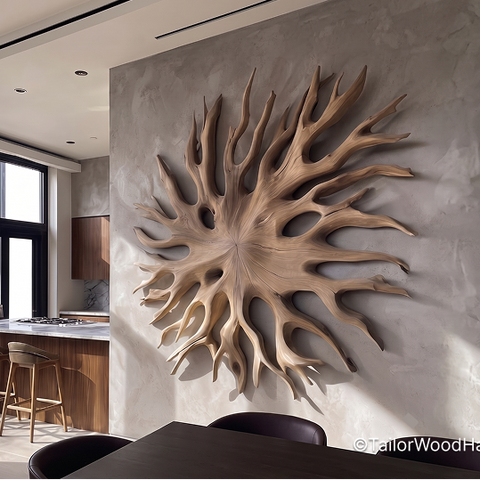
Wood also works well with almost every other natural material. Pair it with stone for contrast, linen for softness, or rattan for a more relaxed atmosphere. For a decorative focal point, carved wood wall art adds craftsmanship and dimensional texture without requiring major changes to the room.
Anchoring rooms with versatile timber grains, rich tonal warmth, and dimensional carved wood wall art
>>> Read more: DIY Carved Wood Wall Art – Step‑by‑Step Guide
Natural Stone
Marble, granite, limestone, and travertine are popular choices for surfaces that need both visual impact and practical durability. Marble is known for its distinctive veining, while travertine offers a softer, more porous appearance. Granite is often selected for its durability, particularly in kitchens.
Stone works particularly well when balanced with warmer materials. A stone countertop paired with wooden cabinets, for example, creates contrast without making the kitchen feel cold.
Bamboo and Rattan
Bamboo and rattan are often used to introduce lighter, more organic details. Bamboo has a firm structure that makes it suitable for flooring, furniture, and room dividers. Rattan is more flexible and commonly appears in woven chairs, pendant lights, baskets, and cabinet details.
Both materials are useful in coastal, tropical, and relaxed contemporary interiors. However, they do not need to be used extensively. A single rattan chair or woven pendant can provide enough texture to soften a room dominated by solid surfaces.
Bamboo and rattan add natural texture and warmth to relaxed interiors
Natural Textiles
Linen, cotton, and wool bring softness to interiors and help balance materials such as wood, stone, and metal. Linen curtains create a relaxed drape, cotton bedding feels comfortable for everyday use, and wool rugs add warmth underfoot.
These materials are particularly useful in bedrooms and living rooms, where comfort matters as much as appearance. Choose colors that complement the surrounding finishes, such as cream, oatmeal, warm gray, or muted earth tones.
Clay, Terracotta, and Leather
Clay and terracotta introduce earthy colors and handcrafted character through tiles, pottery, and decorative objects. Their warm reddish and brown tones work naturally with wood and neutral fabrics.
Leather offers a different kind of texture. It is often used for sofas, accent chairs, and small accessories, adding a more substantial finish to a room. Over time, some leather develops a natural patina that gives the surface additional character.
3. How to Combine Natural Materials Without Overwhelming a Room
Using several natural materials does not automatically create a cohesive interior. The way they relate to one another is just as important as the materials themselves.
Start by balancing textures. If a room already has a rough stone wall or heavily grained wood furniture, introduce smoother surfaces such as linen, cotton, or polished stone. This contrast keeps the design from feeling visually heavy.
Color is another useful connection. Wood, rattan, and terracotta naturally share warm undertones, while gray stone and cooler textiles can provide contrast. You can combine both groups by repeating a few shades throughout the space.
It is also helpful to vary the scale of each material. A large wooden dining table, a medium-sized woven pendant, and a small ceramic vase create a more natural composition than several similarly sized decorative pieces competing for attention.
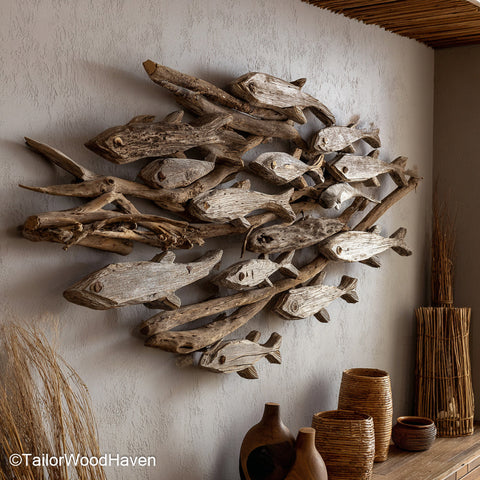
For coastal and nature-inspired interiors, driftwood wall art can introduce irregular organic forms that complement woven textures, neutral fabrics, and natural wood furniture.
Balancing rough stone, woven rattan, soft linen, and weathered driftwood wall art through shared tones and varied scale
4. Using Natural Materials in Different Rooms
The best material choices depend on how each room is used.
-
Living room: Combine wooden furniture, wool rugs, linen upholstery, and stone or ceramic accessories. This creates a comfortable space with a mix of soft and hard textures.
-
Bedroom: Prioritize comfort through cotton or linen bedding, wooden furniture, and soft wool accents. Keep finishes relatively restrained to maintain a restful atmosphere.
-
Kitchen: Wood cabinetry, stone countertops, and terracotta or ceramic accessories provide a practical combination of texture and durability.
-
Bathroom: Stone, bamboo accessories, and moisture-appropriate materials can create a spa-like atmosphere. Avoid placing untreated wood or natural textiles in areas where they remain constantly wet.
Tailoring organic textures from restful bedroom linens to durable kitchen stone and moisture-safe bathroom accents
>>> Read more: Modern Organic Interior Design: A Guide to Natural, Contemporary Spaces
5. What to Consider Before Choosing Natural Materials
Appearance should not be the only factor when selecting materials. Think about maintenance, durability, and the conditions in which each material will be used.
For example, porous stone may require sealing to reduce staining, while natural wood can respond to changes in humidity. Rattan is better suited to areas where it can remain relatively dry, and linen may wrinkle more easily than synthetic fabrics.
Budget also matters. You do not need to use premium natural materials across every surface. Investing in a quality wooden dining table or a durable stone countertop while using affordable cotton textiles and smaller natural accents can create a balanced result.
Frequently Asked Questions
What are the most popular natural materials in interior design?
Wood, natural stone, bamboo, rattan, linen, cotton, and wool are among the most commonly used materials. Each offers different textures and practical benefits.
Are natural materials more expensive?
Not always. Some stone and solid wood products can be costly, but bamboo, rattan accessories, cotton textiles, and smaller decorative pieces can be relatively affordable.
Can you mix wood, stone, and rattan?
Yes. These materials work well together because they offer different textures. Use wood as a grounding element, stone for contrast, and rattan to introduce a lighter woven detail.
How do you make natural materials look modern?
Keep the color palette controlled, choose clean-lined furniture, and avoid using too many rustic finishes at once. Combining natural textures with simple shapes and contemporary lighting creates a more modern appearance.
Natural materials in interior design offer more than visual appeal. They create contrast, warmth, and texture while allowing different elements of a room to work together. By combining wood, stone, woven materials, and natural textiles thoughtfully, you can create an interior that feels balanced and distinctive. For handcrafted wooden decor and natural wall accents, explore Tailor Wood Haven.
|
TAILOR WOOD HAVEN
Address 1: 412 Palmetto Dr, Columbia, SC 29201
Address 2: 1201 Hillside Avenue, Victoria, British Columbia V8T 2B1, Canada
Address 3: Phu Thai Town, Hai Phong 03306, Vietnam
Call us: +1 (647)-608-1571
Email: hello@tailorwoodhaven.com
|
 Skip to content


 Farmhouse Floating Shelves – Perfect handcrafted furniture
 Farmhouse Narrow Console Table with Storage for Entryway or Living Room
 Custom Rustic Console – Natural Wood, Made to Order