An expensive-looking home is not necessarily filled with designer furniture or luxury materials. More often, its appeal comes from how everything works together: the colors feel connected, furniture fits the space, lighting creates the right atmosphere, and decorative details look intentional. If you want to know how to make a home look expensive without committing to a major renovation, start by improving these elements. A few thoughtful changes can make an ordinary room feel more refined without dramatically increasing your budget.
1. Create a Cohesive Color Scheme
One of the easiest ways to give a home a more sophisticated appearance is to establish a consistent color palette. When wall colors, furniture, textiles, and accessories complement one another, the interior feels thoughtfully designed rather than assembled from separate purchases.
Warm neutrals such as ivory, beige, taupe, and soft greige make versatile foundations. They work particularly well with natural wood, stone, and textured fabrics. However, a refined interior does not have to be entirely neutral. Deep green, navy, charcoal, or muted terracotta can add character when used selectively.
The important part is controlling how many colors compete for attention. Choose a dominant shade, a supporting color, and one or two accents. Repeat these tones in different rooms or through smaller details such as cushions, artwork, and decorative objects. This creates continuity without making every room look identical.
Establishing sophisticated spatial continuity with balanced neutral foundations and restrained accent tones
2. Use Lighting to Change the Atmosphere
Even a beautifully furnished room can look ordinary under harsh, poorly positioned lighting. A single ceiling fixture often creates flat illumination, leaving corners dark and decorative features unnoticed.
A better approach is to layer different light sources. Ceiling fixtures provide general illumination, table and floor lamps make seating areas more comfortable, and accent lighting can highlight artwork, architectural details, or textured walls.
Warm or soft-white lighting generally creates a more inviting atmosphere in living rooms and bedrooms. In kitchens and work areas, choose lighting that provides enough clarity for everyday tasks while remaining consistent with the rest of the home.
The fixtures themselves also matter. A simple pendant light, understated wall sconce, or well-proportioned table lamp can become a design feature without needing an elaborate or expensive finish. Rather than buying several decorative lights, invest in a few that suit the scale and style of the room.
Layering warm ambient fixtures, task lamps, and accent lighting to eliminate flat illumination
3. Make the Room Feel Spacious and Well-Proportioned
A room often looks more expensive when it feels comfortable to move through. Crowded furniture, cluttered surfaces, and poorly arranged accessories can make even quality pieces appear less impressive.
Start by considering the relationship between furniture and available space. A large sofa may work well in an open living room but overwhelm a compact one. Similarly, a small rug floating beneath a coffee table can make the seating area feel disconnected. Choose pieces that suit the room's dimensions and leave clear pathways between them.
Curtains are another detail worth reconsidering. Hanging the curtain rod slightly below the ceiling and extending it beyond the window frame can make windows appear taller and wider. Floor-length panels in linen or a similar draping fabric give the room a more finished look.
Decluttering is equally important. Clear unnecessary objects from countertops, coffee tables, and open shelving. Instead of displaying every decorative item you own, select a few pieces with interesting shapes or materials. Giving each object room to stand out often creates a more polished result than adding more decor.
Enhancing architectural flow with correctly scaled furniture, tall drapery, and intentional decluttering
4. Combine Materials and Textures Thoughtfully
A neutral room can still feel rich and interesting when different materials create contrast. The trick is to introduce variety without making the space look busy.
For example, natural wood brings warmth to smooth stone surfaces, while linen and wool soften metal or glass furniture. Woven baskets, ceramic accessories, and textured upholstery can add depth without requiring strong colors or elaborate patterns.
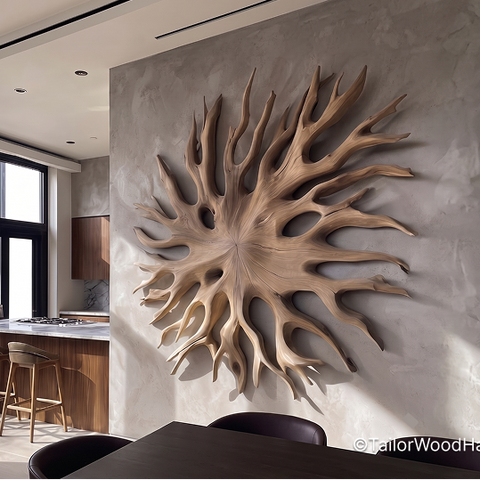
Wall decor also contributes to this balance. Instead of treating artwork as an afterthought, choose pieces that relate to the room's materials and overall character. Handcrafted carved wood wall art can introduce sculptural detail and visible craftsmanship, particularly when paired with simple walls and understated furnishings.
Natural materials are especially effective because their variations make a space feel less uniform. A wooden side table, textured ceramic vase, or stone accessory can provide enough visual interest without overwhelming the existing palette.
Adding rich visual depth to neutral spaces by pairing natural timber, stone, linen, and carved wood art
5. Choose Decor That Looks Intentional
Accessories can make the difference between a room that feels complete and one that looks unfinished. However, expensive-looking styling is not about filling every shelf or surface. It is about choosing pieces that contribute to the overall composition.
Try grouping objects with different heights and shapes. A low decorative bowl, a medium-sized vase, and a taller sculptural object can create a balanced arrangement on a console table. On a coffee table, a small stack of books paired with one distinctive accessory is often more effective than a collection of unrelated decorations.
Artwork deserves the same consideration. A piece that is too small for a large wall can look lost, while several small frames placed without a clear arrangement may create unnecessary visual noise. Consider the width of the furniture beneath the artwork and choose a size that feels proportionate.
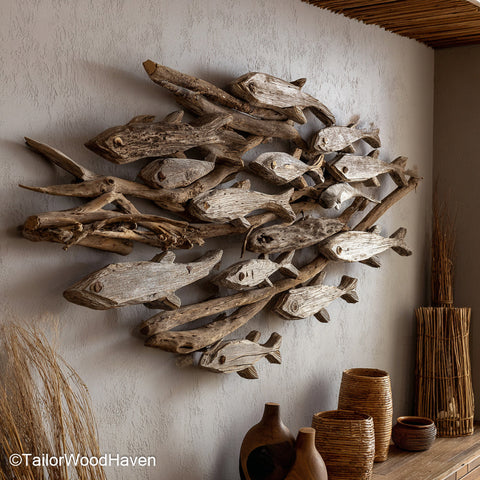
For interiors inspired by natural textures and coastal materials, driftwood wall art can serve as a distinctive focal point. Its irregular shapes and organic character work particularly well with neutral walls, linen fabrics, and warm wood finishes.
6. Upgrade the Small Details You See Every Day
A room's overall impression is influenced by details that are easy to overlook. Worn cabinet handles, outdated faucets, chipped paint, and mismatched hardware can make a space feel less maintained, even when the main furniture is attractive.
You do not need to replace everything. Updating kitchen or bathroom handles, choosing consistent metal finishes, touching up damaged paint, and replacing worn accessories can make existing features look more considered.
Pay attention to maintenance as well. Clean window frames, mirrors, light fixtures, baseboards, and grout lines regularly. Keep upholstery in good condition and repair minor damage before it becomes more noticeable.
These improvements may seem less exciting than buying new furniture, but they often have a greater effect on how finished a home feels.
Refining everyday tactile touchpoints by updating hardware, fixing minor wear, and maintaining immaculate surfaces
7. Avoid the Habits That Make Interiors Look Cheap
Some decorating decisions can undermine an otherwise attractive room. Buying every item from the same furniture collection, for instance, can make the space feel generic. A more layered interior usually combines complementary pieces from different sources while maintaining consistent colors and materials.
It is also worth resisting the temptation to follow every trend. Trend-led accessories can be useful for refreshing a room, but large furniture pieces and permanent finishes should be chosen with longevity in mind.
Finally, avoid confusing luxury with excess. Too many metallic finishes, decorative patterns, oversized accessories, or artificial-looking materials can make a room feel crowded. A restrained design with a few distinctive features often looks more sophisticated.
>>> Read more: How to Decorate Around Wood Wall Art: A Room Styling Guide
Learning how to make a home look expensive is really about making deliberate design choices. A cohesive palette, layered lighting, well-proportioned furniture, natural materials, and carefully selected decor can transform the atmosphere of a room without requiring a large budget. Focus on the elements that have the greatest visual impact first, then refine the smaller details over time.
For handcrafted wood decor that adds texture and character to your space, explore Tailor Wood Haven.
|
TAILOR WOOD HAVEN
Address 1: 412 Palmetto Dr, Columbia, SC 29201
Address 2: 1201 Hillside Avenue, Victoria, British Columbia V8T 2B1, Canada
Address 3: Phu Thai Town, Hai Phong 03306, Vietnam
Call us: +1 (647)-608-1571
Email: hello@tailorwoodhaven.com
|
 Skip to content


 Farmhouse Floating Shelves – Perfect handcrafted furniture
 Farmhouse Narrow Console Table with Storage for Entryway or Living Room
 Custom Rustic Console – Natural Wood, Made to Order