Modern organic interior design brings together contemporary simplicity and the warmth of natural elements. With earthy colors, organic shapes, tactile materials, and thoughtfully chosen furniture, this style creates interiors that feel comfortable, balanced, and connected to nature without sacrificing a clean, modern appearance.
What Is Modern Organic Interior Design?
Modern organic interior design is a decorating style that combines modern design principles with natural materials, soft textures, and shapes inspired by the natural world. It emphasizes simplicity, functionality, and a sense of warmth rather than elaborate decoration or rigid geometric forms.
The style typically features clean architectural lines softened by curved furniture, natural wood, stone, linen, and other tactile materials. Its color palette draws from nature, including warm whites, beige, sand, brown, and muted greens.
Unlike minimalist interiors that can sometimes feel stark, modern organic spaces use texture and natural variation to create visual interest. A wooden dining table, linen sofa, stone accessories, and a few carefully selected decorative pieces can make a room feel layered without appearing cluttered.
The goal is to create a home that feels modern but not cold, natural but not rustic, and simple without becoming empty.
Blending sleek contemporary simplicity with warm earthy palettes, tactile textiles, and natural materials
Key Elements of Modern Organic Interior Design
Natural Materials and Textures
Natural materials are central to modern organic interiors. Wood, stone, linen, wool, rattan, and clay introduce subtle variations in color and texture that make a space feel more inviting.
Wood is particularly useful because it adds warmth to contemporary spaces. It can appear in flooring, furniture, shelving, cabinetry, and wall decorations. Light oak and natural walnut finishes work especially well with warm neutral walls and soft furnishings.
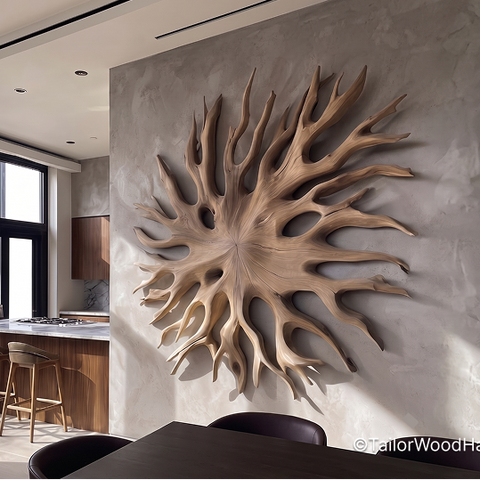
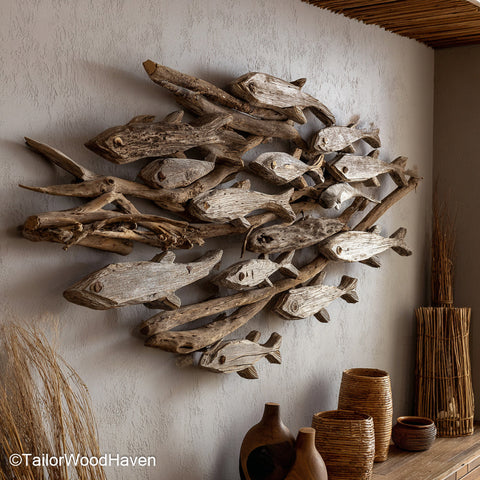
For walls, textured wooden accents can add depth without overwhelming the room. Pieces from the Driftwood Wall Art collection can introduce natural grain, irregular forms, and organic character into an otherwise simple interior.
Stone and ceramic accessories provide another layer of texture. Meanwhile, linen curtains, wool rugs, and cotton upholstery soften harder surfaces and make the room feel more comfortable.
Adding depth and warmth to clean modern rooms with timber grain, stone, and organic driftwood accents
Warm Neutral Color Palette
Modern organic interiors generally rely on a restrained palette of warm, nature-inspired colors. Rather than using strong contrasts, the style creates depth through subtle differences in tone.
|
Color
|
Common Applications
|
Effect
|
|
Warm white
|
Walls, ceilings, large surfaces
|
Keeps the space bright and open
|
|
Beige and cream
|
Sofas, curtains, upholstery
|
Creates a soft, welcoming atmosphere
|
|
Taupe and sand
|
Rugs, furniture, secondary surfaces
|
Adds understated depth
|
|
Earthy brown
|
Wooden furniture and accents
|
Brings warmth and natural character
|
|
Sage green
|
Plants, cushions, decorative details
|
Introduces a subtle natural accent
|
|
Terracotta
|
Pottery and small accessories
|
Adds warmth and color variation
|
These shades work best when layered rather than used in isolation. For example, warm white walls can be paired with a beige sofa, a taupe rug, wooden furniture, and a few darker brown accents.
A limited palette also helps different materials work together. Even when a room contains several textures, consistent undertones keep the overall appearance cohesive.
Organic Shapes and Curved Furniture
Organic shapes soften the straight lines commonly found in modern architecture. Rounded sofas, oval coffee tables, curved chairs, arched mirrors, and sculptural lighting can make a room feel more relaxed and natural.
These forms do not need to dominate the space. A single curved sofa or an oval dining table can provide enough contrast against rectangular windows, cabinetry, and wall panels.
Furniture with simple silhouettes is generally more suitable than heavily ornamented designs. The focus should remain on shape, material, and proportion rather than decorative details.
Softening rigid architectural lines with rounded sofas, oval tables, and flowing sculptural lighting
Natural Light and Open Spaces
Natural light helps highlight the textures and subtle colors that define modern organic interiors. Large windows, sheer curtains, and uncluttered layouts allow daylight to move through the room.
Where possible, avoid blocking windows with oversized furniture or heavy window treatments. Choose light-filtering curtains and arrange seating to make the most of available daylight.
An open layout can also make the interior feel more connected. Instead of filling every corner, leave enough negative space around furniture and decorative objects. This gives individual materials and shapes room to stand out.
Minimalist Decor and Thoughtful Accessories
Modern organic design favors carefully selected decorations over large collections of unrelated objects. Each accessory should contribute something through its shape, texture, material, or function.
Handmade ceramics, stone bowls, woven baskets, natural-fiber rugs, and sculptural wooden objects are useful choices. Plants can also add color and soften the transition between indoor spaces and the natural world.
Wooden wall art works particularly well when a room needs a focal point without introducing bright colors or excessive ornamentation. The Carved Wood Wall Art collection offers examples of how carved textures and natural wood tones can complement a restrained, organic interior.
Curating purposeful handmade ceramics, woven baskets, and carved wood wall art without visual clutter
How to Create a Modern Organic Interior
Creating this style does not require replacing every piece of furniture. A more practical approach is to establish a consistent color palette, introduce natural materials, and gradually refine the room's shapes and accessories.
Start with the largest surfaces. Warm white, cream, or soft beige walls provide a neutral foundation, while natural wood flooring or furniture introduces warmth. If the room already has dark flooring or contemporary finishes, use lighter textiles and wooden accents to soften the overall appearance.
Next, consider the furniture. Choose pieces with simple profiles and comfortable proportions. A linen sofa, solid wood coffee table, or curved accent chair can establish the style without making the room feel overly designed.
Layer different textures to prevent the neutral palette from looking flat. Combine smooth stone with visible wood grain, soft upholstery, woven rugs, and handmade ceramics. The materials should complement one another rather than compete for attention.
Finally, edit the accessories. Keep the pieces that contribute to the room's atmosphere and remove decorations that make the space feel crowded. A few well-positioned objects usually create a stronger effect than filling every available surface.
Modern Organic Interior Design Ideas for Every Room
Living Room
The living room is a natural place to introduce modern organic design because it can accommodate a variety of materials and textures.
A cream or beige sofa creates a soft foundation, while a wooden coffee table adds warmth. A textured rug, linen curtains, and a few ceramic accessories can complete the arrangement. For the walls, choose one focal point, such as a large artwork or a sculptural wooden piece, instead of filling the room with multiple competing decorations.
Keep the furniture arrangement open enough to allow movement and maintain a relaxed atmosphere.
Anchoring open living spaces with cream seating, natural wood tables, and a single sculptural focal point
>>> Read more: 20+ Carved Wood Wall Art For Living Room Ideas to Transform Your Space
Bedroom
A modern organic bedroom should feel calm and comfortable. Start with neutral bedding in linen or cotton, then introduce wooden bedside tables and soft lighting.
A padded headboard, textured blanket, and natural-fiber rug can add depth without making the room visually busy. Keep decorative objects limited to a few meaningful pieces, such as a ceramic vase or a small wooden sculpture.
Avoid overly bright lighting and strong color contrasts. Warm light and layered textiles help create a more restful environment.
Kitchen
In the kitchen, modern organic design can be introduced through natural finishes and simple surfaces. Wood cabinetry, stone countertops, and neutral backsplashes create a balanced foundation.
If a full renovation is not practical, smaller changes can still make a difference. Wooden cutting boards, ceramic containers, woven pendant shades, and simple countertop accessories can introduce natural texture without changing the kitchen's layout.
Dining Room
A solid wood dining table can become the focal point of a modern organic dining room. Pair it with upholstered or curved dining chairs to soften the arrangement.
Pendant lighting made from natural materials can add texture above the table. Keep the centerpiece simple with a ceramic vase, fresh branches, or a low arrangement of greenery.
The dining area should feel connected to the rest of the home, so repeat a few materials or colors used in nearby spaces.
Bathroom
Natural materials can make a bathroom feel warmer and less clinical. Wood-effect cabinetry, stone surfaces, neutral tiles, and simple ceramic accessories are all suitable choices.
Use warm white or beige as the main color, then introduce darker wood tones or muted green through smaller details. Plants can work well in bathrooms with sufficient natural light and suitable ventilation.
Avoid adding too many decorative objects, especially around sinks and countertops. A clean layout helps preserve the calm, uncluttered character of the style.
Materials Commonly Used in Modern Organic Interiors
Choosing materials with complementary textures is more important than using as many natural finishes as possible. The following table summarizes common options and where they work best.
|
Material
|
Typical Applications
|
Design Contribution
|
|
Natural wood
|
Flooring, furniture, wall accents
|
Adds warmth and visible grain
|
|
Stone
|
Countertops, coffee tables, accessories
|
Introduces natural variation
|
|
Linen
|
Curtains, bedding, upholstery
|
Creates a soft, relaxed finish
|
|
Rattan
|
Chairs, baskets, lighting
|
Adds woven texture
|
|
Wool
|
Rugs, throws, upholstery
|
Brings softness and comfort
|
|
Clay and ceramic
|
Vases, pottery, decorative objects
|
Adds handmade character
|
Combining two or three materials in one area is often enough. For example, a living room might pair a wooden coffee table with a linen sofa and a wool rug. The combination feels layered while maintaining a simple visual structure.
 Pairing complementary finishes like natural wood, raw stone, and soft linen for balanced tactile depth
One common mistake is relying too heavily on beige. Although warm neutrals are important, using only similar shades can make a room feel flat. Natural wood grain, stone variation, woven surfaces, and darker accents help create contrast.
Another mistake is introducing too many decorative objects. Modern organic design is not about displaying every natural-looking accessory available. Each piece should have a clear purpose or contribute to the overall composition.
Choosing materials that look natural but feel visually inconsistent can also weaken the result. For example, combining several competing wood tones, glossy finishes, and heavily patterned textiles may make the room feel disconnected. Repeat a few materials throughout the space to create continuity.
Finally, avoid confusing an organic interior with an entirely rustic one. Modern organic design still depends on clean lines, functional furniture, and thoughtful proportions. Natural materials should soften the modern foundation rather than replace it.
For more ideas on using natural wood accents in a balanced interior:
>>> Read more: How to Decorate Around Wood Wall Art: A Room Styling Guide.
FAQs About Modern Organic Interior Design
What colors are used in modern organic interior design?
The style typically uses warm white, beige, cream, taupe, sand, earthy brown, and muted green. Small touches of terracotta or charcoal can add contrast without disrupting the natural palette.
What materials work best for modern organic interiors?
Natural wood, stone, linen, wool, rattan, clay, and ceramic are common choices. These materials provide different textures while maintaining a connection to nature.
Can modern organic design work in a small home?
Yes. A restrained color palette, simple furniture, natural textures, and an uncluttered layout can make smaller rooms feel more open. Choose multifunctional furniture and avoid oversized decorative pieces.
Does modern organic interior design require natural materials?
Natural materials are a defining feature, but they do not need to appear in every element. High-quality alternatives can be used where practical, as long as their colors, textures, and finishes support the overall design.
Modern organic interior design combines contemporary simplicity with the warmth and texture of natural materials. By using a restrained color palette, organic furniture shapes, natural light, and carefully selected accessories, you can create a home that feels comfortable, balanced, and timeless. Explore Tailor Wood Haven for more inspiration on incorporating natural wood elements into your interior.
|
TAILOR WOOD HAVEN
Address 1: 412 Palmetto Dr, Columbia, SC 29201
Address 2: 1201 Hillside Avenue, Victoria, British Columbia V8T 2B1, Canada
Address 3: Phu Thai Town, Hai Phong 03306, Vietnam
Call us: +1 (647)-608-1571
Email: hello@tailorwoodhaven.com
|
 Skip to content


 Farmhouse Floating Shelves – Perfect handcrafted furniture
 Farmhouse Narrow Console Table with Storage for Entryway or Living Room
 Custom Rustic Console – Natural Wood, Made to Order