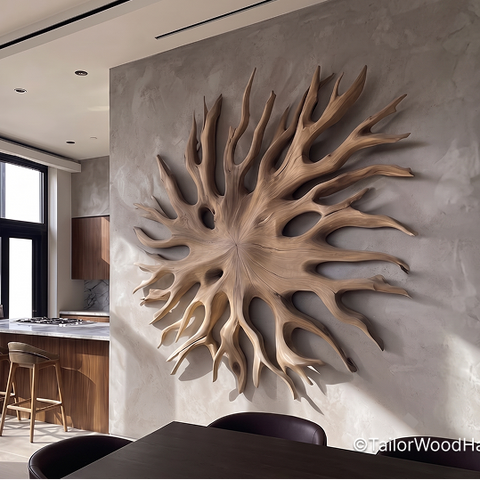
Hardwood isn't one single material choice, it's a whole category with genuinely different colors, grain patterns, price points, and durability depending on the species. The "best" hardwood really depends on what you're optimizing for: a dark, modern statement piece calls for a different wood than a budget-conscious rustic project or a piece headed for a humid room. Here's a practical rundown of the hardwoods most commonly used for wall art, and how to match one to your specific project.
Top Hardwoods for Wall Art
Each of these species brings a distinct color, grain character, and price point to a finished piece, and knowing the basics of each makes comparison shopping far easier.
|
Species
|
Color
|
Hardness
|
Grain
|
Cost
|
Best For
|
|
Walnut
|
Dark chocolate brown
|
Moderate
|
Fine, straight
|
Higher
|
Modern, refined statement pieces
|
|
Oak
|
Light gold to medium brown
|
High
|
Bold, pronounced rays
|
Moderate
|
Rustic, traditional, durable pieces
|
|
Maple
|
Pale cream to light tan
|
High
|
Subtle, fine
|
Moderate
|
Minimalist, Scandinavian styles
|
|
Cherry
|
Reddish-brown, deepens with age
|
Moderate
|
Fine, smooth
|
Moderate to higher
|
Classic, warm-toned statement pieces
|
|
Mahogany
|
Reddish-brown, rich
|
Moderate to high
|
Fine, sometimes ribboned
|
Higher
|
Traditional, formal interiors
|
|
Teak
|
Golden to medium brown
|
Moderate to high
|
Straight, oily texture
|
Higher
|
Humid rooms, outdoor-adjacent spaces
|
|
Ash
|
Pale, similar to oak but finer
|
High
|
Bold, similar to oak
|
Moderate
|
Modern pieces wanting oak's strength with a cleaner look
|
Walnut
Walnut brings a rich, dark brown color with subtle purplish undertones and a fine, straight grain that reads as refined rather than rustic. It's a popular choice for modern and mid-century interiors where a deep, saturated wood tone anchors the space, though it carries a higher price tag than most other hardwoods on this list.
Oak
Oak is one of the most widely used hardwoods for wall art, prized for its hardness, durability, and bold, visible grain pattern. Its lighter gold-to-brown color and rustic character suit farmhouse and traditional interiors especially well, and it's generally more affordable than walnut while still offering real long-term durability.
Leveraging extreme durability and bold textures for rustic and traditional statement pieces
>>> Read more: Walnut vs Oak Wall Art: A Detailed Comparison
Maple
Maple has a pale, understated color and a fine, subtle grain that stays mostly out of the way visually, making it a strong choice when you want the shape or carving of a piece to take center stage rather than the wood's own pattern. It's also notably hard and durable, though its pale color can be more prone to blotchy stain absorption without a pre-stain conditioner.
Cherry
Cherry starts out a warm reddish-brown and continues to deepen and darken for years after it's finished, which is somewhat unusual among common hardwoods. This aging quality makes cherry a distinctive choice for anyone who likes the idea of a piece that visibly matures over time, though it means the piece won't look the same in five years as it does on day one.
Selecting warm reddish-brown timber that naturally deepens and matures over time
Mahogany
Mahogany offers a rich, reddish-brown color with a fine grain, sometimes showing a distinctive ribbon-like figure depending on how it's cut. It's long been associated with formal, traditional furniture and interiors, and it carries a cost that reflects both its appearance and its more limited availability compared to domestic hardwoods.
Teak
Teak stands apart for its natural oil content, which makes it one of the most moisture- and rot-resistant hardwoods available, a real advantage for wall art headed into a humid room or anywhere with higher moisture exposure than a typical living space. Its golden-to-medium-brown color and straight grain give it a warm, substantial look, though it's generally one of the pricier options.
Ash
Ash shares a lot of visual similarity with oak, bold grain, pale-to-medium coloring, but with a somewhat finer, more refined texture. It offers comparable hardness and durability to oak at a generally similar price point, making it a good alternative if you like oak's strength and character but want a slightly cleaner, less rustic look.
Achieving the structural strength of oak with a cleaner paler aesthetic
>>> Read more: How to Choose a Wood Finish for Wall Art: A Complete Decision Guide
How to Choose the Best Hardwood for Your Project
With several good options available, a few practical priorities narrow the choice quickly.
If Budget Is Your Main Priority
Oak and ash generally offer the best combination of durability and accessible pricing, giving you a hard, long-lasting wood without the premium that walnut, mahogany, or teak command. Both are also widely grown and commercially available, which keeps supply steady and pricing more predictable than a specialty or imported species. If you're working with a larger statement piece where cost scales quickly with size, starting from one of these two generally stretches a budget further than any of the darker, pricier hardwoods on this list, without sacrificing much in terms of long-term durability.
If Style and Room Aesthetic Matter Most
Walnut and cherry suit darker, more refined or classic interiors, where a deep, saturated wood tone reads as deliberate and a little formal against the rest of the room. Maple and ash fit cleaner, more minimalist spaces instead, letting a piece's shape or carving take the visual lead rather than a bold wood tone competing for attention. Oak remains the most versatile for rustic and traditional styles specifically, and its warm, mid-range color also tends to play reasonably well with a broader range of existing furniture tones than a very dark or very pale species would.
Pairing dark refined walnut with modern decor or pale maple with Scandinavian minimalism
If Durability Is the Deciding Factor
Oak, maple, and ash rank among the hardest, most impact-resistant choices on this list, holding up well to regular handling, accidental bumps, or a higher-traffic location like a hallway or entryway. This matters less for a piece that will hang undisturbed in a formal living room, but it's worth real consideration for anything within reach of kids, pets, or daily foot traffic. Walnut and cherry, while still perfectly serviceable for wall art, are comparatively softer and show dents or surface marks a bit more readily under the same conditions.
If the Piece Is Headed for a Humid Room
Teak's natural oil content gives it a genuine advantage in humidity and moisture resistance that other hardwoods on this list don't match without significant additional sealing. That oil slows moisture absorption at the source, which is part of why teak has traditionally been the wood of choice for outdoor furniture and marine applications. Any hardwood can perform reasonably well in a moderately humid room if it's properly sealed on every surface, but teak offers more built-in forgiveness if that sealing isn't perfect or needs to go longer between reapplications.
Deploying moisture-resistant teak to ensure long-term stability in bathrooms and kitchens
Frequently Asked Questions About the Best Hardwood for Wall Art
Is walnut or oak better for wall art?
Neither is universally better; walnut suits a darker, more modern look at a higher price, while oak offers more affordable durability with a lighter, bolder-grained appearance better suited to rustic and traditional styles.
Which hardwood is best for a humid bathroom or kitchen?
Teak, thanks to its natural oils and inherent moisture resistance, handles humid environments better than most other common hardwoods, though any hardwood properly sealed on every surface can perform reasonably well in a moderately humid space.
What's the most affordable hardwood for wall art?
Oak and ash are generally the most budget-friendly hardwoods with strong durability, offering a better price-to-performance ratio than walnut, cherry, mahogany, or teak.
Does the hardwood species affect how well a piece carves?
Yes. Softer-grained hardwoods like walnut and cherry generally carve more cleanly for fine detail, while harder, bolder-grained woods like oak show more grain texture through carved cuts, which can enhance or compete with detail depending on the design.
Which hardwood changes color the most over time?
Cherry stands out for its noticeable darkening with age and light exposure, more pronounced than the gradual, subtler shifts seen in walnut, oak, or maple.
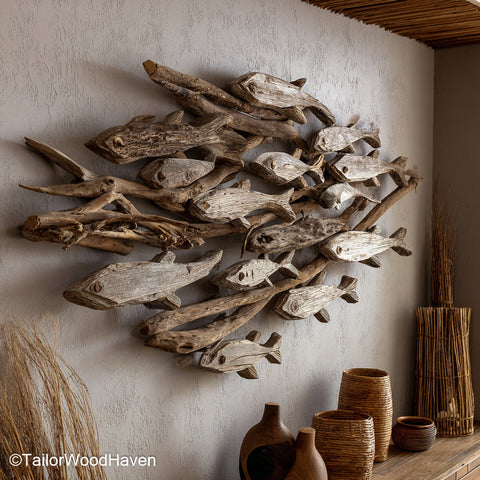
There's no single best hardwood for wall art, only the best fit for your budget, style, and the room a piece is headed for. Oak and ash deliver durability at an accessible price, walnut and cherry bring depth and refinement for a statement piece, and teak earns its place in anything facing real humidity. Our carved wood wall art collection draws on several of these species depending on the piece, and our driftwood wall art offers a naturally weathered alternative if none of these cleaner hardwood looks quite match what you're after.
If you're not sure which species fits your space, the team at Tailor Wood Haven can help you think it through before you commit to a piece.
|
TAILOR WOOD HAVEN
Address 1: 412 Palmetto Dr, Columbia, SC 29201
Address 2: 1201 Hillside Avenue, Victoria, British Columbia V8T 2B1, Canada
Address 3: Phu Thai Town, Hai Phong 03306, Vietnam
Call us: +1 (647)-608-1571
Email: hello@tailorwoodhaven.com
|
 Skip to content


 Farmhouse Floating Shelves – Perfect handcrafted furniture
 Farmhouse Narrow Console Table with Storage for Entryway or Living Room
 Custom Rustic Console – Natural Wood, Made to Order