Your cart (0)
Your cart is empty
Tax included and shipping calculated at checkout
Recommended products




Drawer menu
Tax included and shipping calculated at checkout


Ever wondered how high should floating shelves be in living room so your space feels balanced instead of awkwardly cluttered? Getting the height right isn’t just about measurement - it’s about creating harmony between your wall, furniture, and décor. A shelf hung too high looks disconnected, while one too low crowds your room.
In this guide, we’ll break down the perfect shelf height, spacing, and styling tips so you can design a living room that’s both functional and beautiful.
Before we dive into living room specifics, it’s important to understand the general standards for shelf height. Most floating shelves are placed 4 to 6 feet above the floor, depending on what they hold and where they’re installed. This range provides comfortable access for most adults while keeping the wall visually balanced.
If you’ve ever asked yourself how high should floating shelves be in living room, the answer often starts with this general rule of thumb. When you understand the standard height for all wall shelves, it becomes much easier to adjust for your specific layout or furniture.
If you’re hanging shelves above furniture like a console or sofa, a 10–12 inch gap from the top of the furniture to the shelf bottom usually looks best. It allows space for décor while keeping everything cohesive.
So, when you’re trying to decide how high should floating shelves be in living room, start by referencing these wall height standards, then fine-tune based on your personal style and ceiling height.
For those who love minimalist setups, the Floating White Oak Shelves from Tailor Wood Haven are a perfect fit - their natural tone complements any wall height beautifully.
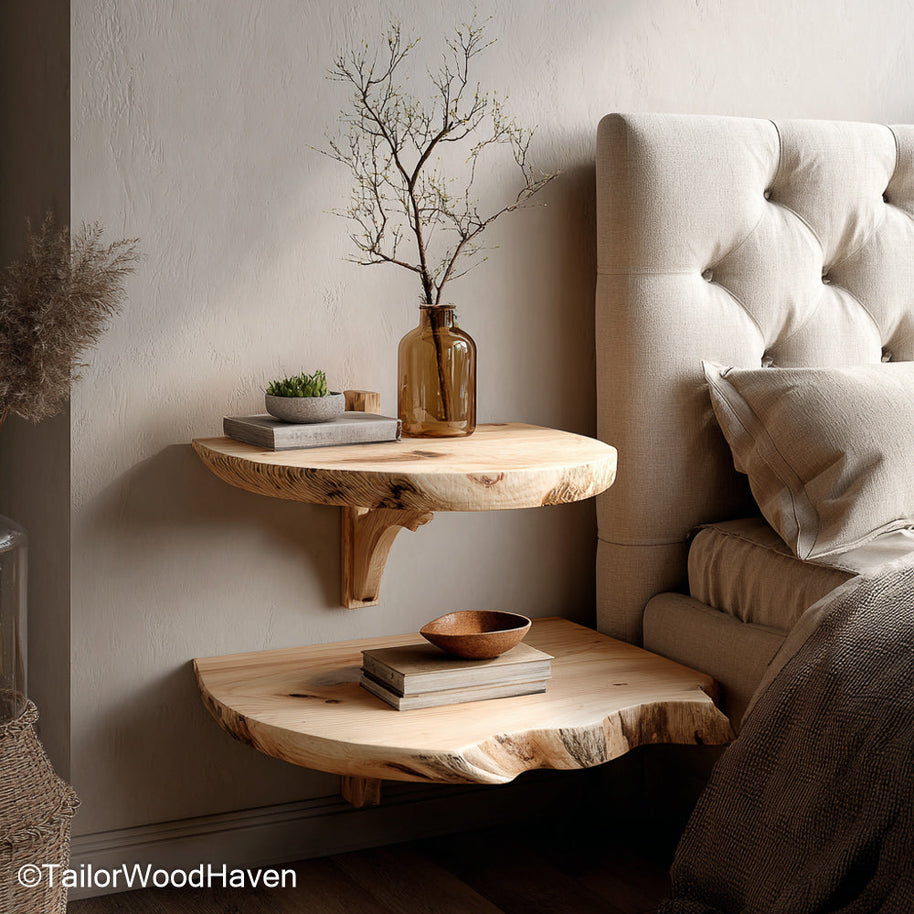
Now that you know the standard, let’s talk about how high should floating shelves be in living room specifically - since this space often combines both comfort and display.
For decorative floating shelves above a sofa, aim for 10–15 inches above the back of the couch. If you plan to use them as book or photo display shelves, eye level (around 57–60 inches from the floor) is a sweet spot. This height creates a natural viewing angle without making your décor feel out of reach.
Another great rule: keep the shelf aligned with nearby furniture. For example, if your console table is 30 inches high, install your lowest shelf around 40–42 inches. This ensures your wall looks organized and visually connected.
If you’re still unsure how high should floating shelves be in living room with different furniture setups, try marking several height options with painter’s tape first. Step back, view them from different angles, and choose what feels most natural for your space.
Want inspiration? The DIY Inspired guide shows how small adjustments in height can completely change a room’s vibe.
Floating TV stands are another common design feature in modern living rooms - and their placement plays a huge role in comfort and visual flow. While you might already know how high should floating shelves be in living room, TV shelves follow slightly different height guidelines to ensure ergonomic viewing.
Ideally, the center of your TV screen should sit around 42–48 inches from the floor, roughly eye level when you’re seated. If your floating shelf supports the TV or media components, measure from the floor to the bottom edge of the TV, leaving at least 6–10 inches between the two for airflow and easy cable management.
When deciding how high should floating shelves be in living room with media setups, keep your eye level and furniture proportions in mind. The goal is to prevent strain while maintaining balance between your screen and surrounding shelves.
A great pairing for this setup is the Rustic Wood Floating Shelves. Their organic, thick-slab look anchors the wall visually beneath a screen, creating a natural balance between structure and softness.
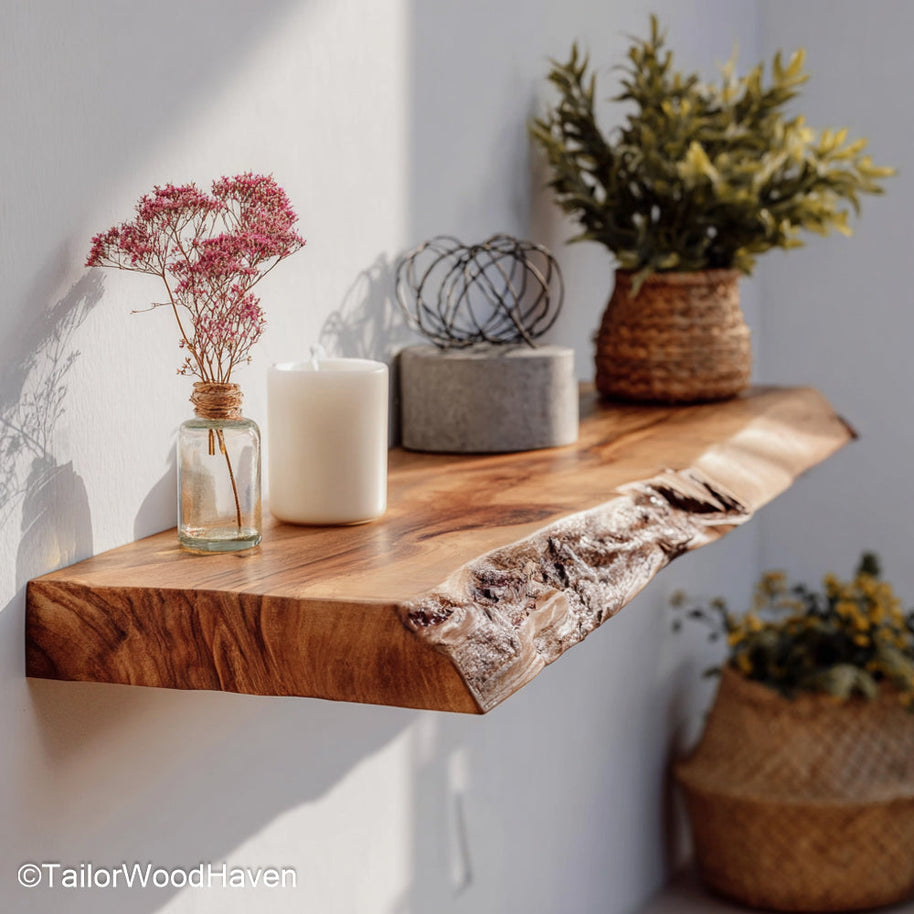
Shelf depth matters just as much as height when you’re planning your layout. Shallow shelves may look too flimsy, while overly deep ones can feel bulky or overwhelm a small room.
For most living rooms, 8–12 inches is the ideal depth.
Use 8-inch shelves for displaying light décor like candles, frames, or plants.
Choose 10–12 inches if you’re storing books, pottery, or heavier items.
When figuring out how high should floating shelves be in living room, remember that depth affects how your wall feels visually. A deeper shelf hung too high can seem heavy and awkward, while a shallower one fits better at eye level. The goal is to balance height and depth for a smooth, cohesive look.
If you’re experimenting with layout, it’s helpful to compare how high should floating shelves be in living room with how deep they are before finalizing. Use painter’s tape or cardboard cutouts to simulate the proportions and see what looks best in your space.
After height and depth, spacing is the final piece of your design puzzle. Floating shelves that are too close can look cramped, while too far apart can make walls feel empty.
When planning how high should floating shelves be in living room, spacing plays a huge role in achieving visual rhythm. A 10–15 inch gap between shelves works best for most layouts, ensuring a balanced flow from top to bottom without making the wall look overcrowded.
If you’re designing a gallery-style setup, consider how your shelf spacing complements other elements - artwork, mirrors, or lighting. The same rule applies when figuring out how high should floating shelves be in living room: symmetry and proportion are what tie everything together.
You can also experiment with staggered arrangements - great for asymmetrical designs and small walls. Learn more creative layout ideas from Love and Renovations’ guide.
If you’re adding floating shelves above your desk, comfort and accessibility come first. Generally, the ideal height is 22–24 inches above the desktop surface, giving you enough clearance for a monitor, lamp, or decor items without making the space feel cramped.
Interestingly, the logic here isn’t much different from when you’re figuring out how high should floating shelves be in living room. Both rely on the same principle: balance between function and proportion. You want enough space to reach items easily while maintaining visual harmony with surrounding furniture.
When styling above a workspace, try mounting two small shelves instead of one large one. This layered setup not only looks modern but also mirrors the clean lines you’d see when deciding how high should floating shelves be in living room - practical, aesthetic, and perfectly proportioned.
If you love compact, vertical organization, try the Floating Shelves Over Toilet from Tailor Wood Haven - despite their bathroom label, their slim form is perfect for tight desk spaces, too.
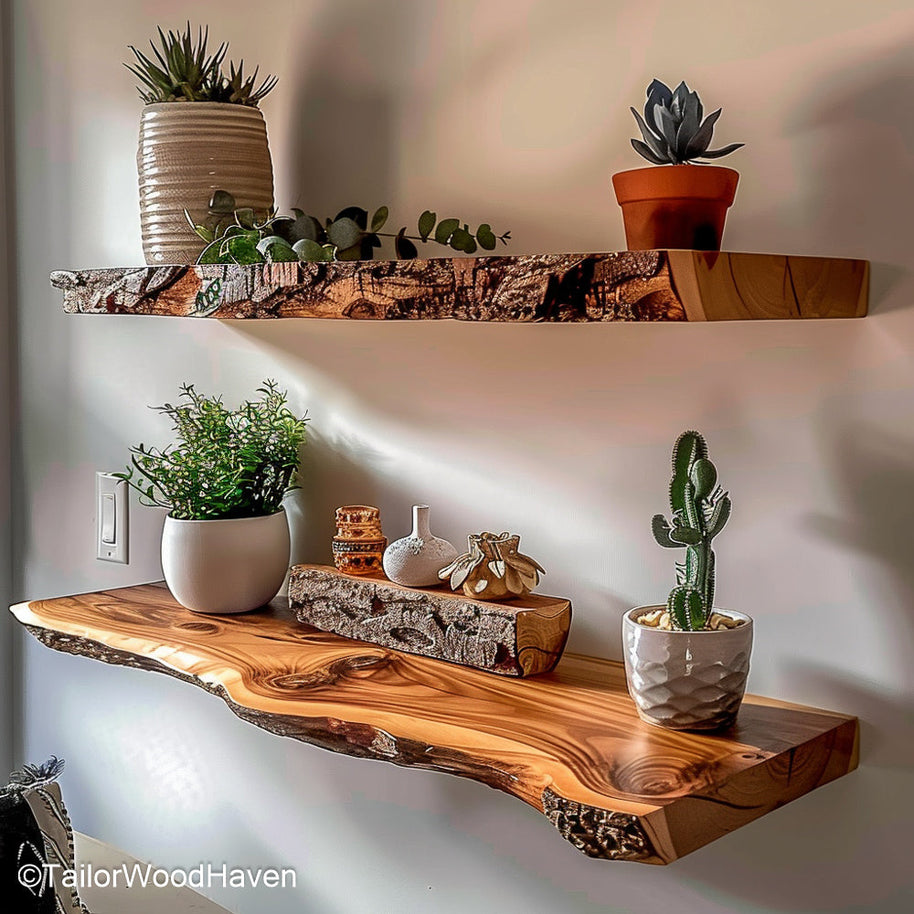
Understanding measurements is one thing, but what if you want to build your own shelves? Here’s a quick guide to ensure your shelves hang straight, secure, and stylish:
Choose the right wood: Solid wood shelves last longer and hold more weight.
Find the studs: Use a stud finder before drilling to ensure your shelf anchors securely.
Measure twice, drill once: Mark all your heights with painter’s tape and double-check levels.
Use hidden brackets: They give a clean, floating illusion that suits modern interiors.
Test with décor: Place items temporarily to check height balance before finalizing.
For easy installation and a uniform look, check out the 6 Floating Shelves Built. They come with floating brackets and are perfect for symmetrical layouts or vertical stacking.
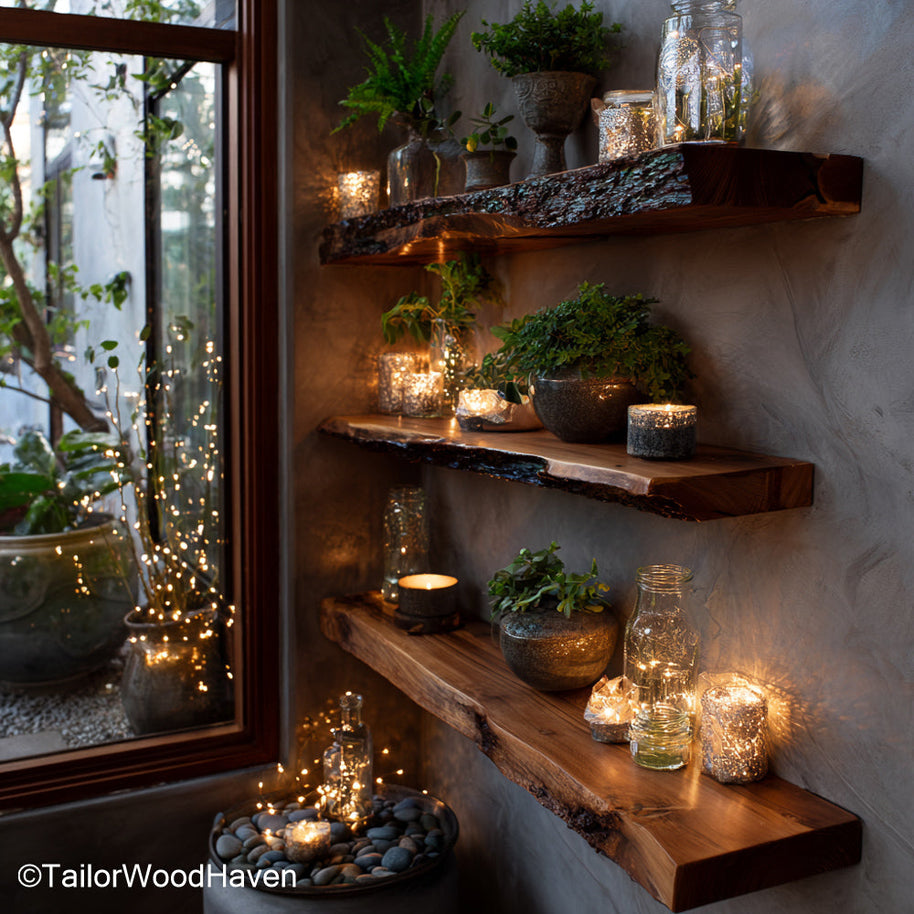
Many people hesitate to install floating shelves because they fear wall damage - especially renters. The good news? You can securely hang shelves without drilling massive holes.
Here are some simple methods:
Adhesive brackets: Ideal for lightweight décor and short-term setups.
Drywall anchors: Provide stability without deep drilling.
Toggle bolts: Perfect for heavier shelves and larger décor.
Command strips: Use them for mini decorative shelves holding under 5 lbs.
When planning how high should floating shelves be in living room, always factor in wall type. Drywall, plaster, and brick walls each require different installation methods.
If you’re unsure about your wall’s weight capacity, it’s best to test with one shelf first before committing to a full setup.
Around 10–15 inches above the back of your sofa works best. It keeps your décor eye-level and well-balanced with your seating area.
Yes, but you’ll need heavy-duty drywall anchors or toggle bolts to ensure safety and prevent sagging.
Use a level and painter’s tape to mark each position. Step back and check symmetry before drilling - this prevents alignment mistakes that can ruin the aesthetic.
Ultimately, deciding how high should floating shelves be in living room depends on your space, furniture, and what you plan to display. The goal is to blend functionality with design - keeping shelves eye-level, evenly spaced, and visually connected to surrounding furniture.


1 comments
Floating Shelves are a simple and stylish way to use empty wall space. They help keep things organized while adding a modern touch to any room. Perfect for displaying books, plants, or small décor items.