Unlike off-the-shelf options, a DIY approach ensures your shelves are perfectly tailored to your space, aesthetic, and functional demands.
Here's how to make floating shelves for kitchen with style and function in mind, transforming your culinary space with personalized flair.
Design First: Choose a Shelf Style That Matches Your Kitchen
Before cutting any wood, visualize the end result. The style of your floating kitchen shelves should seamlessly integrate with your existing kitchen decor. This initial design phase is crucial for a cohesive outcome.
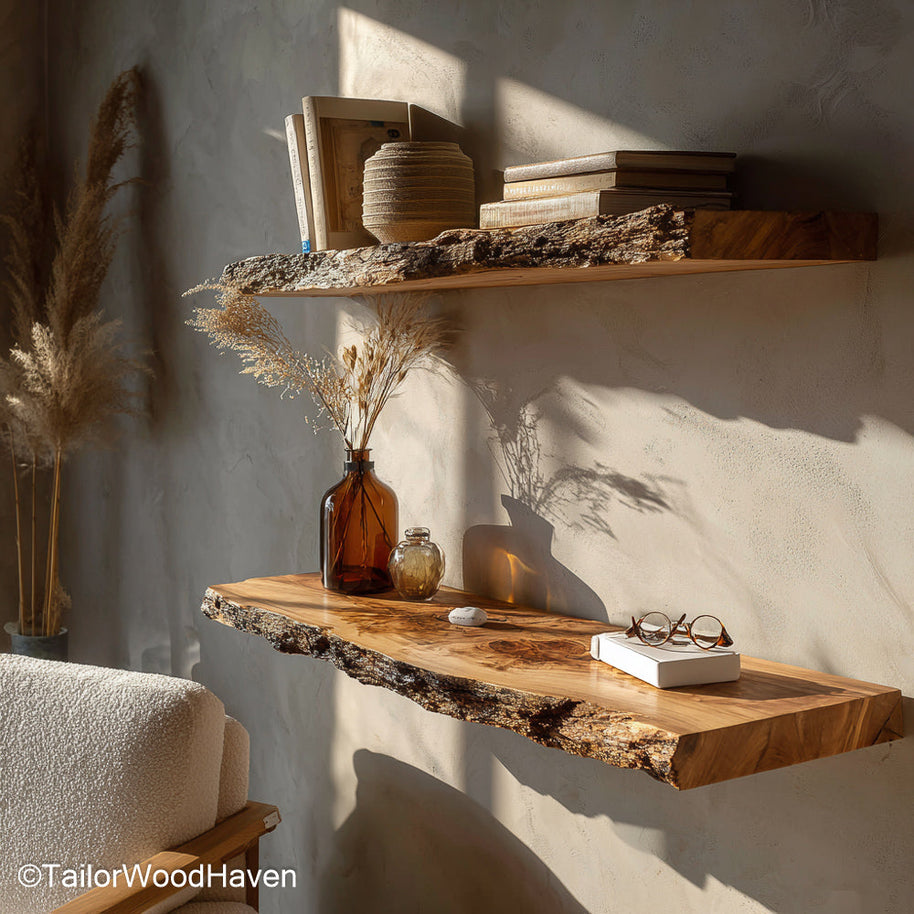
These heavy-duty floating shelves are crafted from solid wood with concealed brackets and reinforced hardware to ensure maximum weight capacity.
1. Scandinavian (light wood, minimal)
For a bright, airy, and uncluttered look, opt for light-colored woods like birch, maple, or white oak. The shelves should be relatively thin (around 1.5 inches) with clean, straight edges.
Finish them with a clear, matte sealant to preserve their natural light tone. This style is perfect for those asking how to make floating shelves for kitchen that enhance natural light and simplicity.
2. Farmhouse (thick, distressed timber)
If your kitchen leans towards a rustic or farmhouse aesthetic, choose thicker wood slabs (2−3 inches), perhaps even with a live edge.
Reclaimed barn wood, distressed pine, or rough-sawn oak work wonderfully. A natural stain or a simple wax finish will highlight the wood's texture and imperfections, adding warmth and character.
This approach dictates a specific answer to how to make floating shelves for kitchen with a country charm.
For an industrial vibe, consider darker woods like walnut or deeply stained pine. Pair these with visible metal pipe brackets or heavy-duty L-brackets in black or raw steel.
The contrast between the dark wood and metal creates a rugged yet refined look. This provides a strong visual statement on how to make floating shelves for kitchen with an urban edge.
How to Build Floating Shelves That Work for Your Cooking Space
Beyond aesthetics, functionality in a kitchen is paramount. Where you place your shelves, and what you plan to put on them, should influence your material choice and finish. This practical consideration is vital when learning how to make floating shelves for kitchen.

It features a clean, flush-mount design using internal concealed brackets, making it ideal for creating generous storage or display space in long hallways, bedrooms, or entryways.
1. Shelves Near the Stove: Heat-Resistant Finish
If your shelves will be near a stovetop, heat and grease are major concerns.
-
Material: Opt for dense hardwoods that are less likely to warp from fluctuating temperatures.
-
Finish: A heat-resistant polyurethane or lacquer is essential to protect the wood from direct heat and make grease splatter easier to clean. Avoid oil finishes here, as they can become sticky over time.
2. Over Sink: Waterproof Sealing
For shelves above the sink, moisture is the enemy. Getting the sealing right is a crucial step in learning how to make floating shelves for kitchen that last in high-humidity zones.
Finish: A marine-grade sealant or a high-quality polyurethane is critical to prevent water damage, swelling, and mold growth. Ensure all surfaces, especially the bottom edge, are thoroughly sealed.
3. Near Prep Areas: Durability Over Décor
Shelves in high-traffic prep zones will endure more bumps and scratches.
In Jenna Sue’s guide, she planned shelf placement based on how she used her kitchen daily - a practical approach for functional styling.
This foresight is key when figuring out how to make floating shelves for kitchen that genuinely serve your culinary habits.
Step-by-Step Build: From Raw Wood to Finished Shelf
Building your own floating kitchen shelves gives you control over the quality and strength. Here's a concise guide to the construction process.
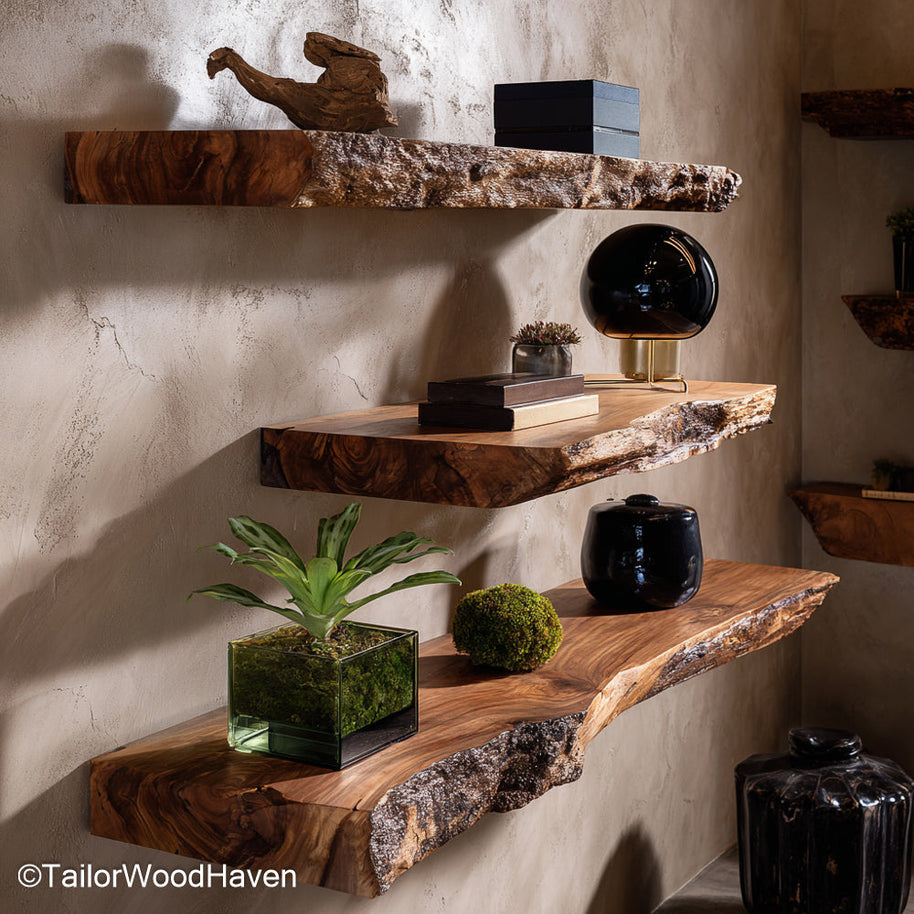
These reclaimed timber floating shelves are crafted from upcycled wood, featuring rich character and a wall-mounted form, perfect for rustic or eco-conscious homes.
1. Cut and Sand the Boards
Use a miter saw or circular saw to cut your chosen wood to the precise length and depth. For a professional look, ensure all cuts are perfectly square.
Start with an 80-grit sandpaper to shape and remove major imperfections, move to 120-grit for smoothing, and finish with 220-grit for a silky-smooth surface.
Smooth edges make the shelf look polished. This meticulous preparation is crucial for how to make floating shelves for kitchen that look store-bought.
2. Pre-drill for Hidden Bracket Mounting
The "floating" effect comes from invisible support.
Carefully mark the precise locations for your hidden bracket rods on the back edge of the shelf. Accuracy is paramount here.
Use a drill press (if available, for perfect alignment) or a handheld drill with a drilling guide to create clean, straight holes that match the diameter and depth of your bracket rods.
The holes must be deep enough to provide ample support. This step defines how to make floating shelves for kitchen appear truly suspended.
3. Install on Studs or Use Heavy-Duty Anchors
Secure installation is non-negotiable for kitchen shelves, especially when learning how to make floating shelves for kitchen.
Use a reliable stud finder to locate the wall studs. Mark their centers precisely. Your brackets must be anchored into these studs for maximum load capacity.
Using a level, mark a straight line for your shelf's bottom edge. Secure your hidden floating shelf brackets directly into the wall studs with long, heavy-duty structural screws.
Carefully slide the pre-drilled shelf onto the bracket rods. Use a rubber mallet to gently tap it into place for a snug fit.
If building a hollow box shelf, slide it over a securely mounted wood cleat and fasten it from the top/bottom with small finishing nails or screws.
For a clean install and modern appeal, Plank & Pillow’s tutorial walks through using floating brackets and precise leveling, providing excellent guidance on how to make floating shelves for kitchen with a professional finish.
Finishing Tips to Make Them Last
A beautiful shelf is only truly functional if it's durable. Proper finishing protects your investment and ensures your shelves can withstand the kitchen environment. These tips are vital for those learning how to make floating shelves for kitchen that endure.
1. Use Food-Safe Sealants
For shelves holding dishware or exposed to food prep:
Options like tung oil or mineral oil penetrate the wood, providing a natural, matte finish that is safe for incidental food contact.
Reapply periodically. Choosing the right finish is the final step in learning how to make floating shelves for kitchen that are safe and durable.
2. Avoid Overloading — Weight Distribution Tips
Even the strongest floating kitchen shelves have limits.
Store your heaviest items (stacks of plates, large canisters) on lower shelves and closer to the wall mounting points.
Be aware of the weight rating of your chosen brackets and wood. Understanding these limits is crucial after mastering how to make floating shelves for kitchen construction.
3. Routine Cleaning Tips for Open Shelves
Open shelves require more frequent dusting than closed cabinets.
For stubborn grease, use a mild dish soap solution. Ensure your finish is waterproof before using any wet cleaners.
Proper maintenance extends the life of your beautifully crafted floating kitchen shelves, proving that long-term care is vital to the success of how to make floating shelves for kitchen.
Ideas to Style Your Kitchen Floating Shelves
Now that you know how to make floating shelves for kitchen, it's time to bring them to life with thoughtful styling. This transforms them from mere storage into a decorative focal point.
1. Display vs. Storage: Finding a Balance
Mentally divide your shelf into three sections. Dedicate one section to pure decor (a small plant, a piece of art), one to functional storage (stacked bowls, spice jars), and one to a mix.
Display items you genuinely use and love. Group similar items (e.g., all white ceramic, or glass jars of pasta).
Don't overcrowd the shelves. Allow some breathing room for items to stand out. This enhances the "floating" aesthetic.
These rustic wall bookshelves are built from thick slabs with a worn, character-rich surface and an open floating design, perfect for farmhouse-style displays or storage.
2. Use Color-Blocked Dishware or Glass Jars
Consistency is key for a cohesive look.
If you have colorful dishware, use a single color scheme on your shelves for a dramatic visual impact.
Decant dry goods into matching clear glass or ceramic canisters. This instantly upgrades pantry staples into attractive display items.
3. Rotate Seasonally for a Fresh Look
Floating shelves are easy to refresh.
Swap out small decor items, colors, or plants to match seasons or holidays. This keeps your kitchen feeling fresh and current without a major overhaul. This final step showcases the full potential of learning how to make floating shelves for kitchen.
Display handmade pottery, vacation souvenirs, or family photos to infuse personal character into your floating kitchen shelves.
Learning how to make floating shelves for kitchen is a rewarding project that combines practical utility with customized style.
By selecting materials carefully and mastering secure installation, you can create durable, beautiful, and highly functional storage solutions, enjoying a more open, organized, and aesthetically pleasing kitchen space.
 Skip to content


 Farmhouse Floating Shelves – Perfect handcrafted furniture
 Farmhouse Narrow Console Table with Storage for Entryway or Living Room
 Custom Rustic Console – Natural Wood, Made to Order


