Wood wall decor and wood paneling both bring natural wood into a room, but they solve very different problems. Wood wall decor is an accent, a piece or grouping that adds a focal point to an otherwise finished wall. Wood paneling is a structural wall treatment, covering some or all of a wall's surface and changing the room's architecture rather than just accessorizing it. Here's a detailed, side-by-side look at how the two compare.
Quick Comparison: Wood Wall Decor vs Wood Paneling
|
Factor
|
Wood Wall Decor
|
Wood Paneling
|
|
Scope
|
A single piece or small grouping on an otherwise finished wall
|
Covers a full wall or large section of wall surface
|
|
Installation
|
Simple hanging hardware, done in minutes
|
Multi-day installation, often needs a contractor
|
|
Cost
|
Lower, ranges from modest to a statement-piece investment
|
Higher, materials plus labor across a full wall
|
|
Permanence
|
Fully removable and reversible
|
Semi-permanent; removal can damage the underlying wall
|
|
Flexibility
|
Easy to swap, move, or replace anytime
|
Committed look; changing it later is a real renovation
|
|
Visual impact
|
Adds a focal point or accent
|
Changes the entire room's architecture and feel
|
|
Resale consideration
|
Neutral to positive; easy for buyers to remove if not to taste
|
Can be a strong selling point or a turn-off depending on buyer taste
|
|
Best for
|
Renters, frequent redecorators, adding a focal point
|
Homeowners committing to a long-term architectural style
|
How Wood Wall Decor and Wood Paneling Compare, Category by Category
The table above gives the quick version. Here's what's actually behind each of those differences.
Scope and Scale
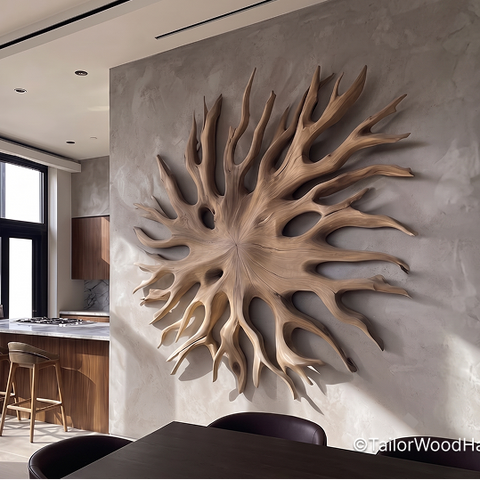
Wood wall decor operates at the scale of a single piece or a small grouped display, adding character to one section of one wall while leaving the rest of the room's surfaces untouched. It functions as an accent within a room that's already otherwise finished. For example, hanging a highly textured, standalone piece like the Flowing Silk Wave Wood Wall Panel for Modern Organic Interiors immediately creates a striking focal point without altering the underlying drywall.
Wood paneling operates at the scale of the wall itself, covering a large portion or the entirety of a wall's surface, sometimes an entire room. It's not an accent added to a finished space, it's part of finishing the space, changing the architectural character of the room rather than decorating within it.
Understanding the difference between an architectural feature and an accent piece
Installation
Wood wall decor installs with basic hanging hardware, a French cleat, wire, or sawtooth hangers, and most pieces go up in minutes once you've found the right spot and confirmed the wall can support the weight.
Wood paneling is a genuine construction project, typically involving measuring and cutting individual boards or panels, securing them to the wall framing, and finishing edges and corners cleanly. Larger or more complex paneling jobs, especially anything involving load-bearing considerations or extensive trim work, often call for a contractor rather than a weekend DIY effort.
Comparing basic hanging hardware against complex multi-day construction projects
Cost
Wood wall decor ranges from relatively affordable smaller pieces to significant investments for large, handcrafted statement art, but even at the higher end, the cost applies to one piece rather than an entire wall's worth of material and labor.
Wood paneling costs scale with the size of the wall or room being covered, factoring in both materials, which vary widely depending on wood species and panel style, and labor if you're not installing it yourself. A full-room paneling project is almost always a bigger financial commitment than even an expensive single piece of wall decor.
Permanence and Flexibility
Wood wall decor is entirely reversible. Taking it down leaves a wall in essentially its original condition, aside from a small nail hole or two, which makes it easy to update a room's look, move to a new space, or simply change your mind without any lasting commitment.
Wood paneling is a much more permanent decision. While it can technically be removed, doing so often damages the underlying wall surface, which then needs to be repaired or refinished, effectively turning "removal" into its own separate project. This makes paneling a longer-term commitment that's worth thinking through carefully before installing, since undoing it later isn't as simple as taking down a picture.
Evaluating reversible decor options against semi-permanent structural commitments
Visual Impact
Wood wall decor adds a focal point or an accent, drawing the eye to a specific spot without necessarily changing how the rest of the room reads. It's additive, layered on top of an already-finished space. Adding a deeply carved, dimensional artwork like the Eroded Canyon Wood Wall Sculpture for Organic Interiors introduces dramatic shadows and organic movement, instantly elevating a blank wall while keeping the room's foundational architecture intact.
Wood paneling changes the room's fundamental character, since it becomes part of the architecture itself rather than something added on top of it. A paneled wall shifts the whole feel of a room, warmer, more textured, more architecturally detailed, in a way that a single accent piece, however striking, generally can't replicate on its own.
>>> Read more: 20+ Carved Wood Wall Art For Living Room Ideas to Transform Your Space
Maintenance
Wood wall decor needs occasional dusting and, depending on the finish, periodic resealing, but the maintenance scope is limited to the piece itself.
Wood paneling requires the same general care, dusting and occasional refinishing, but applied across a much larger surface area, which means more time and material when maintenance is due. Paneling is also more exposed to everyday wear across a larger footprint, scuffs from furniture, handprints near light switches, and so on, simply because it covers more of the room.
The routine upkeep required for single pieces versus large paneled surfaces
Resale and Long-Term Considerations
Wood wall decor has essentially no impact on a home's resale value either way, since it's easily removed and doesn't affect the underlying structure or finish of the home.
Wood paneling can genuinely influence how buyers perceive a space, sometimes as a desirable, characterful architectural feature, and sometimes as an outdated or overly personal choice that a buyer would want to remove. This makes it a more consequential decision than wall decor if resale value is a consideration, since taste in paneling styles shifts over time in a way that a removable accent piece never has to account for.
>>> Read more: How to Mix Wood Wall Art with Other Decor: A Layering Guide
Which One Should You Choose?
If you want to add character and a focal point without a major renovation, or if you're renting, redecorate often, or simply aren't ready to commit to a permanent architectural change, wood wall decor is the lower-risk, more flexible option. If you're a homeowner planning to stay in a space long-term and want to fundamentally change a room's architectural feel, wood paneling delivers an impact that a single piece of decor can't match, at the cost of a bigger upfront investment and a much less reversible decision. Many rooms actually benefit from combining both, using paneling on one accent wall as the architectural backdrop and wood wall decor layered on top or on an adjacent wall as the focal point.
Making the final decision based on your budget timeline and homeowner status
Frequently Asked Questions About Wood Wall Decor vs Wood Paneling
A few questions come up often once people start comparing the two approaches directly.
Can I hang wood wall decor on a wall that already has wood paneling?
Yes, generally, as long as the paneling can support the weight of the hanging hardware, which is usually the case for standard picture hooks or a French cleat anchored into the wall studs behind the paneling rather than just the panel surface itself.
Is wood paneling a good idea for renters?
Usually not, given its semi-permanent nature and the potential for damage to the underlying wall upon removal. Wood wall decor is a far more practical choice for a rental, since it's fully reversible and leaves no lasting mark on the space.
Does wood paneling increase a home's value?
It can, particularly when it's a well-executed, timeless style like shiplap or board-and-batten in a room where it suits the architecture, but taste in paneling trends shifts over time, so its impact on resale value is less predictable than more universally neutral choices.
How long does wood paneling typically last compared to wall decor?
Both can last decades with proper care, but paneling, being part of the wall's structure, tends to stay in place far longer than any single piece of wall decor, which is often swapped out for a fresh look well before it would ever need replacing for wear reasons.
Is it more affordable to start with wall decor and add paneling later?
Generally, yes. Wood wall decor is a lower-cost, lower-commitment way to introduce wood into a space, and it's entirely possible to enjoy that look for years before deciding whether a bigger paneling project makes sense for the room down the line.
Wood wall decor and wood paneling both bring the same core material into a home, but at completely different scales of commitment. Wall decor offers flexibility, low cost, and easy reversibility, ideal for adding a focal point without changing a room's architecture. Wood paneling offers a far bigger visual and structural impact, at the cost of higher expense and a much more permanent decision. Choosing between them comes down to how much of a commitment you're ready to make, and plenty of the best-designed rooms end up using both.
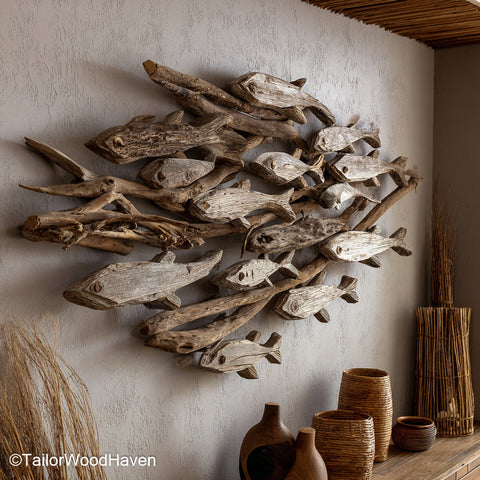
Looking for a wood wall decor piece to add character without a full renovation? Visit Tailor Wood Haven to explore our full range of handcrafted wood wall art, or browse the Carved Wood Wall Art, Driftwood Wall Art, and Wood Wall Art collections for statement pieces you can hang today.
|
TAILOR WOOD HAVEN
Address 1: 412 Palmetto Dr, Columbia, SC 29201
Address 2: 1201 Hillside Avenue, Victoria, British Columbia V8T 2B1, Canada
Address 3: Phu Thai Town, Hai Phong 03306, Vietnam
Call us: +1 (647)-608-1571
Email: hello@tailorwoodhaven.com
|
 Skip to content


 Farmhouse Floating Shelves – Perfect handcrafted furniture
 Farmhouse Narrow Console Table with Storage for Entryway or Living Room
 Custom Rustic Console – Natural Wood, Made to Order