Wood and metal sit at opposite ends of the material spectrum for wall art, one warm and organic, the other cool and structured, and that contrast is exactly why both remain popular choices for very different kinds of rooms. Neither is objectively better, but they perform differently in almost every practical category, from how they hold up outdoors to how much they weigh once you're ready to hang them. Here's a detailed, side-by-side look at how wood wall art and metal wall art actually compare.
|
Factor
|
Wood Wall Art
|
Metal Wall Art
|
|
Look and feel
|
Warm, organic, natural grain and texture
|
Cool, sleek, structured or industrial
|
|
Durability
|
Very durable if properly sealed
|
Extremely durable; resists impact and wear
|
|
Weather resistance
|
Poor to moderate; needs full sealing, indoor use only
|
Good to excellent; many finishes suit outdoor use
|
|
Weight
|
Moderate to heavy, depending on size
|
Can be lightweight (thin metal) or very heavy (solid metal)
|
|
Maintenance
|
Occasional dusting; resealing every few years
|
Minimal; occasional dusting and rust checks on lower-grade finishes
|
|
Humidity resistance
|
Good only if fully sealed on all sides
|
Excellent, aside from risk of rust on untreated metal
|
|
Style fit
|
Rustic, boho, coastal, organic modern
|
Industrial, modern, minimalist, contemporary
|
|
Typical cost
|
Moderate to high, reflects craftsmanship
|
Moderate to high, depending on metal type and finish
|
|
Sound and light
|
Absorbs sound slightly; matte, non-reflective
|
Can be reflective or glossy; adds visual "shine" to a room
|
The table above gives the quick version. Here's what's actually behind each of those differences.
Look and Feel
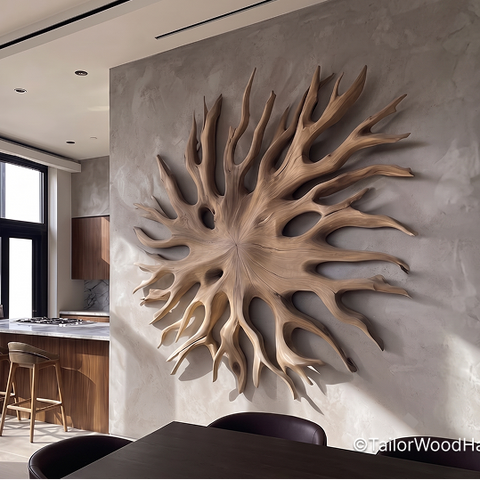
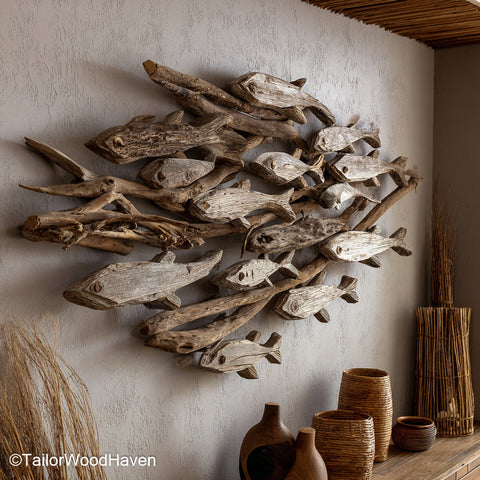
Wood wall art brings warmth and organic irregularity to a wall, since grain, knots, and natural color variation mean no two pieces look quite identical, even within the same design. It tends to soften a room and add a sense of nature and craftsmanship.
Metal wall art brings a cooler, more structured presence, with clean edges, consistent finish, and often a bit of shine or reflectivity depending on the metal and treatment used. It tends to sharpen a room's look and reads as more deliberate and architectural rather than organic.
Understanding the impact of organic warmth versus cool structure
Durability
Wood wall art, properly sealed, holds up well to years of normal handling and indoor display, though it remains vulnerable to warping, cracking, and fading if exposed to humidity swings or direct sunlight over time.
Metal wall art is generally more physically durable than wood, resistant to dents, scratches, and general wear in a way that wood simply can't match. Its main vulnerability is corrosion or rust on lower-quality or untreated metals, particularly in humid or outdoor conditions, though many finishes are specifically treated to resist this.
Weather and Humidity Resistance
Wood wall art is best kept indoors, in a reasonably stable, humidity-controlled environment. Even a well-sealed piece isn't generally recommended for true outdoor exposure, since sun, rain, and temperature swings will eventually degrade even a good finish over years of direct weather.
Metal wall art handles moisture and weather considerably better, and many metal pieces are specifically designed and finished for outdoor use, on a patio, garden wall, or covered porch, without the warping or cracking risk that wood faces in the same conditions. However, if you are decorating a covered, climate-controlled sunroom or a well-protected indoor patio, choosing a dimensional piece like the Layered Wave Wood Wall Panel with Natural Wood Tones can successfully bridge the gap between nature-inspired motifs and indoor warmth. Untreated or lower-grade metal can still rust over time outdoors, so it's worth checking a piece's specific outdoor rating before committing to that kind of placement.
Determining which pieces can survive outdoor exposure and damp rooms
>>> Read more: How to Clean Driftwood Wall Art: Safe Maintenance & Care Guide
Weight and Mounting
Wood wall art ranges from fairly light for a flat, thin panel to quite heavy for a large, dimensional, or layered piece, generally requiring sturdier mounting hardware, like a French cleat, as size and thickness increase.
Metal wall art varies even more widely, since thin sheet metal cutouts can be remarkably lightweight, while solid or heavily welded metal sculptures can be some of the heaviest wall art available. It's worth checking a specific piece's actual weight before assuming metal is automatically lighter than wood, since that assumption doesn't always hold.
Maintenance
Wood wall art needs periodic dusting and a fresh coat of sealant, oil, or wax every one to several years, depending on the finish, to keep it protected and looking its best.
Metal wall art generally needs less ongoing maintenance, mainly occasional dusting, though it's worth periodically checking lower-quality or untreated pieces for early signs of rust or corrosion, particularly in humid rooms or if the piece has any outdoor exposure.
The routine upkeep required to keep your artwork looking its best
Style and Room Fit
Wood wall art suits rustic, boho, coastal, farmhouse, and organic modern interiors especially well, where its natural texture and warmth complement a room's overall softness and material variety. For example, anchoring an organic modern living room with the Organic Fissure Wood Wall Sculpture for Modern Interiors instantly reinforces a relaxed, tactile aesthetic through deep reliefs and raw wood grain.
Metal wall art fits industrial, contemporary, minimalist, and modern spaces particularly well, where its clean lines and structured finish align with a room already built around sleeker, harder-edged materials like glass, concrete, or steel fixtures.
Matching the aesthetic strengths of both mediums to your interior design
>>> Read more: How to Hang Metal Wall Art: A Step-by-Step Installation Guide
Cost
Wood wall art, especially handcrafted or carved pieces, typically reflects the cost of skilled labor and material sourcing, and pricing varies widely based on size, wood species, and craftsmanship.
Metal wall art pricing also varies considerably depending on the type of metal, the fabrication method, welded and hand-finished pieces cost more than mass-produced stamped metal, and the overall size and complexity of the design. Neither material is consistently cheaper than the other across the board; it comes down to the specific piece and how it was made.
Which One Should You Choose?
If your room leans warm, organic, rustic, or coastal, or you want a piece that adds texture and a handcrafted feel, wood wall art is generally the better fit. If your room leans industrial, modern, or minimalist, or you need a piece that can handle a covered outdoor space or a more humid environment, metal wall art tends to be the more practical and durable choice. Plenty of rooms successfully combine both, using a wood piece for warmth in one area and a metal accent for contrast and structure elsewhere, since the two materials actually complement each other well when used together rather than treated as an either-or decision.
Making the final decision based on your priorities and room conditions
A few questions come up often once people start comparing the two materials directly.
Which material is better for outdoor spaces?
Metal, generally, especially finishes specifically rated for outdoor or weather exposure. Wood wall art is better suited to indoor display, since even a well-sealed piece will degrade faster than metal under direct sun, rain, and temperature swings over time.
Not always. It depends entirely on the specific piece, since thin sheet metal cutouts can be lighter than a thick wood panel, while a solid or heavily welded metal sculpture can weigh considerably more than a comparably sized wood piece. Always check a specific item's actual weight rather than assuming based on material alone.
Yes, and it's a common and effective pairing, since the contrast between wood's warmth and metal's structure often adds visual interest rather than clashing. A wood piece paired with black metal hardware or a nearby metal accent piece is a popular combination specifically because the two materials play off each other well.
Lower-quality or untreated metal can rust, particularly in humid environments or with any outdoor exposure, while properly finished metal, powder-coated, galvanized, or made from naturally rust-resistant metals like aluminum or stainless steel, resists corrosion much better over the long term.
Which material holds up better in a humid room, like a bathroom?
Metal generally holds up better in ongoing humidity than wood, aside from the risk of rust on lower-quality finishes. A fully sealed wood piece can still work in a well-ventilated humid room, but metal has fewer vulnerabilities to ambient moisture overall.
Wood wall art and metal wall art bring genuinely different qualities to a room, warmth and organic texture from wood, structure and durability from metal, and the right choice depends more on your room's existing style and practical needs than on one material being universally superior. For humid or outdoor-adjacent spaces, or a more industrial and modern look, metal tends to have the edge. For warmth, texture, and a natural, handcrafted feel, wood remains hard to beat.
Leaning toward the warmth and texture of wood? Visit Tailor Wood Haven to explore our full range of handcrafted wood wall art, or browse the Carved Wood Wall Art, Driftwood Wall Art, and Wood Wall Art collections for pieces built to bring lasting, natural character to your walls.
|
TAILOR WOOD HAVEN
Address 1: 412 Palmetto Dr, Columbia, SC 29201
Address 2: 1201 Hillside Avenue, Victoria, British Columbia V8T 2B1, Canada
Address 3: Phu Thai Town, Hai Phong 03306, Vietnam
Call us: +1 (647)-608-1571
Email: hello@tailorwoodhaven.com
|
 Skip to content


 Farmhouse Floating Shelves – Perfect handcrafted furniture
 Farmhouse Narrow Console Table with Storage for Entryway or Living Room
 Custom Rustic Console – Natural Wood, Made to Order