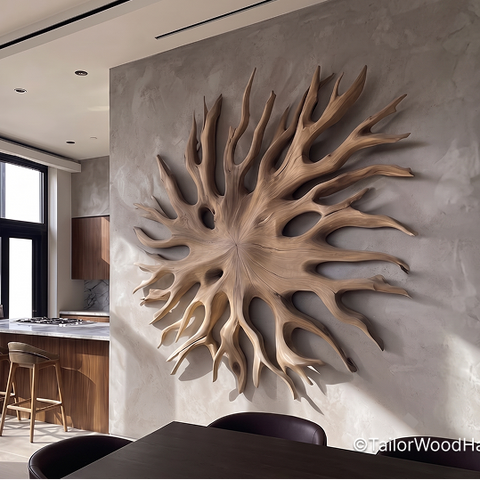
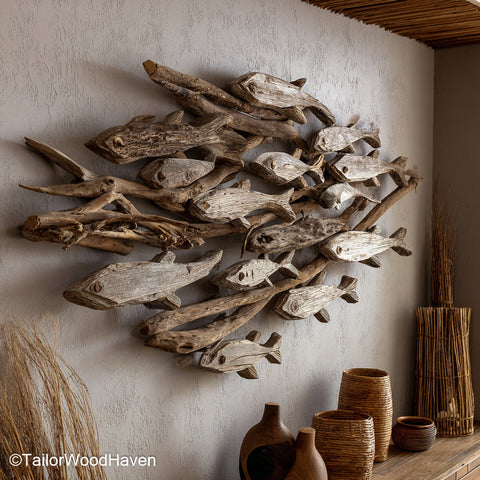
Wood wall art and framed art solve the same basic problem, filling a wall with something worth looking at, but they approach it in almost opposite ways. Framed art centers on an image behind glass or acrylic, protected and presented with a border, while wood wall art is typically unframed by design, letting the material itself, its shape, grain, and texture, be the entire piece. Here's a detailed, side-by-side look at how the two actually compare.
Quick Comparison: Wood Wall Art vs Framed Art
|
Factor
|
Wood Wall Art
|
Framed Art
|
|
What it displays
|
The wood material itself: shape, grain, carving, texture
|
A printed, painted, or photographic image behind glass or a border
|
|
Texture
|
Dimensional, tactile, varies by piece
|
Flat image; texture limited to the frame itself
|
|
Durability
|
Very durable if properly sealed
|
Glass can crack or shatter; paper/print vulnerable to fading
|
|
Weight
|
Moderate to heavy
|
Light to moderate, heavier with glass
|
|
Maintenance
|
Occasional dusting; resealing every few years
|
Glass cleaning; keep print away from direct sun to prevent fading
|
|
Customization
|
Limited to available shapes/designs; custom orders common
|
Nearly unlimited image, print, and frame style options
|
|
Typical cost
|
Moderate to high, reflects craftsmanship
|
Wide range, from inexpensive prints to costly framing and original art
|
|
Style fit
|
Rustic, organic, boho, modern-natural
|
Traditional, gallery-style, virtually any aesthetic depending on image and frame
|
|
Breakability
|
Low; solid material
|
Higher; glass or acrylic can break in shipping or from impact
|
How Wood Wall Art and Framed Art Compare, Category by Category
The table above gives the quick version. Here's what's actually behind each of those differences.
What It Displays and How It Reads on a Wall
Wood wall art is the material itself on display, whether that's a carved design, a driftwood sculpture, or a layered wood panel. There's no separate image being protected or presented; the shape, grain, and texture of the wood are the entire visual content of the piece.
Framed art exists to display and protect something else, a print, a painting, a photograph, with the frame and glass serving a supporting role around that central image. This makes framed art fundamentally about the picture, while wood wall art is fundamentally about the material.
Understanding the difference between raw material aesthetics and encased imagery
Texture and Dimension
Wood wall art is naturally three-dimensional, catching light and shadow differently depending on the angle and time of day, which gives it a tactile quality that changes subtly as you move around a room. Adding a heavily textured, sculptural focal point like the Abstract 3D Wood Wall Art with Layered Relief brings unmistakable physical depth to a space that flat prints cannot replicate.
Framed art is flat by comparison, even when the image itself has visual texture, like a heavily textured oil painting, since the glass or acrylic covering it creates a smooth, uniform surface plane regardless of what's happening in the image underneath. Any dimension in framed art typically comes from the frame's molding rather than the artwork itself.
Durability
Wood wall art, properly sealed, holds up to years of normal handling without much risk, and its main vulnerabilities, humidity and direct sunlight, are manageable with sensible placement and care.
Framed art carries a different kind of fragility: the glass or acrylic covering can crack or shatter from an impact or a rough move, and the print, photograph, or painting underneath can fade, foxing, or discolor over time, particularly if it isn't UV-protective glass or kept out of direct sunlight. Framed pieces also tend to trap moisture behind the glass in humid conditions, which can cause its own kind of damage over time.
Comparing shatter risks fading and long-term environmental vulnerabilities
Maintenance
Wood wall art needs periodic dusting and an occasional refresh of oil, wax, or sealant, but otherwise requires little specialized care.
Framed art needs the glass cleaned periodically, ideally with a glass-safe cleaner rather than anything applied directly to unprotected print material, and benefits from an occasional check behind the frame for any moisture buildup or foxing on the print itself, particularly in a humid room.
>>> Read more: How to Prevent Wood Wall Art from Warping
Customization and Variety
Wood wall art offers real variety in shape, wood species, and carving or layering style, but it's inherently more limited than framed art in terms of specific imagery, since the material itself is the design rather than a picture that can show literally anything.
Framed art offers close to unlimited flexibility, since any image, photograph, illustration, or painting can be framed, and the frame style itself, from thin modern metal to ornate traditional wood, adds another full layer of customization on top of the image choice.
Matching versatile framing options against unique organic wood shapes
Cost
Wood wall art, especially handcrafted or carved pieces, reflects the cost of skilled labor and material sourcing, with pricing generally rising alongside size and complexity of the carving or design.
Framed art spans an enormous price range, from inexpensive mass-produced prints in basic frames to museum-quality framing and original artwork that can cost significantly more than most wood wall art. The framing itself, glass type, mat board, molding quality, often accounts for a meaningful portion of the total cost, sometimes more than the art inside it.
Style and Room Fit
Wood wall art suits rustic, boho, coastal, farmhouse, and organic modern interiors particularly well, where natural material and texture align with the room's overall aesthetic.
Framed art works across virtually any style, since the image and frame combination can be tailored to match a traditional, contemporary, minimalist, or eclectic room equally well. This flexibility is one of framed art's biggest practical advantages over wood wall art.
Aligning dimensional rustic charm and classic gallery aesthetics with your interior
>>> Read more: How to Mix Wood Wall Art with Other Decor: A Layering Guide
Which One Should You Choose?
If you want a specific image, painting, or photograph as the focus of a wall, framed art is the natural choice, since it's built specifically to showcase and protect that picture. If you want texture, material warmth, and a piece that functions more like a sculptural object than a picture, wood wall art brings a quality framed art generally can't replicate.
Many rooms use both effectively, letting framed art handle color, imagery, and personal photographs while a wood piece adds textural depth and serves as a dimensional anchor elsewhere on the same wall. Incorporating an architectural statement like the Layered Dune Wood Wall Art with Framed Relief alongside traditional frames creates a beautifully curated, high-contrast gallery arrangement.
Making the final decision based on your priorities for imagery or texture
Frequently Asked Questions About Wood Wall Art vs Framed Art
A few questions come up often once people start comparing the two directly.
Is wood wall art more durable than framed art?
Generally, yes, mainly because framed art includes glass or acrylic that can crack or shatter, along with a print or painting surface vulnerable to fading and moisture. Properly sealed wood is a solid, single material without that same layered vulnerability.
Can wood wall art display a specific image the way framed art can?
Not typically in the same way. Wood wall art is generally centered on shape, texture, and carved or dimensional design rather than a literal picture, while framed art is specifically built to showcase a chosen image. Some wood-burning or engraving techniques can render simple images onto wood, but it's a different visual effect than a printed or painted picture behind glass.
Which is easier to hang, wood wall art or framed art?
It depends on the specific piece, but framed art is often lighter, especially in a simple frame with basic glass, and typically hangs with standard wire or sawtooth hardware. Larger or more dimensional wood pieces tend to be heavier and may need sturdier mounting like a French cleat.
Does framed art need more protection from sunlight than wood?
Both benefit from staying out of direct, prolonged sunlight, but framed art with a standard, non-UV-protective glass can be particularly vulnerable, since sunlight fades the print or painting underneath while also potentially damaging the glass's seal over time. UV-protective glass reduces this risk significantly if it's an option when framing.
Can wood wall art and framed art be combined in the same gallery wall?
Yes, and it's a common, effective pairing, since the contrast between a flat, framed image and a dimensional wood piece adds visual variety and depth to a mixed wall rather than making everything compete for the same kind of attention.
Wood wall art and framed art serve genuinely different purposes: framed art protects and showcases a chosen image with nearly unlimited customization, while wood wall art turns the material itself into the artwork, offering texture and dimension that a flat, framed picture can't match. Neither replaces the other so much as complements it, and the right choice, or the right mix of both, comes down to whether you want a specific picture on the wall or a piece defined by its material and shape.
Leaning toward the warmth and texture of wood? Visit Tailor Wood Haven to explore our full range of handcrafted wood wall art, or browse the Carved Wood Wall Art, Driftwood Wall Art, and Wood Wall Art collections for pieces built to bring lasting, dimensional character to your walls.
|
TAILOR WOOD HAVEN
Address 1: 412 Palmetto Dr, Columbia, SC 29201
Address 2: 1201 Hillside Avenue, Victoria, British Columbia V8T 2B1, Canada
Address 3: Phu Thai Town, Hai Phong 03306, Vietnam
Call us: +1 (647)-608-1571
Email: hello@tailorwoodhaven.com
|
 Skip to content


 Farmhouse Floating Shelves – Perfect handcrafted furniture
 Farmhouse Narrow Console Table with Storage for Entryway or Living Room
 Custom Rustic Console – Natural Wood, Made to Order