The paint you choose shapes almost everything about how a piece of wall art turns out, from how long it takes to dry to how vibrant the colors stay years down the line. Beginners often default to whatever's cheapest or most familiar, but each type of paint has real trade-offs worth knowing before you start, especially if the piece is going to hang somewhere for years rather than sit in a sketchbook. Here's a practical breakdown of the main paint types used for wall art, and how to think about which one fits your project.
Types of Paint for Wall Art
There are five main types of paint worth considering for a wall art project, and each one comes with a distinct look, working process, and set of trade-offs.
Acrylic Paint for Wall Art
Acrylic is the most popular choice for DIY wall art, and for good reason. It dries fast, usually within 20 to 30 minutes for a thin layer, which makes it forgiving for beginners who want to build up layers without waiting long between them. It cleans up with just soap and water while wet, doesn't require any special solvents, and works on a wide range of surfaces, including canvas, wood, and paper.
The trade-off is that fast drying time can also work against you if you're trying to blend colors smoothly, since acrylic sets up before oil paint would, giving you a shorter working window per layer. It's a strong default choice for most wall art projects, particularly anything bold, graphic, or layered, and it's the paint most commonly recommended for techniques like acrylic pouring.
The fast-drying and versatile default choice for most DIY projects
Oil Paint for Wall Art
Oil paint is the traditional choice for fine art, prized for its rich color, smooth blendability, and long open working time, often hours rather than minutes, which makes it easier to soften edges and mix colors directly on the surface. The depth and luminosity oil paint achieves is genuinely hard to replicate with other mediums, which is part of why it remains a favorite for portrait and landscape painting.
The downsides are real, though. Oil paint takes days to touch-dry and can take weeks or months to fully cure, and it requires solvents like mineral spirits or turpentine for thinning and cleanup, which adds cost, ventilation requirements, and a steeper learning curve. It's a strong choice if you're comfortable with a slower process and want the richest possible color depth, but it's a less practical starting point for a first wall art project.
Traditional rich colors with a longer working time and steeper learning curve
Watercolor for Wall Art
Watercolor produces a light, translucent look that acrylic and oil can't easily match, since the paper shows through the pigment rather than being fully covered. It's well suited to looser, more atmospheric styles, botanical illustrations, and pieces that lean into soft color washes rather than bold, opaque coverage.
Watercolor is unforgiving in a different way than other paints, since mistakes are harder to paint over or correct once the color has soaked into the paper. It also requires watercolor-specific paper, not canvas, since standard paper buckles and warps under the amount of water involved. For wall art specifically, a finished watercolor piece typically needs to be framed under glass to protect it, since the paper and pigment are more vulnerable to moisture, dust, and UV fading than a sealed acrylic or oil piece would be.
Translucent and atmospheric washes that require specific paper and framing
Gouache for Wall Art
Gouache sits somewhere between watercolor and acrylic, using a similar water-based formula to watercolor but with more pigment and an additive that makes it opaque rather than translucent. It dries to a matte, flat finish and can be reactivated with water even after drying, which makes it easy to adjust or blend even after a layer has set, something neither watercolor nor acrylic really allows.
Gouache has become a popular choice for bold, flat-color illustration-style wall art, since it produces clean, saturated color without the sheen of acrylic. Like watercolor, gouache pieces generally need to be framed under glass for long-term protection, since the paint remains somewhat water-soluble even after it's fully dry.
An opaque and matte water-based option for bold illustrative designs
Spray Paint for Wall Art
Spray paint is less common for detailed wall art but genuinely useful for large-scale abstract pieces, stenciled designs, or bold background layers that would take much longer to achieve with a brush. It covers large areas quickly and evenly, and works well combined with stencils or tape for clean graphic shapes.
Ventilation is non-negotiable with spray paint, and it's harder to control for fine detail than a brush-based paint, so it tends to work best as a technique layered with other paint types rather than a sole medium for a detailed piece.
Quick coverage for large backgrounds and clean stenciled graphics
>>> Read more: Driftwood Art: One of a Kind Beauty Shaped By the Ocean
Best Paint for Wall Art by Surface
The surface you're painting on narrows the choice almost as much as your style preference does.
- Canvas works well with acrylic paint for canvas art or oil, both of which are formulated to flex slightly with the canvas without cracking over time
-
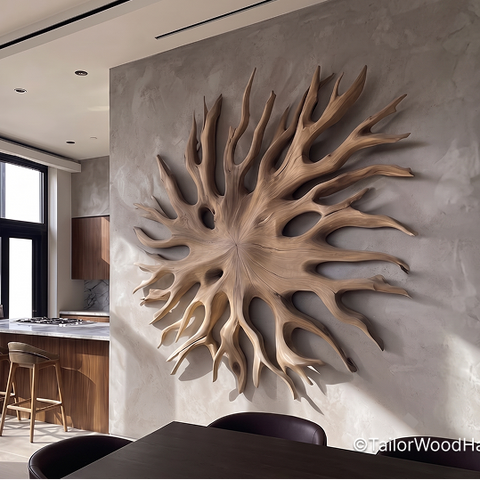
Wood takes acrylic paint well with a primed surface, and also works with oil paint, though wood needs to be sealed first to prevent the paint from soaking in unevenly. Of course, you can always skip the primer and paint altogether by showcasing the raw material itself with a dimensional piece like the Framed Driftwood Tree Wall Sculpture in Natural Solid Wood
- Paper is the only real option for watercolor and works well with gouache too, but standard paper isn't suited to heavier paints like acrylic or oil without warping
- Raw or unfinished wood benefits from a coat of gesso or primer before painting with any medium, since it gives the paint a consistent surface to grip rather than absorbing unevenly into bare wood grain
Matching your chosen medium to the right canvas wood or paper foundation
Choosing the Best Paint for Wall Art Based on Experience Level
If you're new to painting and want a forgiving, low-cost entry point, acrylic is almost always the right starting place, since it's fast-drying, easy to correct, and works across the widest range of surfaces. Watercolor and gouache are good next steps if you're drawn to a softer, more illustrative style and don't mind the extra care that framing under glass requires. Oil paint is worth exploring once you have some experience already, since the slower process and solvent requirements have a real learning curve that can be discouraging for a first project.
Recommendations for beginners and when to step up to more complex paints
Frequently Asked Questions About Paint for Wall Art
A few questions come up often once people start deciding which paint to buy for a wall art project.
Can I mix paint types on the same piece?
Generally, acrylic can be layered over dried watercolor or gouache without issue, since it's more flexible and forgiving about what's underneath. Oil paint, however, should never be applied under acrylic, since oil and water-based paints don't bond well together and the oil layer can cause cracking or peeling over time if applied first.
Do I need to seal a painting after it's finished?
Acrylic and oil paintings benefit from a varnish or sealant once fully cured, both to protect the surface and to even out any sheen differences between areas of thick and thin paint. Watercolor and gouache pieces are typically protected by framing under glass instead, since a liquid sealant can disturb the water-soluble pigment.
Which paint holds up best to sunlight over time?
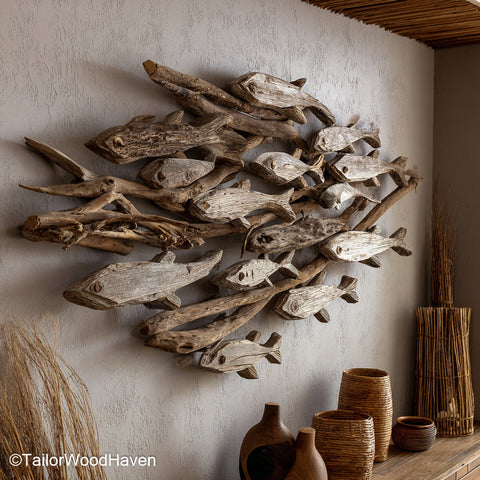
Acrylic and oil paints, especially higher-quality artist-grade formulas, tend to resist fading better than watercolor and gouache, which are more vulnerable to UV exposure due to their more delicate, water-soluble pigments. Regardless of paint type, keeping any finished piece out of direct, prolonged sunlight extends its color life significantly. If you prefer to avoid the worry of fading pigments entirely, decorating with unpainted, highly textured pieces like the Handcrafted Driftwood Fish Shoal Wall Art in Natural Wood brings lasting visual interest to a sunny room through natural shadows and wood grain rather than applied color.
Is craft paint the same as artist-grade acrylic?
Not quite. Craft paint is generally thinner, less pigmented, and less lightfast than artist-grade acrylic, which makes it fine for smaller decorative projects but less ideal for a piece meant to hold its color and finish over many years on display.
There's no single best paint for wall art, only the best fit for your surface, your style, and how much patience you have for drying time and cleanup. Acrylic remains the most practical all-around choice for most DIY projects, while oil, watercolor, and gouache each open up a different look and come with their own set of trade-offs worth knowing before you commit a canvas, panel, or sheet of paper to one medium over another.
Prefer skipping the paint altogether for something with natural texture built right in? Visit Tailor Wood Haven to explore our full range of handcrafted wood wall art, or browse the Carved Wood Wall Art, Driftwood Wall Art, and Wood Wall Art collections for pieces where the wood grain itself is the color and texture.
|
TAILOR WOOD HAVEN
Address 1: 412 Palmetto Dr, Columbia, SC 29201
Address 2: 1201 Hillside Avenue, Victoria, British Columbia V8T 2B1, Canada
Address 3: Phu Thai Town, Hai Phong 03306, Vietnam
Call us: +1 (647)-608-1571
Email: hello@tailorwoodhaven.com
|
 Skip to content


 Farmhouse Floating Shelves – Perfect handcrafted furniture
 Farmhouse Narrow Console Table with Storage for Entryway or Living Room
 Custom Rustic Console – Natural Wood, Made to Order