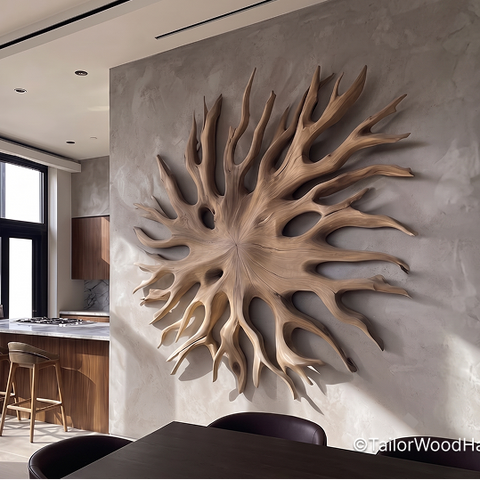
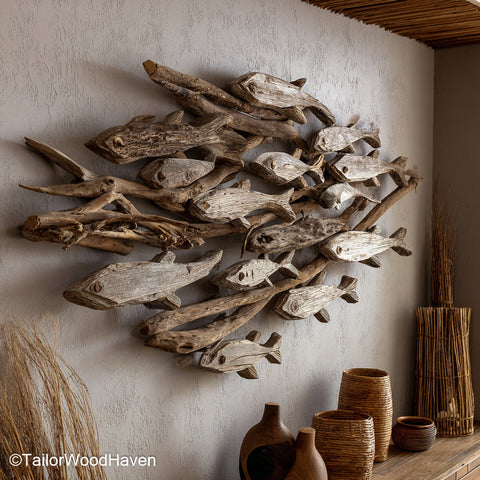
Painted and stained are the two most common ways to finish wood wall art, and the choice between them shapes almost everything about how a piece looks and holds up over time. Stain penetrates the wood and lets the natural grain show through, while paint sits on the surface and can cover grain entirely in favor of solid, consistent color. Neither is better across the board, but they perform very differently depending on your design goals, the wood you're working with, and how much upkeep you're willing to do. Here's a detailed look at how the two compare.
Quick Comparison: Painted vs Stained Wood Wall Art
|
Factor
|
Painted
|
Stained
|
|
Grain visibility
|
Hidden or mostly hidden
|
Visible, often enhanced
|
|
Color range
|
Nearly unlimited
|
Limited to wood-tone shades, unless tinted
|
|
Application difficulty
|
More forgiving for solid coverage, harder for a smooth finish
|
Requires even technique to avoid blotching
|
|
Durability
|
Can chip or peel over time
|
Penetrates wood; less prone to chipping
|
|
Touch-ups
|
Visible unless color matched precisely
|
Blends more easily into surrounding wood
|
|
Best for
|
Bold, graphic, or uniform designs
|
Rustic, natural, or grain-forward designs
|
|
Hiding wood imperfections
|
Covers mismatched wood tones and minor flaws well
|
Shows imperfections more, since it doesn't hide the surface
|
|
Typical maintenance
|
Occasional touch-up of chips; repaint over years
|
Reapply protective topcoat periodically
|
How Painted and Stained Wood Wall Art Compare, Category by Category
The table above gives the quick version. Here's what's actually behind each of those differences.
Appearance and Grain Visibility
Painted wood wall art covers the surface with solid, opaque color, which means the wood's natural grain pattern is mostly or entirely hidden beneath the paint layer. This gives a cleaner, more graphic look, well suited to bold colors, crisp geometric patterns, or a piece meant to coordinate precisely with a room's existing palette.
Stained wood wall art penetrates into the wood fibers rather than sitting on top, which means the grain, knots, and natural color variation remain visible, often enhanced rather than hidden. This is the better choice whenever showing off the wood itself, rather than covering it, is the point of the piece.
>>> Read more: How to Make Wall Art Look Nice in a Bedroom
Color Range and Customization
Painted finishes offer close to unlimited color options, since any paint color can be mixed or matched to a specific need, including colors that don't exist naturally in wood at all, like bright blues, pinks, or pure white.
Stained finishes are limited to a range of wood-tone shades, from pale honey to deep espresso, unless a tinted or colored stain is used to push the color further from wood's natural palette. Even tinted stains still let some grain show through, which caps how far the color can diverge from a natural wood look.
Matching room palettes precisely with paint versus embracing natural timber shades
Application and Technique
Painted finishes are relatively forgiving for achieving solid, even coverage, since multiple coats can build up consistent color even over an uneven or blotchy base. Getting a perfectly smooth painted surface without brush marks does take some technique, though, particularly on a larger piece.
Stained finishes require more attention to even application, since certain woods, pine, birch, and maple especially, absorb stain unevenly and can develop a blotchy, inconsistent appearance without a pre-stain conditioner. Timing also matters more with stain, since how long it sits before being wiped off directly controls the final color depth.
Durability and Wear
Painted surfaces can chip, scratch, or peel over time, particularly at edges and corners that see more handling, and once a chip happens, the bare wood or undercoat beneath becomes visible in a way that calls attention to the damage.
Stained finishes, having penetrated into the wood rather than sitting on top, don't chip or peel the same way, since there's no separate paint layer to flake off. A stained surface can still show wear through the topcoat applied over it, but the color itself tends to hold up with less visible damage than a chipped paint surface would.
Preventing chipped corners on painted surfaces and preserving penetrated wood stains
Touch-Ups and Repairs
Painted touch-ups are tricky to blend seamlessly, since matching a specific paint color and sheen exactly, especially after the original paint has aged or faded slightly, often leaves a touch-up spot that's subtly different from the surrounding area.
Stained touch-ups blend more naturally, since reapplying stain to a repaired or sanded spot tends to integrate with the surrounding wood more smoothly than paint does, particularly if the repair follows the same wood grain direction.
Hiding Imperfections vs Showing Them
Painted finishes are the better choice for wood with mismatched tones, visible repairs, or minor surface flaws, since opaque color covers inconsistencies that would otherwise show through a clear or stained finish.
Stained finishes do the opposite, letting every grain variation, knot, and surface imperfection remain visible, even adding character for some designs but requiring more careful wood selection and surface prep if a clean, consistent look is the goal.
Maintenance Over Time
Painted pieces generally need occasional touch-up painting as chips or wear spots appear, and a full repaint eventually if the color fades or the surface finish degrades broadly rather than in isolated spots.
Stained pieces mainly need the protective topcoat over the stain, oil, wax, or polyurethane, refreshed periodically, since it's that topcoat rather than the stain itself that wears down with handling and UV exposure over time.
Refreshing protective topcoats and managing faded colors across different finishes
>>> Read more: How to Pack Wall Art for Moving: A Complete Guide to Packing It Safely
If your design calls for bold, solid color, needs to match a very specific palette, or you're working with mismatched or lower-grade wood you'd rather not showcase, painted finishes generally deliver the better result. If your goal is to highlight natural grain, lean into a rustic, organic, or wood-forward aesthetic, or you're working with a particularly beautiful piece of wood, staining is almost always the stronger choice, since painting over attractive natural grain defeats much of the point of using real wood in the first place. Plenty of pieces also combine both, staining some sections to show grain while painting others for contrast and graphic punch.
 Aligning your aesthetic goals and wood quality with the optimal finishing method
Frequently Asked Questions About Painted vs Stained Wood Wall Art
A few questions come up often once people start comparing the two finishes directly.
Can I stain over paint or paint over stain?
Paint can go over a stained surface without much issue, as long as the stained wood is clean and the paint is given something to grip, sometimes a light sanding first. Stain, however, cannot penetrate through an existing paint layer, so stain can only be applied to bare or sanded-back wood, not directly over paint.
Which finish lasts longer, paint or stain?
Stain combined with a durable topcoat often shows less visible wear over time than paint, mainly because paint can chip in a way that draws the eye, while a worn stain and topcoat tends to dull more gradually and evenly. Both can last many years with proper care and periodic maintenance.
Is one finish better for a humid environment?
Neither paint nor stain alone provides much moisture protection; the real protection comes from the clear topcoat applied over either one. A fully sealed piece, whether painted or stained underneath, handles humidity reasonably well, while an unsealed piece of either type is vulnerable regardless of which base finish was used.
Can I mix stain and paint on the same piece?
Yes, and it's a common technique, staining the sections where grain should show through while painting other sections, geometric shapes, borders, or accents, for contrast. This works especially well on a piece with distinct, separated design elements rather than one continuous surface.
Which finish is better for hiding wood grain I don't like?
Paint, without question. A stain will always let some grain pattern show through to varying degrees, while opaque paint fully covers grain that doesn't suit the piece's intended look.
Painted and stained wood wall art aren't competing for the same job so much as serving different design goals: paint delivers bold, consistent, nearly unlimited color at the cost of hiding the wood itself, while stain celebrates the wood's natural grain and texture within a narrower color range. Choosing between them comes down to whether the wood itself or the color is meant to be the star of the piece. Our carved wood wall art and driftwood wall art both lean into natural, stained or clear-finished wood specifically to let grain and texture do the visual work, and a piece like our layered strata wood panel shows how much depth a well-chosen stain can bring out on its own. If you're weighing a custom finish for a specific room, the team at Tailor Wood Haven can talk through which approach fits your design best.
|
TAILOR WOOD HAVEN
Address 1: 412 Palmetto Dr, Columbia, SC 29201
Address 2: 1201 Hillside Avenue, Victoria, British Columbia V8T 2B1, Canada
Address 3: Phu Thai Town, Hai Phong 03306, Vietnam
Call us: +1 (647)-608-1571
Email: hello@tailorwoodhaven.com
|
 Skip to content


 Farmhouse Floating Shelves – Perfect handcrafted furniture
 Farmhouse Narrow Console Table with Storage for Entryway or Living Room
 Custom Rustic Console – Natural Wood, Made to Order