Choosing a finish is one of the last decisions in a wood wall art project, but it has an outsized effect on how the piece looks, how long it lasts, and how much upkeep it needs going forward. With oil, wax, stain, paint, varnish, and a handful of other options all doing fundamentally different jobs, picking the right one comes down to matching the finish to your specific goals rather than defaulting to whatever's most familiar. Here's how to work through that decision.
Types of Wood Finishes for Wall Art
Before weighing which finish fits your specific piece, it helps to see the full lineup side by side, since each one trades off look, durability, and upkeep differently.
|
Finish
|
Look
|
Durability
|
Maintenance
|
|
Penetrating oil (Danish, tung)
|
Natural, matte to soft sheen
|
Moderate
|
Reapply every 6–12 months
|
|
Wax
|
Soft, natural sheen
|
Lower
|
Reapply every 6–12 months
|
|
Polyurethane
|
Clear, satin to glossy
|
High
|
Reapply every 2–5 years
|
|
Spar urethane
|
Clear, UV-resistant
|
High
|
Reapply every 2–5 years
|
|
Shellac
|
Warm, glossy
|
Low to moderate (poor with moisture)
|
Recoat as needed
|
|
Lacquer
|
Smooth, glossy
|
High
|
Low; durable film
|
|
Stain + topcoat
|
Natural wood tone, grain visible
|
Depends on topcoat
|
Follows topcoat schedule
|
|
Paint
|
Opaque, any color
|
Moderate (chips over time)
|
Touch up as needed
|
|
Raw/unfinished
|
Natural, no sheen
|
Low
|
Vulnerable to moisture and stains
|
Questions to Ask Before Choosing a Finish
Rather than starting with a specific product, work through a few questions about the piece itself and where it's going, since the answers narrow the field quickly.
What Look Are You Going For?
If showing off the wood's natural grain and color is the priority, a clear finish, oil, wax, polyurethane, or varnish, keeps that visible, with the specific choice mostly affecting sheen level rather than appearance. If you want a richer or deeper wood tone without covering the grain entirely, stain under a clear topcoat adds color while still letting the grain show through. If you want bold, consistent color that doesn't rely on the wood's natural tone at all, paint is the only option that fully delivers that, since every other finish type lets at least some of the underlying wood show.
How Durable Does It Need to Be?
A piece that will see regular handling, in a hallway, a kids' room, or anywhere it might get bumped, benefits from a harder, more durable finish like polyurethane or lacquer, both of which form a tough protective film on the surface. A piece that will hang undisturbed and rarely get touched can get away with a softer finish like wax or oil, which offers a more natural look and feel at the cost of somewhat lower physical durability.
Selecting tough protective films for high-traffic zones or soft natural oils for untouched displays
What Room Will It Hang In?
Humidity matters more than almost any other placement factor. A piece going into a bathroom, kitchen, or other humid space needs a finish that seals effectively on every surface, with polyurethane or a marine-grade spar urethane generally outperforming wax or oil in consistently damp conditions. A piece in a stable, dry living space or bedroom has more flexibility, since humidity swings are less of a concern there. Sunlight matters too: a piece hanging somewhere it'll see regular direct light benefits from a UV-resistant finish specifically, since standard clear coats offer only modest protection against fading.
>>> Read more: How to Pick Wall Art for Living Room – A Complete Guide to Stylish Choices
How Much Maintenance Are You Willing to Do?
Oil and wax finishes look beautiful and feel genuinely natural to the touch, but they need refreshing every 6 to 12 months to keep performing, which is a real ongoing commitment. Polyurethane and lacquer ask much less of you after the initial application, typically holding up for 2 to 5 years before needing attention, which suits anyone who wants to apply a finish once and not think about it again for a while.
Matching Finish to Wood Type
Some finishes suit certain woods better than others, since grain structure and natural oil content both affect how a finish absorbs and performs:
-
Open-grained woods like oak and ash take oil beautifully, since the oil penetrates into the grain's natural texture and enhances it rather than sitting flatly on top
-
Fine-grained, pale woods like maple, birch, and pine are more prone to blotching with stain and often benefit from a gel stain or a pre-stain conditioner rather than a standard penetrating stain
-
Dense, naturally oily woods like teak already resist moisture well on their own and can sometimes get by with a lighter finish than a more porous species would need
-
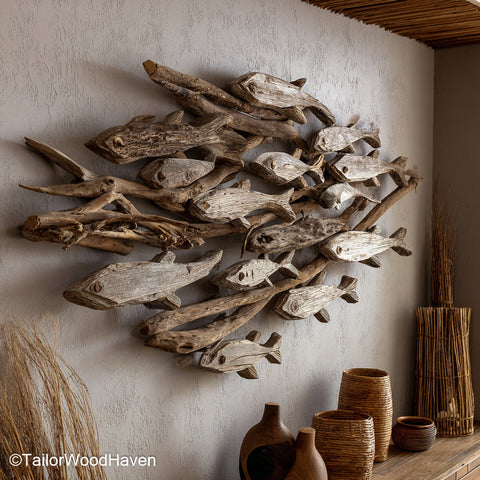
Reclaimed or driftwood, already weathered and often irregular in texture, generally does best with a finish that doesn't try to create a perfectly uniform sheen, since a bit of natural variation is usually part of the intended look
Pairing open-grained oak and blotch-prone pine with the correct penetrating formulas
>>> Read more: How to Make Textured Wall Art: A Step-by-Step DIY Guide
Common Mistakes When Choosing a Finish
-
Picking a finish based on looks alone, without considering the room's humidity or how much handling the piece will see, which often means redoing the finish sooner than expected
-
Skipping a test patch, since stain and even some clear finishes can look noticeably different on the actual wood than expected from a product label or sample chip
-
Assuming all clear finishes offer the same UV protection, when in fact standard polyurethane, oil, and wax offer only modest UV resistance compared to a finish specifically labeled UV-inhibiting
-
Finishing only the front, which leaves an unsealed back or edge vulnerable to uneven moisture exchange regardless of how well the visible side is protected
Avoiding untested color shifts and unsealed backing boards that ruin artwork over time
Frequently Asked Questions About Choosing a Wood Finish
A few questions come up often once people start comparing finish options for a specific piece.
What's the easiest finish for a beginner to apply well?
A wipe-on oil or a wax finish is generally the most forgiving for a first attempt, since both apply with a simple cloth and don't require the brush technique that polyurethane or lacquer demand to avoid drips and brush marks.
Can I switch finishes later if I don't like the result?
It depends on the finish. A wax or oil finish can often be sanded back and refinished with something else relatively easily. Polyurethane and lacquer are harder to remove fully and may require more aggressive sanding or a chemical stripper before a different finish can be applied cleanly.
Is a more expensive finish always better?
Not necessarily. Cost often reflects added durability or UV protection, which matters a lot for a piece in a demanding environment, but a basic, inexpensive oil finish is perfectly appropriate for a piece hanging somewhere stable and low-traffic where those extra qualities wouldn't get much use anyway.
Do I need a different finish for outdoor wood wall art?
Yes. Outdoor pieces need a finish specifically rated for exterior or marine use, like spar urethane, since standard interior finishes aren't formulated to handle direct weather exposure and will break down much faster outside than they would indoors.
How do I know if a finish will change the wood's color?
Clear finishes like wax and polyurethane generally shift wood color only slightly, often adding a faint warm tint, while oil-based finishes tend to deepen and enrich color more noticeably. Testing any finish on a scrap piece of the same wood beforehand is the most reliable way to know for certain.
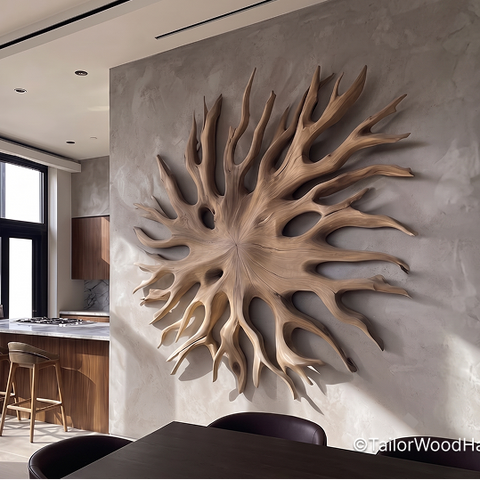
Choosing a wood finish for wall art really comes down to matching the product to your specific priorities: the look you want, how much handling and humidity the piece will face, and how much ongoing maintenance you're willing to take on. There's rarely a single correct answer, since a finish that's perfect for a low-traffic bedroom wall might be the wrong call for a humid bathroom or a sun-drenched entryway. Our carved wood wall art and driftwood wall art each use finishing approaches suited to their specific material and intended setting, and a piece like our branching horizon panel shows how a well-chosen clear finish can bring out grain without overpowering a clean, modern design. If you're planning a custom piece and aren't sure which finish fits your space, the team at Tailor Wood Haven can help you think it through before you commit.
|
TAILOR WOOD HAVEN
Address 1: 412 Palmetto Dr, Columbia, SC 29201
Address 2: 1201 Hillside Avenue, Victoria, British Columbia V8T 2B1, Canada
Address 3: Phu Thai Town, Hai Phong 03306, Vietnam
Call us: +1 (647)-608-1571
Email: hello@tailorwoodhaven.com
|
 Skip to content


 Farmhouse Floating Shelves – Perfect handcrafted furniture
 Farmhouse Narrow Console Table with Storage for Entryway or Living Room
 Custom Rustic Console – Natural Wood, Made to Order