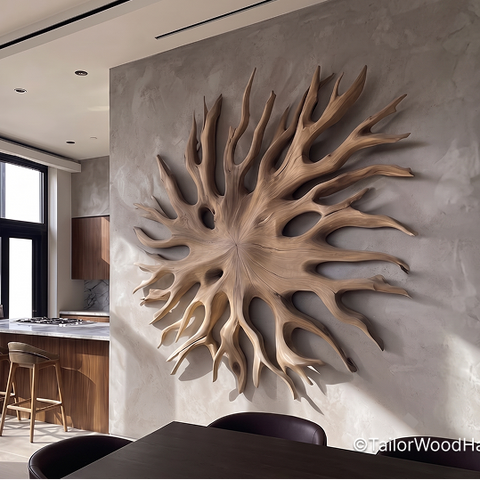
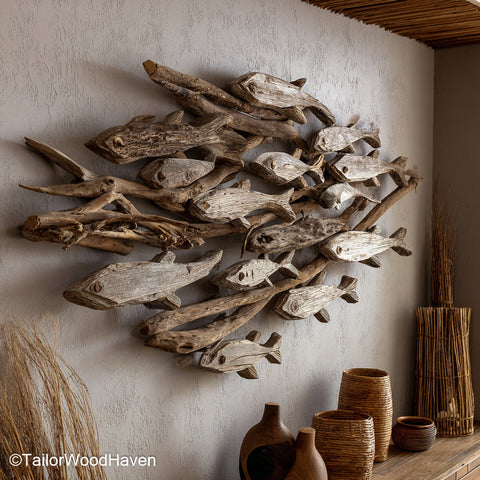
Wondering how high to hang art on wall for a balanced look? Hanging artwork at the correct height directly influences the overall harmony of a space. This guide explains the standard 57–60-inch eye-level rule, how to calculate the exact hook position, and practical ways to adjust the height for different areas so your artwork always looks its best.

How high to hang art on wall
1. How high to hang art on wall? Standard height guidelines
The ideal hanging height should be determined using the center of the artwork before marking the hook position. This approach places wood wall art at a comfortable viewing level and maintains a balanced composition.
1.1. Follow the 57–60-inch center rule
A widely used rule for determining how high to hang art on wall is to position the center of the artwork 57–60 inches (145–152 cm) above the floor. This range corresponds to average eye level, allowing viewers to see the piece comfortably without looking up or down. Note that this measurement indicates the center of the artwork, not where the nail or hook should be installed.
For wood panel art, determine the center at the midpoint of its total height. The same rule applies to driftwood art and wall sculptures, but measurements should be based on the entire outer silhouette rather than only the thickest wooden section. After marking the position, step back and check whether the artwork appears too high or too low.

Find the center of the wood panel art
1.2. Calculate the exact hook position
The hook is usually positioned above the center of the artwork, so it cannot be installed directly at the 57–60-inch mark. To determine the correct location, consider both the artwork’s height and the hanging hardware on the back. Before measuring, place the artwork face down on a flat surface and check that the D-rings, picture wire, or other hardware are securely attached.
Take the following measurements:
-
Artwork height: Measure from the lowest to the highest point of the wood artwork, including any protruding details.
-
Artwork center height: Select a point between 57 and 60 inches based on the desired viewing level.
-
Distance to the hanging point: Measure from the top edge of the artwork to the D-ring or the point where the wire will rest on the hook.
-
Wire sag: Pull the wire upward as it would sit on the hook before measuring to replicate the actual hanging position.
Use the following formula:
Hook position = Center height + ½ artwork height − Distance from the top edge to the hanging point
For example, suppose a wood artwork is 30 inches tall, with its center positioned 58 inches above the floor. When the wire is pulled upward, the distance from the top edge to the point where it rests on the hook is 4 inches. The hook should therefore be installed at:
58 + 15 − 4 = 69 inches, or approximately 175 cm above the floor.
If the artwork uses two separate D-rings, both hooks must be installed along the same horizontal line at the calculated height. For picture wire, simply mark the resting point after accounting for the actual wire sag; do not subtract the sag a second time. Before drilling or hammering, use a level to check the alignment and painter’s tape to test the position.

Calculate the correct hook position
2. How high to hang art above furniture?
When hanging art above furniture, use the piece below as the main reference point. The bottom of the artwork should be approximately 6–8 inches (15–20 cm) above the furniture, while its width should be around two-thirds the width of the furniture.
2.1. How high to hang art above a sofa?
When determining how high to hang art above a sofa, align the center of the artwork with the center of the sofa rather than the center of the wall. If the sofa is positioned off-center, shift the artwork accordingly so the two elements form a cohesive arrangement. Measure the 6–8-inch gap from the highest point of the sofa back to the lowest point of the artwork, including sofas with curved backs.
Horizontal wood wall art or detailed compositions often complement the length of a sofa. For a multi-piece arrangement, measure the full span from the leftmost to the rightmost element, then align its overall center with the sofa. Avoid centering the artwork on the wall, as excess empty space may weaken its visual connection with the seating area.
2.2. How high to hang wood wall art above a bed?
Above a bed, use the top edge of the headboard as the reference point rather than positioning the artwork according to the wall alone. Measure from the highest point of the headboard to the bottom of the artwork, particularly when the headboard has a curved or carved profile. This keeps the artwork visually connected to the sleeping area while leaving enough space to prevent the two surfaces from touching or appearing crowded.
The artwork should be proportional to the headboard and should not extend beyond its outer edges, as this can make the arrangement feel visually heavy. For a multi-piece composition, include the gaps between the individual elements when comparing its total width with the headboard. Artwork that is too narrow may appear disconnected, while pieces that extend too far beyond the edges can make the arrangement look unbalanced.
2.3. How high to hang art above a console table, fireplace, or low cabinet?
Above a console table or low cabinet, the artwork’s position should account for the height of table lamps, vases, books, and decorative objects. Arrange these items first, then assess the remaining space to ensure they do not obstruct the artwork. If the accessories are too tall, rearrange them or select a more suitable artwork instead of hanging the piece too far above the furniture.
Above a fireplace, use the top edge of the mantel as the reference point and check the appliance manufacturer’s safety guidelines before hanging wood wall art. The artwork should not be placed within a heat-exposure zone or obstruct any vents. If the mantel already holds several decorative objects, adjust their number and height so the artwork remains prominent without being pushed too high.

Hang art at the right height above the sofa
>> Explore more: How to Make Wood Quilt Wall Art: Complete Guide
3. How high to hang pictures in different spaces?
The ideal hanging height should be adjusted according to the viewing angle and how each area is used. The same position will not work equally well in every space.
3.1. Dining rooms and home offices
In a dining room, wood wall art can be hung slightly lower than the standard height because viewers usually see it while seated at the table. Test the position from several chairs to ensure the center of the artwork falls within a comfortable viewing range. The piece should still remain above chair backs and seated head height so it does not feel too close to the dining area.
In a home office, assess the height from the primary seated position rather than only while standing. Before installing the hardware, place the monitor, desk lamp, and accessories in their intended positions to determine how much of the artwork remains visible. Avoid raising the artwork excessively to clear obstructions; adjust the arrangement or choose a less obstructed section of the wall instead.
3.2. Hallways and staircases
In a hallway, viewers see the artwork while moving, so visual continuity is more important than adjusting each piece individually. When hanging several wood artworks along one wall, establish and maintain a consistent centerline. This alignment allows the eye to move naturally and prevents the pieces from appearing uneven despite differences in size and shape.
On a staircase, the centerline of the arrangement should rise with the slope of the steps rather than keeping every piece on the same horizontal line. Mark a guideline parallel to the handrail or stair edges, then position the center of each artwork along it. Check the visual rhythm from the bottom, landing, and top of the staircase to ensure the composition works from multiple viewing angles.
3.3. Small walls and entryways
On a small wall, a moderately sized wood artwork or vertical composition is generally more suitable than a wide horizontal arrangement. Center the piece within the visible section of the wall rather than using its full width when a door or architectural feature divides the surface. This placement preserves sufficient negative space around the artwork and prevents the area from feeling cramped.
In an entryway, determine the height based on the natural line of sight when entering through the door and standing in the foyer. The artwork should not be concealed by an open door or obstructed by handles, switches, or furniture placed against the wall. For vertical compositions, keep important details within the main viewing range while ensuring the lower edge is not positioned where people may accidentally bump into it.

Maintain visual flow in hallways and staircases
4. How to determine hanging height based on wood art design
Each wood artwork has a different silhouette and distribution of materials. Therefore, its hanging position should be determined by the visual weight of the piece.
4.1. Flat wood art and carved wood panels
For many panel-style artworks, the geometric center should be calculated using the entire wooden panel, including the background and border, rather than the decorative motif alone. For example, if the pattern on a wooden carved wall decor piece is concentrated on one side, view it under the room’s actual lighting and slightly adjust its position until the overall composition appears balanced.

Balance the entire wood panel composition
4.2. Driftwood art and pieces with irregular silhouettes
For driftwood artwork with an irregular silhouette, protruding details may increase its overall dimensions without adding much visual weight. For example, the tail and fins of a driftwood whale wall art piece appear lighter than the body. Its visual center should therefore be positioned around the area with the greatest concentration of wood while also accounting for the gaps between the branches.

Find the visual center of driftwood artwork
4.3. Large wood art and statement pieces
For many large wood artworks, negative space should be distributed according to the direction in which the form extends. A horizontal large driftwood wall art piece requires more space on both sides, while a design with upward-reaching branches needs additional clearance above. Avoid raising the artwork simply because the ceiling is high, as its ideal position also depends on the silhouette and density of the wooden form.

Balance negative space around large wood artwork
4.4. Multi-piece or modular wood art
For artwork composed of multiple pieces, determine the visual center based on the entire arrangement rather than each module individually. When arranging driftwood fish wall decor, for example, use the largest element as the anchor and position the smaller pieces to guide the eye along the overall direction of movement. The spacing should feel natural but not so wide that the school of fish appears disconnected.

Create a cohesive driftwood arrangement
Once you have determined the appropriate height, proportions, and visual center, the next step is choosing artwork that complements your space. Explore Tailor Wood Haven’s Wood Wall Art collection to find a design that fits your wall and interior style.
5. FAQs about how high to hang art on wall
5.1. Does a high ceiling mean artwork should be hung higher?
No. Artwork should still be positioned according to eye level and the nearest furniture. Hanging it too high simply to fill empty wall space can make it feel disconnected from the rest of the room.
5.2. How high should wood wall art be hung near a TV?
When placing artwork beside a TV, align its center approximately with the center of the screen to create balance. If hanging it above the TV, leave sufficient clearance and ensure it does not obstruct ventilation, cables, or access needed for installation and maintenance.
5.3. Should the hanging height be adjusted in a child’s room?
Yes. Artwork can be positioned closer to a child’s eye level, but heavy pieces or designs with protruding edges should remain out of reach. The hanging hardware must also be securely anchored to prevent the artwork from falling if touched or bumped.
5.4. How should artwork be positioned on a wall between two pieces of furniture?
Center the artwork within the actual wall space between the two pieces of furniture rather than across the entire wall. Keep the space on both sides relatively balanced so the artwork does not appear shifted to one side or make the area feel crowded.
Understanding how high to hang art on wall makes it easier to create a balanced and professionally styled display. Applying the 57–60-inch rule while considering furniture proportions will help every piece look its best. Ready to refresh your walls? Explore Tailor Wood Haven’s natural wood wall art collection and discover handcrafted 3D designs that bring depth and character to your space.
|
TAILOR WOOD HAVEN
Address 1: 412 Palmetto Dr, Columbia, SC 29201
Address 2: 1201 Hillside Avenue, Victoria, British Columbia V8T 2B1, Canada
Address 3: Phu Thai Town, Hai Phong 03306, Vietnam
Call us: +1 (647)-608-1571
Email: hello@tailorwoodhaven.com
|
 Skip to content


 Farmhouse Floating Shelves – Perfect handcrafted furniture
 Farmhouse Narrow Console Table with Storage for Entryway or Living Room
 Custom Rustic Console – Natural Wood, Made to Order