Not sure how thick should floating shelves be for your space? Choosing the right thickness is one of the most critical decisions in your project.
Get it wrong, and your shelf might look flimsy, overwhelm the wall, or, worse, sag under the weight of your belongings. The answer depends entirely on two factors: what you're storing and where you're placing it.
Why Shelf Thickness Matters
Understanding the dual role of thickness is the key to mastering this design choice. It's not just about aesthetics; it's about physics.
1. Looks vs. Load Capacity
Thickness establishes the visual presence of the shelf. A thin shelf looks sleek and minimalist, while a thick, chunky shelf creates a warm, rustic anchor point. This is the first consideration when asking how thick should floating shelves be.
Thickness directly correlates with the shelf’s structural integrity. A thicker shelf is inherently stiffer, making it less likely to bend or sag over time, especially when supporting heavy items.
Furthermore, a thicker shelf provides more internal volume to safely embed the heavy-duty hidden mounting brackets.
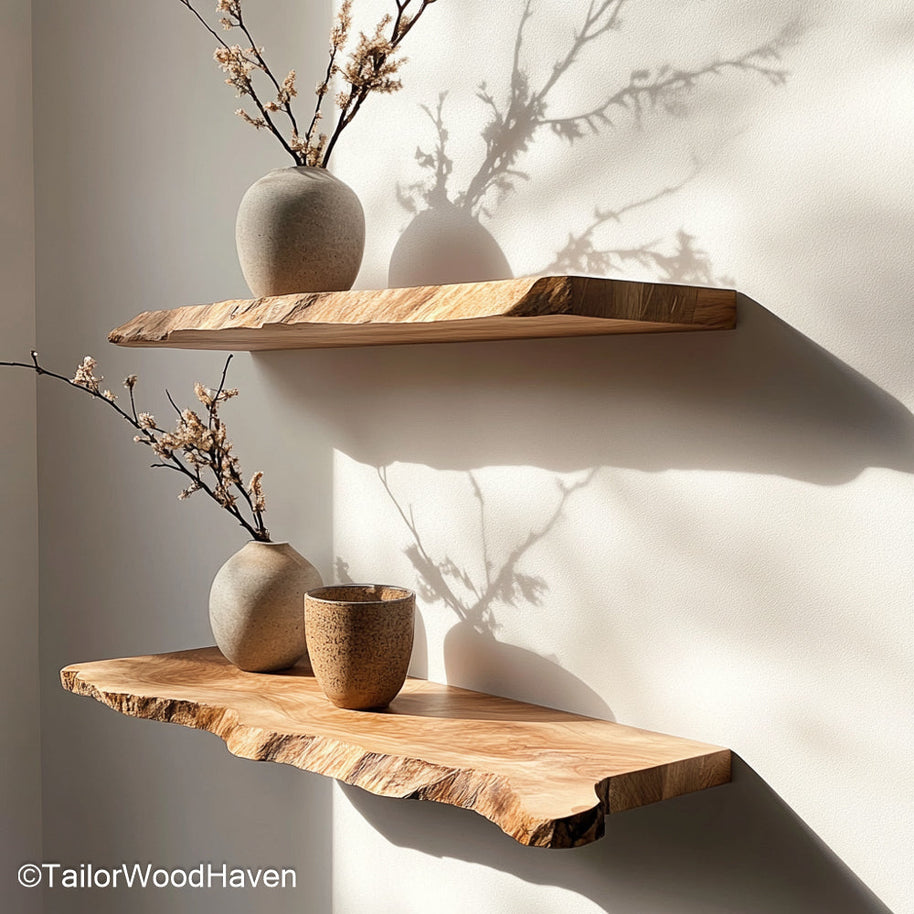
These sealed hardwood floating shelves are great for light decor, offering easy, bracket-free installation for large kitchens or full-room styling.
2. Visual Balance in Different Spaces
The size of the room and the height of the wall greatly influence the visual balance, guiding your choice in how thick should floating shelves be.
In large living rooms or kitchens with high ceilings, asking how thick should floating shelves be often leads to an answer of 2 inches or more. A thin shelf (1 inch) can look lost or disproportionate on a big wall.
In small bathrooms or narrow hallways, a shelf that is too thick (over 2 inches) can feel bulky and protrude too far into the space. Here, a thickness of 1 inch or less usually works best.
General Guidelines by Room
The required function of the shelf in each room dictates the minimum thickness needed for safety and stability. This contextual approach is key to determining exactly how thick should floating shelves be.

This shelf set is ideal for kitchens, bringing a cozy and convenient feel. The flush mounts and matching dimensions create an elegant, minimalist look for modern interiors.
1. Kitchen – For Dishes and Glassware
Kitchen shelves are typically the most functional and weight-bearing in the home. They hold stacks of plates, bowls, and glassware.
This range ensures the wood is strong enough to resist the sheer force of stacked dishes and provides enough depth to accommodate the large, robust steel mounting rods needed for heavy kitchen loads.
A shelf thinner than 1.5 inches will almost certainly sag in a kitchen environment, making strength the priority when asking how thick should floating shelves be here.
2. Living Room – Decorative or Mixed Use
Living room shelves often hold a mix of items: books, plants, art, and decor. This versatility allows for more stylistic flexibility in determining how thick should floating shelves be.
If the shelf is purely decorative (light frames, small vases), 1.5 inches is sufficient and looks sleek. If the shelf is intended for heavy books or records, opt for 2 inches or more to prevent noticeable deflection over time.

These floating shelves are built from rich walnut slabs with a soft finish, making them ideal for adding elegance to kitchen, bedroom, or workspace walls.
3. Bathroom – Moisture-Resistant Thickness
Bathroom shelves face the challenges of high humidity and usually only carry light loads (towels, toiletries).
Since the load is light, you can choose a slimmer profile to keep the small space feeling open. However, the chosen wood or material must be properly sealed to prevent warping and swelling from moisture, regardless of how thick should floating shelves be.
A helpful chart in Shelf Expression’s depth and thickness guide shows the ideal specs by room and use, confirming that function is the primary driver when answering how thick should floating shelves be.
Best Shelf Thickness by Material Type
The stiffness of the material itself significantly affects the required thickness to achieve a no-sag shelf, which is a key factor when deciding how thick should floating shelves be.
1. Solid Wood vs. Engineered Wood
Naturally stiff and durable. For heavy loads, 1.75 inches is usually the minimum.
For a decorative pine shelf, you can sometimes get away with 1.5 inches, but only for short spans (under 36 inches).
These shelves look thick but are lightweight because they are a veneer wrapped around a hollow core. While lighter, they rely entirely on the internal bracing system. To look substantial and hide the rail system, these typically start at a minimum of 2 inches thick, which answers the question of how thick should floating shelves be when working with hollow core materials.
2. How Thickness Affects Sagging Over Time
Sagging (or deflection) is the downward bend of the shelf over time due to sustained load.
Sagging is inversely proportional to the cube of the thickness. This means that doubling the shelf thickness reduces the amount of sag by EIGHT times!
This single engineering principle is why you should always err on the side of thicker when debating how thick should floating shelves be for utility.
How to Choose Thickness for Heavy-Duty Use
When designing for utility, such as a laundry room or home office, prioritize strength over minimalist styling. This requires matching the shelf thickness to the load-bearing hardware.
1. Weight Ratings by Bracket Type
The bracket system used dictates the minimum thickness required for the shelf material. This table helps determine how thick should floating shelves be based on the hardware you intend to use.
|
Bracket Type
|
Ideal Shelf Thickness
|
Typical Load
|
|
Simple Wall Cleat
|
1.25" - 1.5"
|
Light decor (0-15 lbs)
|
|
Heavy-Duty Steel Rods
|
1.75" - 2.5"+
|
Books, dishes, appliances (40+ lbs)
|
|
French Cleat
|
0.75" - 1.5"
|
Mixed load (20-40 lbs)
|
For any shelf requiring steel rod brackets, a thickness under 1.75 inches makes it very difficult and risky to drill the necessary deep, straight channels without compromising the shelf's integrity.
For in-depth buying tips on heavy load support, Forever Joint Tops shares insights on picking strong, wall-mounted shelves, which provides excellent information when considering how thick should floating shelves be for true storage.
If the shelf's primary function is high-density storage:
Books are surprisingly heavy. A standard 3-foot shelf loaded with books should be at least 2 inches thick and mounted to studs using steel rod brackets.
These demand maximum rigidity. A thickness of 2.5 inches or greater is often recommended, sometimes using metal angle iron hidden inside the shelf material for ultimate reinforcement.
The rule here is clear: when in doubt about how thick should floating shelves be for a heavy item, always choose the next size up.
Design Considerations for Minimalist vs Rustic Shelves
Once the functional requirement is met, you can use thickness to fine-tune your desired design aesthetic.

These floating shelves are made with a deep walnut tone and a smooth slab surface. They are cleanly mounted for use in kitchens, studies, or hallways.
1. When to Go Slim (1.25") vs. Chunky (2"–3")
The aesthetic choice of how thick should floating shelves be allows you to define the style of your space, provided the shelf meets the minimum strength requirements.
Choose slim when you want a minimalist, modern, or Scandinavian look. The goal is to make the shelves visually recede, letting the items on display be the focal point. This works best with light-colored, smooth-finished wood or engineered shelving.
Choose chunky when you want a rustic, farmhouse, or industrial look.
The shelf itself becomes a strong, architectural element. This works best with darker, distressed, or live-edge wood. A 3-inch thick oak shelf makes a powerful statement.
2. Matching Thickness to Wall Depth and Decor Style
Ensure your chosen shelf thickness is visually balanced with the shelf's depth. A 10-inch deep shelf that is only 1 inch thick will look flimsy.
A rough ratio of 1 inch of thickness for every 5 inches of depth (e.g., a 2-inch thick shelf for a 10-inch depth) is a good starting point for achieving a balanced look.
If your home is full of hefty furniture and deep crown molding, a thin shelf will look out of place. Matching the visual 'weight' of the shelf to the surrounding decor is a critical design step when deciding how thick should floating shelves be.

Crafted from rich walnut with natural grain and bracket-free support, these shelves are ideal for warm-toned kitchens or living rooms.
Choosing the right shelf thickness is the foundational decision that impacts both the style and the safety of your floating shelf installation.
By applying the principles of strength, material type, and visual balance, you can confidently determine exactly how thick should floating shelves be to create a custom look that lasts for years.
 Skip to content


 Farmhouse Floating Shelves – Perfect handcrafted furniture
 Farmhouse Narrow Console Table with Storage for Entryway or Living Room
 Custom Rustic Console – Natural Wood, Made to Order


