Wood wall art and canvas are two of the most common choices for filling a wall, but they're fundamentally different mediums with different strengths, and the right pick depends more on what you actually want from a piece than on which one is objectively "better." Canvas offers flat, printed or painted imagery in an enormous range of styles at a relatively low cost. Wood wall art brings dimension, natural texture, and material character that a flat surface simply can't replicate. Here's a detailed, side-by-side look at how the two compare.
Quick Comparison: Wood Wall Art vs Canvas
|
Factor
|
Wood Wall Art
|
Canvas
|
|
Texture
|
Natural, dimensional, varies by piece
|
Flat, smooth printed or painted surface
|
|
Durability
|
Very durable if properly sealed
|
Vulnerable to tears, moisture, and warping over time
|
|
Weight
|
Heavier, often needs sturdier mounting
|
Lightweight, easy to hang
|
|
Maintenance
|
Occasional dusting; needs resealing every few years
|
Light dusting; more sensitive to humidity and sunlight
|
|
Humidity resistance
|
Good if fully sealed on all sides
|
Poor; prone to sagging or mold in damp rooms
|
|
Customization
|
Limited to available carving/shape designs, though custom orders are common
|
Nearly unlimited image, color, and print options
|
|
Typical cost
|
Higher, reflects material and craftsmanship
|
Lower, especially for printed reproductions
|
|
Best for
|
Rustic, organic, textural, and statement pieces
|
Photography, illustration, graphic and colorful designs
|
|
Lifespan
|
Decades with proper care
|
Years to a couple decades, depending on quality and conditions
|
How Wood Wall Art and Canvas Compare, Category by Category
The table above gives the quick version. Here's what's actually behind each of those differences.
Texture and Visual Depth
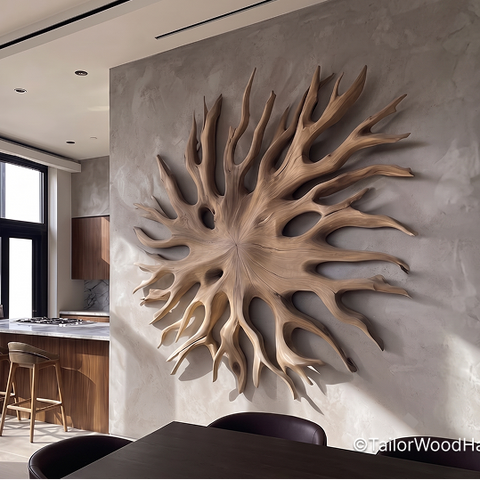
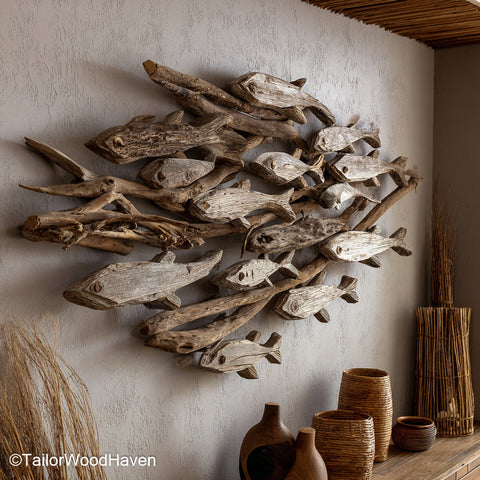
Wood wall art is inherently three-dimensional, whether it's a carved relief, a layered design, or a piece built from natural driftwood. For instance, a highly sculptural piece like the Abstract Organic Driftwood Wall Art Panel in Natural Wood brings unmistakable physical depth to a room that flat prints cannot replicate. That dimension means the piece looks different depending on the angle of light hitting it, and even the time of day, since shadow and grain shift as light moves across the room.
Canvas is flat by nature. Even a canvas with heavy brushstroke texture from oil or acrylic paint reads as a two-dimensional surface compared to a piece where the material itself has physical depth carved or shaped into it. For a specific image, photograph, or illustration rendered in full color and detail, that flatness is exactly what makes canvas practical, since printing an image onto wood in the same way isn't standard, and dimensional wood art rarely centers on a literal picture the way canvas does.
Understanding the impact of physical dimension versus a flat printed surface
Durability and Lifespan
Wood wall art, properly sealed, is genuinely durable, resistant to scuffs and general handling, and capable of lasting decades if it's cared for and kept in a reasonably stable environment. Its main vulnerabilities are humidity swings, which can cause warping or cracking over time, and prolonged direct sunlight, which fades color and finish.
Canvas has different weak points. The fabric itself can sag, tear, or develop ripples over time, especially in a humid room, and the printed or painted surface is more vulnerable to fading, scuffing, and moisture damage than a sealed wood finish. A well-made canvas print can last many years with good care, but it generally has a shorter practical lifespan than a quality wood piece before showing visible wear.
>>> Read more: How to Clean Canvas Wall Art: A Safe Cleaning Guide
Maintenance and Care
Wood wall art needs periodic attention, mainly dusting every few weeks and a fresh coat of oil, wax, or sealant every one to several years depending on the finish, but otherwise holds up with minimal ongoing effort.
Canvas is lower-maintenance day to day, generally just needing a light, dry dusting, but it's less forgiving of any deeper cleaning attempt, since water or cleaning products can damage the print or paint layer if applied incorrectly. Canvas is also more sensitive to its environment overall, more likely to be damaged by humidity, direct sunlight, or an accidental bump than a solid, sealed wood piece would be.
The routine upkeep required to keep your artwork looking its best
>>> Read more: How to Prevent Wood Wall Art from Warping
Cost Considerations
Canvas is generally the more budget-friendly option, particularly for printed reproductions, which can be mass-produced at a relatively low cost regardless of size. Original canvas paintings can run into the same price range as fine art generally, but standard printed canvas wall art tends to be accessible even at large sizes.
Wood wall art, especially handcrafted or carved pieces, typically costs more, reflecting the material itself, the labor involved in shaping and finishing it, and the fact that pieces are often made individually rather than mass-produced on the same scale as a printed canvas. That higher upfront cost is often offset by wood's longer lifespan and lower risk of needing replacement due to fading or damage.
Style and Room Fit
Canvas covers an enormous stylistic range, since it can display literally any image, photograph, illustration, or painted design, which makes it the more flexible choice if you have a specific picture, color scheme, or piece of photography in mind.
Wood wall art leans naturally toward organic, rustic, coastal, boho, and modern-natural aesthetics, where its material and texture do most of the visual work rather than a printed image. It's a strong choice when the goal is warmth, texture, and a sense of craftsmanship rather than a specific picture or graphic design. Adding a richly grained statement piece, such as the Layered Canyon Wood Wall Panel for Rustic Interiors, instantly grounds a room with an earthy, tactile presence that standard canvas simply cannot emulate.
Matching the aesthetic strengths of both mediums to your interior design
Weight and Mounting
Wood wall art is generally heavier than canvas, particularly larger or more dimensional pieces, which means it often needs sturdier mounting hardware, like a French cleat rated for the piece's actual weight, and a wall anchor suited to more substantial loads.
Canvas is comparatively lightweight even at large sizes, since it's built around a hollow stretcher frame rather than solid material, which makes it easier to hang with simple hardware and easier to move or rehang without much effort.
Which One Should You Choose?
If you want a specific image, photograph, or illustration rendered in color, or you're working with a smaller budget, canvas is generally the more practical and flexible choice. If you want texture, dimension, and a piece that feels more like a crafted object than a printed picture, and you're comfortable with a higher upfront cost and a bit more ongoing care, wood wall art tends to deliver a level of warmth and presence that canvas can't quite replicate. Many well-designed rooms actually use both, pairing a wood piece as a dimensional focal point with canvas prints filling in supporting color and imagery elsewhere on the same wall or in the same space.
Making the final decision based on your priorities and budget
Frequently Asked Questions About Wood Wall Art vs Canvas
A few questions come up often once people start comparing the two mediums directly.
Which one lasts longer, wood or canvas?
Properly sealed wood generally has a longer practical lifespan than canvas, since it's more resistant to the kind of fading, sagging, and surface damage that affects canvas over time. Canvas can still last many years with good care, but it's more sensitive to humidity, sunlight, and physical handling than a well-finished wood piece.
Is wood wall art harder to hang than canvas?
Generally, yes, mainly due to weight. Wood pieces, especially larger or dimensional ones, often need sturdier mounting hardware than the simple wire or sawtooth hangers that work fine for lightweight canvas.
Can I get a printed image on wood the way I can on canvas?
Some processes exist for transferring or printing images onto wood, but it's less standard and less widely available than canvas printing, and the result tends to look and feel quite different, since the wood grain typically shows through. Wood wall art generally centers on shape, texture, and carved or dimensional design rather than a literal printed picture.
Is canvas a better choice for a humid room like a bathroom?
No, if anything canvas tends to hold up worse than a properly sealed wood piece in a humid room, since unprotected canvas is prone to sagging, mold, and mildew in consistent moisture. Both mediums do best with good ventilation, but wood, fully sealed on all sides, is generally the more resilient option in a humid space.
Can wood wall art and canvas be used together in the same room?
Yes, and it's a common approach in mixed gallery walls, using a wood piece as a textural, dimensional anchor alongside canvas prints that bring in color, imagery, or pattern. The contrast between the two mediums, flat versus dimensional, often adds visual interest rather than clashing.
Wood wall art and canvas serve different purposes more than one being categorically better than the other. Canvas wins on flexibility, cost, and image variety, making it the practical choice for a specific picture or a tighter budget. Wood wall art wins on texture, durability, and a sense of natural craftsmanship, making it the stronger choice for a piece meant to serve as a lasting, tactile statement in a room. Choosing between them really comes down to which of those priorities matters most for the specific wall you're filling.
Leaning toward the warmth and texture of wood? Visit Tailor Wood Haven to explore our full range of handcrafted wood wall art, or browse the Carved Wood Wall Art, Driftwood Wall Art, and Wood Wall Art collections for pieces built to bring lasting, dimensional character to your walls.
|
TAILOR WOOD HAVEN
Address 1: 412 Palmetto Dr, Columbia, SC 29201
Address 2: 1201 Hillside Avenue, Victoria, British Columbia V8T 2B1, Canada
Address 3: Phu Thai Town, Hai Phong 03306, Vietnam
Call us: +1 (647)-608-1571
Email: hello@tailorwoodhaven.com
|
 Skip to content


 Farmhouse Floating Shelves – Perfect handcrafted furniture
 Farmhouse Narrow Console Table with Storage for Entryway or Living Room
 Custom Rustic Console – Natural Wood, Made to Order