Looking for floating shelves that don’t just look good but also hold weight? Floating shelves are the ultimate minimalist storage solution, but their strength depends entirely on their quality and installation.
This guide shows you exactly where can I get floating shelves that last, from reliable stores to DIY builds.
Build It Yourself: How to Make Heavy-Duty Floating Shelves
For total control over load capacity and style, building your own shelves is the best answer to where can I get floating shelves.
This allows you to customize the dimensions and, most importantly, choose the strongest materials and hardware necessary for heavy loads.
1. Materials for Strength
When building a heavy-duty floating shelf, the shelf material and the bracket material are equally vital.
Avoid lightweight MDF or particleboard. Opt for solid hardwoods like Oak, Maple, or Walnut, which are structurally dense and less prone to warping or sagging over time, especially over longer spans.
For a thick, substantial look without the heavy weight, you can construct a hollow-core shelf using plywood, which is then clad in thin hardwood veneer.
The quality of the hidden bracket determines the weight capacity. Look for high-gauge steel rod brackets or specialized rail systems.
These hidden brackets must be rigid and designed to handle significant downward and horizontal leverage.
Never choose thin, flimsy hardware if strength is your priority. This attention to materials is crucial when asking where can I get floating shelves that don’t sag.

This shelf features a slim floating profile and a raw live edge, making it a unique, organic accent for small spaces like bedrooms or entryways.
2. Ideal Wall Types
The strength of your floating shelf system is only as good as the wall it's attached to.
This is the ideal attachment point. Align your bracket holes directly with the center of at least two vertical wooden studs, typically spaced 16 or 24 inches apart. Screwing directly into solid wood provides the maximum shear and pull-out strength possible.
Excellent strength can be achieved here using proper masonry drill bits and heavy-duty sleeve anchors or wedge anchors.
This is the weakest option. If you absolutely cannot hit a stud, you must use high-rated heavy-duty toggle bolts or snap toggles.
These devices open up behind the drywall to distribute the weight over a larger surface area, offering a much better solution to where can I get floating shelves secured in hollow walls than simple plastic anchors.
3. Step-by-Step Building
Measure and cut your solid wood or hollow-core pieces to the desired dimensions. Sand and finish the shelf thoroughly before installation.
Precisely route or drill the channels or holes in the back edge of the shelf board to perfectly match the dimensions of your chosen hidden bracket. Precision here is key for a tight fit and a truly "floating" look.
Locate and mark your wall studs. Attach the steel bracket or rail system to the wall using structural screws driven deep into the studs. Ensure the bracket is perfectly level.
Slide the finished wooden shelf onto the mounted bracket rods. For maximum safety, secure the shelf to the bracket from underneath using small set screws, ensuring the shelf cannot lift or slide off.
This DIY route helps you solve where can I get floating shelves that meet your exact specifications.
Can Floating Shelves Hold Heavy Items?
Yes, floating shelves can hold substantial weight, often far more than people realize, but the weight capacity is entirely dictated by the installation method and the hardware used.
The answer to where can I get floating shelves with high capacity lies mostly in the bracket.
1. How Much Weight Is “Too Much”
Standard shelves mounted into drywall with basic anchors typically hold 15 to 25 pounds. However, a properly engineered heavy-duty floating shelf system anchored into two or more studs can often support 50 to 100 pounds or more.
The maximum safe weight is reduced dramatically by shelf depth (deeper means more leverage), shelf material (hollow core vs. solid oak), and the items placed on it (heavy items near the front edge are worse than those near the wall).
A deep shelf carrying 10 pounds far from the wall creates much more pull-out force than a shallow shelf carrying 20 pounds close to the wall.
When assessing where can I get floating shelves that carry heavy loads, always choose shallower, thicker shelves.

Crafted from thick slabs with beautiful natural form, these shelves are ideal for adding significant warmth and organic texture to otherwise modern walls.
2. Shelf Bracket vs. Hidden Mount
Most floating shelves use one of two primary hidden support systems:
These use rigid steel rods extending from a wall plate. The rods slide into corresponding holes in the back of the shelf.
They are great for solid wood shelves and provide good support if the rods are long and wide enough.
These use a metal rail that mounts to the wall, and the shelf has a corresponding channel that locks onto the rail.
These systems often provide better load distribution across the entire back of the shelf and can be the better option when searching for where can I get floating shelves for a kitchen.
Are Floating Shelves Strong Enough for Your Needs?
To determine if a floating shelf is strong enough, you need to match the shelf's engineering to its intended use.
Understanding the relationship between load, depth, and anchoring helps answer where can I get floating shelves that meet your specific functional requirements.
1. Kitchen vs. Garage Use
Kitchen shelves are frequently used for heavy items like stacks of dinner plates, large mixing bowls, or rows of spice jars.
Here, strength is mandatory. You need a 10- to 12-inch deep shelf attached firmly to studs or masonry.
Garage shelves require the highest capacity, holding paint cans, tools, or spare parts.
A garage-grade shelf often requires a modified T-bracket or heavy-duty angle iron hidden inside the shelf, transforming the question of where can I get floating shelves into how can I build industrial-strength storage.
If you only need to display light items like small photos or dried flowers, most standard, off-the-shelf floating shelf kits will suffice.
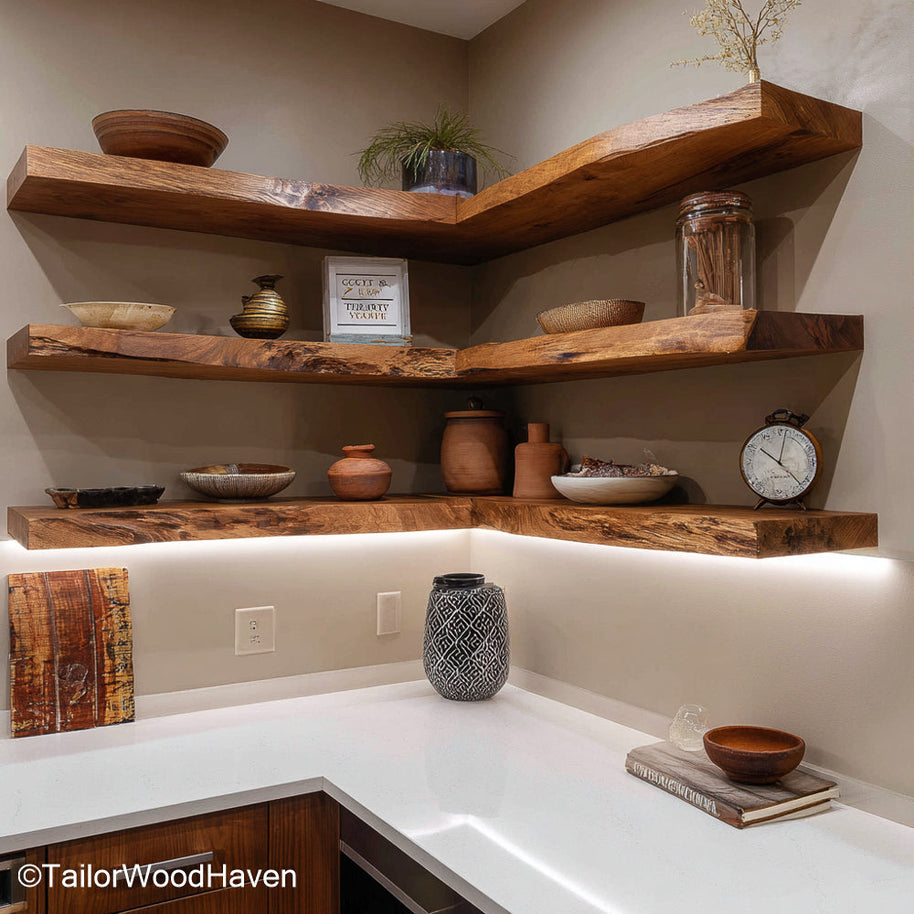
Built with a soft live edge and a clever right-angle design, this shelf is perfect for maximizing small corner spaces in earthy, rustic interiors.
2. Hidden Support Design
The key structural difference that makes some floating shelves stronger than others is how the hidden bracket transfers the load to the wall.
The best shelves feature a bracket system that not only supports the vertical weight but also resists the downward rotational force (torque).
When shopping, always ask: where can I get floating shelves that are rated for both vertical load and leverage? Look for products explicitly labeled "heavy-duty" or "high-capacity".
How to Build a Garage-Grade Floating Shelf
Building a floating shelf for a garage or laundry room prioritizes function over form, allowing you to use materials and anchoring methods optimized purely for strength.
This is an excellent solution for where can I get floating shelves that can handle 100 pounds or more.
1. Weight-Focused Materials
Instead of decorative wood, you may opt for:
-
Internal Structure: Use thick steel angle iron or heavy-duty, commercial-grade floating shelf rods.
-
Shelf Cladding: Clad the internal support structure with thick plywood or robust butcher block material for maximum resilience against tools and oils.
2. Anchoring Tips
For garage shelves, aim for an anchor every 12 to 16 inches, hitting studs wherever possible. If studs are unavailable, use two 3/8-inch toggle bolts at each mounting point instead of just one.
When considering where can I get floating shelves to withstand industrial use, prioritize the quality of your fasteners above all else.
Where to Buy Heavy-Duty Floating Shelves Online
If DIY isn't your preference, the market offers many stylish and strong prefabricated options. The search for where can I get floating shelves that are ready to install often leads to specialized online retailers.
1. Amazon, Etsy, Wayfair
Offers the widest variety, from cheap sets to high-end solid wood options. Be sure to check user reviews and photos that specifically mention durability and bracket quality.
Excellent source for handmade, custom, solid hardwood shelves from small businesses. These often feature superior-quality, welded steel brackets designed for heavy weight.
This is a great choice if you're asking where can I get floating shelves with a unique, rustic, or custom look.
Good sources for standard kitchen or living room floating shelves. Always check the listed weight capacity - if it's not listed, assume it's only for light décor.
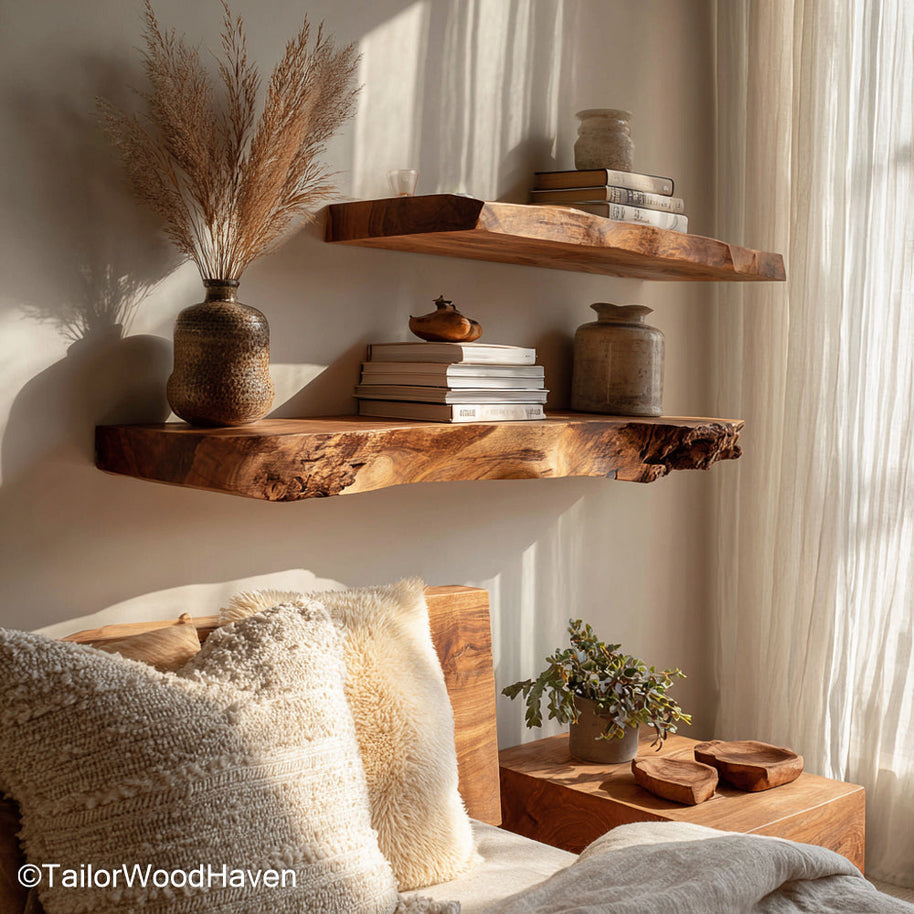
Showcasing solid timber with raw contours and visible grain, this shelving is designed for both robust wall-mounted storage and eye-catching decorative display.
2. Review of Best Options
When browsing, look for the following phrases in product descriptions:
-
"Solid Wood Construction" (avoid particleboard).
-
"Heavy-Duty Steel Bracket" (ideally 1/4-inch thick or greater).
-
"Mounts to Studs" (a manufacturer emphasizing stud mounting indicates a commitment to capacity).
If you are looking for shelves specifically to handle heavy kitchen items like dishes and canned goods, resources like Food & Wine offer excellent curated lists of tested products.
Checking expert reviews is the fastest way to confirm where can I get floating shelves that have a proven track record.
Finding the perfect floating shelves requires balancing aesthetic appeal with structural integrity.
Whether you DIY a custom, ultra-strong system or purchase a reliable pre-made unit, the answer to where can I get floating shelves that succeed lies in three main steps: choosing dense materials, using high-quality hidden brackets, and anchoring those brackets directly into wall studs or concrete.
 Skip to content


 Farmhouse Floating Shelves – Perfect handcrafted furniture
 Farmhouse Narrow Console Table with Storage for Entryway or Living Room
 Custom Rustic Console – Natural Wood, Made to Order


