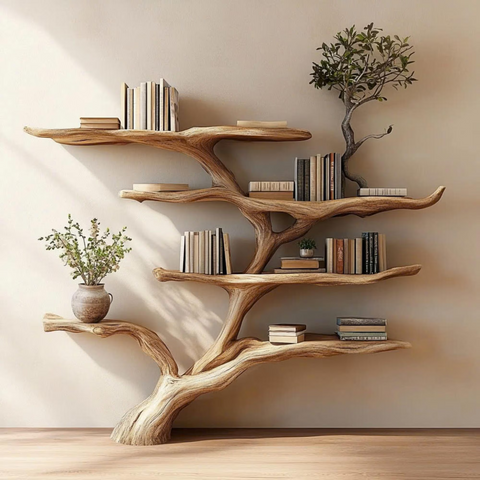
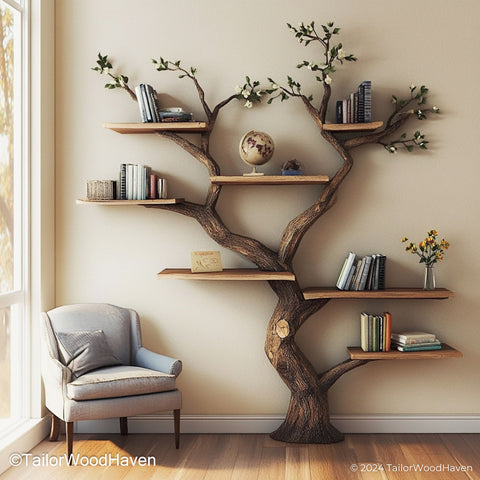
A tree bookshelf for plants combines natural wood with greenery to create a display that feels fresh and inviting. Whether you prefer a few subtle green accents or a bookshelf filled with plants, the key is to balance appearance with practicality. Choosing suitable plants, arranging them according to the shelf layout, and protecting the wood from moisture can help you create a beautiful display that is easy to maintain.
1. Why Use a Tree Bookshelf for Plants?
A tree bookshelf offers a natural setting for displaying plants because its organic structure complements the shapes and textures of foliage. The branches create separate display areas, allowing you to combine greenery with books and decorative objects without making every shelf look the same.
This arrangement can also help you make better use of vertical space. Instead of placing several plant stands around a room, you can group smaller plants on a single piece of furniture. This is especially useful in apartments or rooms where floor space is limited.
A tree bookshelf can suit different interior styles, from minimalist spaces with a few carefully selected plants to relaxed, nature-inspired rooms with varied foliage. However, not every shelf is designed to support heavy pots or moisture exposure. Before arranging plants, consider the bookshelf's weight capacity, finish, and position relative to natural light.
A tree bookshelf offers a natural setting for displaying plants
2. 7 Ways to Style a Tree Bookshelf With Plants
2.1 Mix Books and Potted Plants
Combining books with potted plants creates a display that feels both practical and decorative. Books introduce structure and color, while foliage adds contrast and softens the bookshelf's branching lines.
Start by grouping books on a few shelves, then place small plants in the remaining spaces. You can arrange books vertically or stack a small number horizontally to create different heights. Keep enough open space around each plant so its leaves remain visible.
For a cohesive look, choose pots that complement the wood finish and the colors already present in the room. Avoid filling every branch, as a little empty space helps the bookshelf look balanced rather than crowded.
2.2 Display Trailing Plants on Higher Branches
Trailing plants can emphasize the natural shape of a tree bookshelf. Their stems extend downward from the shelves, creating a cascading effect that echoes the branching structure.
Place trailing plants on higher shelves only when the pots can sit securely and the shelf can support their weight. Leave enough room for the foliage to grow without covering books or interfering with nearby objects.
Consider the plant's light requirements before deciding where it belongs. A high shelf may look attractive, but it is not automatically the best growing location. Choose a position that provides suitable light and allows you to water and maintain the plant safely.
Display trailing plants on higher branches
2.3 Use Small Plants for Narrow Shelves
Small potted plants are ideal for narrow branches and compact display areas. They add greenery without taking up too much room or making the bookshelf look unbalanced.
Succulents and compact foliage plants can be suitable options, depending on the light and humidity in your home. Before purchasing a plant, check its mature size and growing requirements rather than judging it only by its appearance at the store.
Use lightweight pots that sit securely on the shelf, and avoid placing containers too close to the edge. If the shelf is narrow, choose a plant with a compact shape instead of one that spreads widely or becomes top-heavy.
2.4 Create a Green Focal Point With One Statement Plant
You do not need many plants to make a tree bookshelf stand out. One distinctive plant can become the main feature while smaller decorative objects and books provide supporting details.
Choose a plant with an interesting leaf shape or a naturally balanced silhouette. Place it on a shelf that offers enough space for its current size and future growth. Keep surrounding branches relatively uncluttered so the plant remains the visual focus.
Before choosing a large specimen, check the combined weight of the pot, soil, and plant. A statement plant should enhance the display without placing more weight on the bookshelf than it is designed to support.
Create a green focal point with one statement plants
2.5 Combine Different Leaf Shapes and Textures
Using plants with contrasting foliage can make a bookshelf more visually interesting. Broad leaves, fine foliage, and trailing stems create variation without requiring a large number of decorative accessories.
For example, you could pair a compact plant with rounded leaves and another with narrow, upright foliage. If you prefer a softer look, add a trailing variety to introduce a different shape.
Try to keep the overall palette coordinated. Too many contrasting colors or oversized plants may compete with the bookshelf's natural form. A small selection of plants with complementary textures often creates a more balanced result.
2.6 Match Plant Pots With the Wood Finish
Plant pots influence how the entire bookshelf looks. Choosing containers that complement the wood can make the display feel intentional, even when the plants have different shapes and sizes.
Neutral ceramic pots work well with many natural wood finishes, while terracotta can introduce a warm, earthy accent. Simple white or dark containers can also create contrast against the wood grain.
You do not need to use identical pots throughout the bookshelf. Instead, repeat one or two colors or materials to connect the display. Make sure each container has a stable base, and use a waterproof tray or saucer to prevent water from reaching the wooden surface.
Match plant pots with the wood finish
2.7 Create a Minimalist Plant and Book Display
A minimalist arrangement is a good option if you want greenery without turning the bookshelf into a full plant collection. Select a few plants with distinct shapes and leave some branches empty.
Place books in small groups and use one or two decorative objects to complete the arrangement. This gives each item room to stand out and makes dusting and watering easier.
See more: How to arrange book on shelf: Ways to create a beautiful bookshelf
3. Which Plants Work Best on a Tree Bookshelf?
The best plants depend on the available light, shelf dimensions, and amount of maintenance you can provide. Before choosing a variety, consider its mature size, watering needs, and whether it is suitable for the room where the bookshelf will stand.
3.1 Small Potted Plants for Compact Shelves
Compact plants are useful when shelf space is limited. Small succulents may work in bright locations, while other compact foliage plants may be more suitable for areas with indirect light.
Check the growing requirements of each variety before placing it on the bookshelf. A plant that stays small in one environment may grow larger under different conditions.
3.2 Trailing Plants for Branch-Inspired Shelves
Trailing plants can complement the branching form of a tree bookshelf. Varieties such as pothos and heartleaf philodendron are popular indoor options because their stems can grow along or downward from a container.
Both plants can be toxic if chewed by pets, so consider your household before choosing them. Keep trailing stems away from walkways and ensure the pot remains secure, especially on elevated shelves.
Trailing plants for branch-inspired shelves
3.3 Low-Maintenance Plants for Busy Homeowners
If you have limited time for plant care, consider varieties with manageable watering needs that suit your indoor light conditions. Snake plants and some pothos varieties are common choices for indoor settings, although their requirements still need to be considered.
Avoid choosing a plant solely because it is described as low-maintenance. Even resilient varieties can struggle when exposed to unsuitable light, overwatering, or poor drainage.
3.4 Artificial Plants for Low-Light Areas
Artificial plants provide a way to add greenery to a bookshelf in a room that does not receive enough natural light for live plants. They do not require watering or sunlight, making them useful for decorative displays in darker corners.
Choose realistic-looking foliage and containers that match the bookshelf's finish. Dust the leaves regularly to keep them looking fresh, and avoid overcrowding the shelves with artificial greenery.
4. How to Protect a Wooden Tree Bookshelf When Displaying Plants
Water and excess weight are two important considerations when displaying plants on wooden furniture. With a few precautions, you can reduce the risk of damage while keeping your arrangement attractive.
-
Use waterproof saucers or trays: Place a suitable barrier beneath each pot to catch drips and prevent water from reaching the wood.
-
Remove standing water promptly: Check trays after watering and wipe up spills immediately. Do not allow moisture to remain around shelf edges or joints.
-
Check the weight of each pot: Remember that wet soil and water add weight. Follow the bookshelf's recommended load limits.
-
Match plants to available light: Avoid placing a plant in an unsuitable location simply because it completes the display. Move it when necessary to meet its growing needs.
-
Allow airflow around foliage: Keep leaves from pressing constantly against wooden surfaces, especially in areas with limited ventilation.
-
Inspect the finish regularly: Look for water marks, discoloration, or changes in the surface coating and address problems early.
If the bookshelf has a delicate or unfinished surface, consult the manufacturer's care instructions before placing live plants directly on it. Protective trays can help, but they do not replace prompt cleanup and appropriate plant care.
How to protect a wooden tree bookshelf when displaying plants
5. How to Choose a Tree Bookshelf for Plants
The right tree bookshelf should accommodate both your plants and your everyday storage needs. Consider the following factors before selecting a design.
-
Shelf dimensions and layout: Measure the available space and check the width and depth of individual branches. Make sure your pots can sit securely without extending beyond the edges.
-
Material and finish: Natural wood adds warmth and visual texture, but finishes vary in how they respond to moisture. Choose a bookshelf with a finish suited to your intended use and follow the recommended care instructions.
-
Weight capacity and stability: Consider the combined weight of pots, soil, water, books, and decorative objects. A visually appealing design still needs to provide adequate support for its contents.
-
Lighting and plant placement: Think about the room's natural light before deciding where to display the bookshelf. Some plants need brighter conditions than others, so your preferred varieties may influence the best location.
-
Maintenance requirements: Choose an arrangement that allows you to water plants, remove dead leaves, and clean the shelves without difficulty. Plants placed too high or in tightly packed spaces may be harder to maintain.
For a more personalized interior, Tailor Wood Haven offers handcrafted, made-to-order natural wood furniture, with customization options that may include dimensions, shapes, and finishes depending on the design. Considering your intended plant display before selecting a bookshelf can help you identify a suitable size and layout.
6. Frequently Asked Questions About Tree Bookshelves for Plants
6.1 Can Plant Pots Damage a Bookshelf's Finish Even Without Spilling Water?
Yes, damage may occur if moisture becomes trapped beneath a pot or saucer. Condensation, damp pot bases, and water that remains unnoticed can affect some wood finishes. Use a suitable protective barrier, check beneath containers regularly, and keep the shelf surface dry.
6.2 How Often Should I Rearrange Plants on a Tree Bookshelf?
There is no fixed schedule for rearranging plants. Review their placement when they grow, their light requirements change, or the display becomes crowded. Rotate containers when appropriate for the plant's light exposure, and move any variety that no longer fits the available space.
6.3 Can a Tree Bookshelf Be Used to Display Herbs Indoors?
It may be possible to display small herbs on a tree bookshelf if the location provides sufficient light and the shelves can support their pots. Many culinary herbs need several hours of bright light, so a dim corner may not be suitable. Choose varieties based on your indoor conditions and use trays to protect the wood from watering spills.
A tree bookshelf for plants offers a creative way to combine books, natural wood, and greenery in one display. By mixing different plant shapes, choosing suitable pots, and leaving enough open space, you can create an arrangement that complements your interior without looking crowded.
Before adding plants, consider the bookshelf's dimensions, finish, stability, and weight limits. Protect the wood from moisture and select plants that suit the available light and your maintenance routine. With thoughtful choices, your tree bookshelf can become a distinctive and practical feature in your home.
 Skip to content


 Farmhouse Floating Shelves – Perfect handcrafted furniture
 Farmhouse Narrow Console Table with Storage for Entryway or Living Room
 Custom Rustic Console – Natural Wood, Made to Order