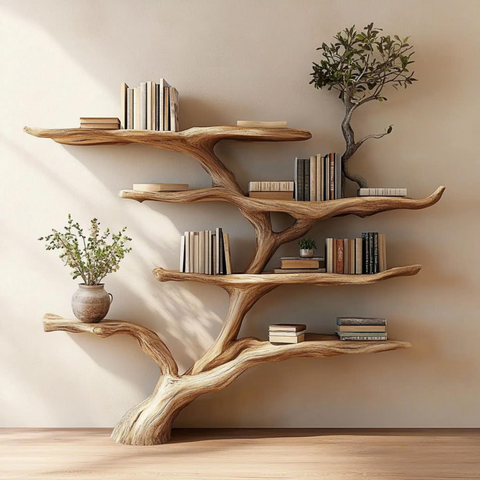
Open-plan homes and studio apartments offer flexibility, but separating different activities can be challenging without making a room feel smaller. A tree bookshelf room divider provides a practical solution by combining storage with a nature-inspired design. Its open branches help define separate areas while allowing light and sightlines to pass through. Whether you want to divide a living room, create a home office, or add a reading corner, the right bookshelf can bring structure to your space without making it feel enclosed.
1. Where Can You Use a Tree Bookshelf as a Room Divider?
A tree bookshelf can separate different functional areas while maintaining a visual connection between them. Its best placement depends on your floor plan, furniture arrangement, and how much privacy each area needs.
1.1 Between the Living Room and Dining Area
In an open-plan home, a tree bookshelf can mark the transition between the living room and dining area without requiring a solid wall. Position it between the two zones to create a subtle boundary while keeping the overall layout connected.
The open structure helps preserve sightlines, while the shelves provide space for books, ceramics, or small decorative objects. Choose a design that allows people to move comfortably between the living and dining areas without creating a narrow passage.

Tree bookshelf divide the living room and dining area
1.2 Behind a Sofa in an Open-Plan Living Room
Placing a tree bookshelf behind a sofa is an effective way to define the living area, especially when the seating arrangement does not sit against a wall. The bookshelf creates a visual backdrop while separating the lounge from the rest of the room.
This arrangement can also provide additional storage without requiring another large piece of furniture. Keep the shelves relatively balanced and avoid filling every branch, so the divider does not feel too heavy behind the sofa.
1.3 Between a Living Area and Home Office
If your home office shares space with the living room, a tree bookshelf can help distinguish work and relaxation zones. Position it between the desk and seating area to establish a clear boundary without completely isolating the workspace.
Books, small plants, and a few decorative objects can make the divider feel integrated with both areas. For a functional setup, ensure that the bookshelf does not block natural light or interfere with access to the desk.

A tree bookshelf between living area and home office
1.4 Separating a Bedroom From a Workspace
In a bedroom that also serves as a home office, a tree bookshelf can visually separate the bed from the desk. This creates a more defined workspace while maintaining an open feel.
A partially open design is particularly useful when you want to distinguish work from rest without making the bedroom feel divided into small compartments. Place frequently used books and work materials on accessible shelves, while keeping the display simple enough to support a relaxing atmosphere.
1.5 Dividing a Studio Apartment Into Functional Zones
Studio apartments often combine sleeping, dining, working, and living areas within one room. A tree bookshelf divider can help organize these activities without taking up the space required for a full partition.
For example, you could place it between the bed and living area or use it to separate a desk from the main seating zone. A compact design with an open structure is often more suitable for a small studio than a deep, solid bookcase.
Before choosing a bookshelf, consider how people move through the apartment and whether the divider will interfere with windows, doors, or everyday activities.

Dividing a studio apartment into functional zones
1.6 Creating a Small Reading Corner
A tree bookshelf can also define a reading corner within a larger room. Position it beside a comfortable chair or a small rug to distinguish the area from the surrounding space.
The bookshelf provides storage for favorite books while its branch-inspired shape adds visual interest. A floor lamp and a small side table can complete the corner without requiring additional partitions.
See more: How to Choose a Large Wood Bookshelf for Your Home
2. What Should You Consider Before Using a Tree Bookshelf as a Room Divider?
Before choosing a tree bookshelf room divider, consider the available space, how both sides will be used, and the effect on natural light and airflow. A divider should improve the layout rather than make movement more difficult or leave one area feeling cramped.
2.1 Measure the Available Floor and Ceiling Space
Measure the intended placement carefully, including the bookshelf's width, depth, and height. Make sure there is enough room to walk around it and access nearby furniture comfortably.
A tall bookshelf can create a stronger visual boundary, while a shorter design may be better for maintaining open sightlines. In a small apartment, a narrow or open-backed design can help preserve a sense of space. Also consider the ceiling height and nearby furniture. The divider should look proportional to the room rather than overwhelming the surrounding interior.

Measure the available floor and ceiling space
2.2 Plan What You Want to Store on Each Side
Think about how the bookshelf will function from both sides. If it separates a living room and dining area, one side might display books while the other holds decorative objects. For a bedroom and workspace, the shelves could store reading materials and selected office supplies.
Not every tree bookshelf is designed to be accessed equally from both sides, so check its construction and shelf arrangement before deciding on the layout. Avoid overloading the shelves. A divider should remain visually balanced, and the weight of books and decorative items must stay within the manufacturer's specifications.
2.3 Consider Natural Light and Airflow
One of the main advantages of an open bookshelf divider is that it can separate areas without completely blocking light. This is particularly important in studio apartments or rooms with limited windows.
Choose a design with enough open space between the branches and shelves to preserve sightlines. Avoid placing too many large objects together in the same section, as this can make the divider feel more solid than intended.
Allow enough clearance around windows, ventilation points, and walkways. If the bookshelf is tall or freestanding, check its stability and follow the manufacturer's installation recommendations.

Consider natural light and airflow
3. How to Style a Tree Bookshelf Room Divider
Styling helps a tree bookshelf divider feel like part of the interior rather than an object placed in the middle of a room. The goal is to balance storage, decoration, and openness.
3.1 Use Books to Create Visual Weight
Books can help establish a clear boundary between two areas. Arranging several books together creates a stronger visual presence, while leaving other branches open keeps the divider from looking too dense.
You can organize books by size, color, or subject, depending on the surrounding decor. For example, a living room and dining area may benefit from a combination of books and decorative objects, while a workspace divider might prioritize reference books and notebooks. Keep heavier books on appropriately supported lower shelves when possible, and follow the bookshelf's stated weight limits.
3.2 Add Plants for a Natural Transition
Small plants can complement the tree-inspired structure and help connect the bookshelf with the rest of the room. Trailing plants, compact leafy varieties, or small potted plants can add texture without requiring additional furniture.
Choose plants according to the available light and the amount of maintenance you want to manage. Use leak-resistant pots or protective trays to prevent water from damaging the wood finish. Avoid placing plants where their leaves or trailing stems obstruct walkways or interfere with the use of nearby furniture.

Add more plants on the shelf for a natural transition
3.3 Display Artwork and Decorative Objects
A few carefully chosen objects can make a bookshelf divider visually appealing from both sides. Consider small sculptures, ceramic pieces, framed photographs, or decorative objects that complement the room's color palette.
Try to distribute items rather than filling every shelf. Empty spaces allow light to pass through and help preserve the open appearance that makes a bookshelf divider useful. If both sides are visible, check the display from each angle. The arrangement should look intentional whether viewed from the living room, dining area, or workspace.
3.4 Match the Wood With the Rest of the Interior
The wood tone can influence how well the divider fits into the room. Light wood often works well with Scandinavian and Japandi interiors, while warmer or darker finishes may complement rustic and traditional spaces.
You do not need to match every wooden item exactly. Instead, look for compatible undertones and repeat a few materials or colors throughout the room to create visual continuity.
For a more distinctive interior, a handcrafted tree bookshelf can serve as a sculptural feature. Tailor Wood Haven offers made-to-order natural wood furniture with customizable shapes, sizes, and finishes, providing an option for homeowners looking for a bookshelf that suits their space and personal style.

Match the wood with the rest of the interior
4. Frequently Asked Questions About Tree Bookshelf Room Dividers
4.1 How Tall Should a Bookshelf Room Divider Be?
The ideal height depends on the room's dimensions and how much separation you want. A lower bookshelf preserves open sightlines and works well in smaller spaces, while a taller design creates a more noticeable boundary. Measure the room and consider nearby furniture before choosing a height.
4.2 How Do You Make a Bookshelf Divider Look Good From Both Sides?
Use a balanced mix of books, plants, and decorative objects, and avoid concentrating everything on one side. Leave some shelves open so light can pass through, and check the arrangement from both areas. If the bookshelf has a designated front or back, confirm that its design suits your intended placement.
4.3 Can a Room Divider Bookshelf Work in an Open-Plan Apartment?
Yes. A room divider bookshelf can help define a living area, dining space, workspace, or sleeping zone without completely closing off the room. An open tree bookshelf is particularly useful when maintaining natural light and visual connection is important. Choose a size that suits the apartment and leaves enough space for comfortable movement.
A tree bookshelf room divider offers a practical way to organize an open-plan home while preserving its spacious feel. From separating a living room and dining area to defining a home office or studio apartment, it combines storage with a distinctive, nature-inspired design.
For the best results, choose a size that suits the layout, consider how both sides will be used, and keep the styling balanced. With thoughtful placement and a suitable design, a tree bookshelf divider can help create functional zones without making your home feel closed off.
 Skip to content


 Farmhouse Floating Shelves – Perfect handcrafted furniture
 Farmhouse Narrow Console Table with Storage for Entryway or Living Room
 Custom Rustic Console – Natural Wood, Made to Order