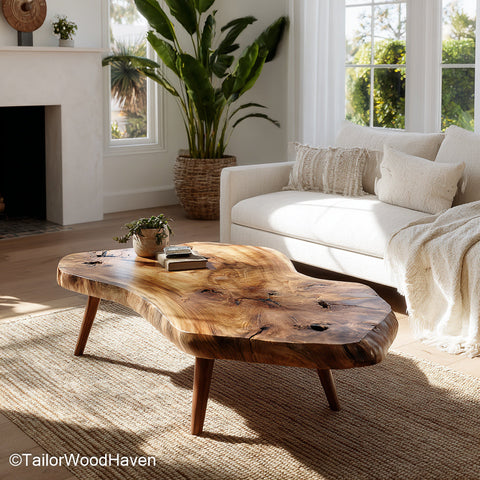
Drying live edge slabs is essential before turning freshly cut wood into furniture. Excess moisture can cause the wood to crack, warp, or shrink after construction.
Whether you're making a coffee table or a dining table, proper drying helps the slab remain more stable over time. The right method depends on the wood species, slab thickness, storage conditions, and intended use.
How Long Does It Take to Dry Live Edge Slabs?
Drying time varies depending on the slab's thickness, wood species, temperature, humidity, and airflow.
As a rough guideline, air drying may take around one year per inch of thickness under suitable conditions. Kiln drying is generally faster, often taking several weeks to a few months, depending on the wood and drying schedule.
Thicker slabs typically take longer because moisture must escape from deeper inside the wood. If you're choosing material for a furniture project, read our guide on how thick a live edge table slab should be to understand the recommended thickness for different table types.
These time estimates are only starting points. Always check the wood's moisture content before using it.
How to Air Dry Live Edge Slabs
Air drying is an affordable option if you have enough space and can wait for the wood to dry naturally.
Follow these steps to help your slabs dry evenly:
-
Seal the end grain. Apply a suitable end-grain sealer to slow moisture loss and reduce the risk of end checking.
-
Stack the slabs properly. Place dry, evenly sized stickers between slabs to allow airflow. Align the stickers vertically and use a level, sturdy foundation.
-
Choose a sheltered location. Protect the wood from rain while allowing air to circulate around the stack.
-
Monitor moisture content. Use a moisture meter to check several locations periodically, especially on thick slabs.
Avoid exposing the wood to harsh, uncontrolled drying conditions. Moisture loss that happens too quickly can increase the risk of cracks and other defects.
Air Drying vs. Kiln Drying Live Edge Slabs
Both methods remove moisture, but they differ in speed and control.
| Factor |
Air Drying |
Kiln Drying |
| Drying time |
Usually slower |
Usually faster |
| Cost |
Lower direct cost |
Requires equipment or a professional service |
| Moisture control |
Depends on weather conditions |
More controlled |
| Best for |
Projects with flexible timelines |
Projects needing controlled moisture levels |
Air drying works well when you have suitable storage and plenty of time. Kiln drying is often a better option when preparing slabs for indoor furniture and achieving a specific moisture level.
Some slabs are air dried first and then kiln dried to complete the process.
What Moisture Content Should Live Edge Slabs Have?
Moisture content (MC) measures the amount of water in wood relative to its oven-dry weight.
For indoor furniture in many climate-controlled environments, around 6%–9% moisture content can be a useful target. The ideal level depends on the humidity and temperature of the room where the furniture will be used.
Before working with a slab:
-
Check moisture at multiple points.
-
Do not assume the center is dry because the surface feels dry.
-
Allow the slab to acclimate to the intended working environment.
-
Recheck moisture before final machining and finishing.
The goal is to bring the wood close to the moisture level it will maintain in its final environment, reducing movement after construction.
How to Prevent Cracking and Warping
Cracking and warping are common concerns when drying live edge slabs. Proper handling can help reduce the risk.
-
Prevent end checking: Seal the end grain soon after cutting.
-
Reduce warping: Use a level foundation, consistent stickers, and adequate support.
-
Avoid uneven drying: Store slabs in a sheltered, well-ventilated area.
-
Check moisture regularly: Use a moisture meter instead of judging dryness by appearance alone.
Natural wood can still move as humidity changes, even after drying. Proper drying reduces the risk but cannot eliminate every defect.
See more: How to Flatten a Live Edge Slab
How to Know When Live Edge Slabs Are Dry Enough
A slab is ready for furniture making when its moisture content is suitable for the intended environment and the wood has had time to stabilize.
Use a moisture meter to check several locations. Significant differences between readings may indicate uneven moisture distribution, meaning the slab needs more drying or acclimation.
Once the slab reaches the appropriate moisture level, allow it to adjust to the workshop or indoor environment before final milling and finishing.
When the wood is ready, follow our guide on how to finish a live edge slab to prepare the surface and apply a suitable protective coating.
Drying live edge slabs requires patience, proper storage, and regular moisture checks. Air drying is economical but slow, while kiln drying offers more controlled results in less time.
Consider the slab's thickness, wood species, and final environment instead of relying on a fixed drying schedule. Properly dried wood provides a more stable foundation for long-lasting furniture.
If you're planning a natural wood centerpiece for your living room, explore the handcrafted live edge coffee tables at Tailor Wood Haven.
 Skip to content


 Farmhouse Floating Shelves – Perfect handcrafted furniture
 Farmhouse Narrow Console Table with Storage for Entryway or Living Room
 Custom Rustic Console – Natural Wood, Made to Order