 Skip to content
Your cart (0)
Your cart is empty
Tax included and shipping calculated at checkout
Recommended products

Drawer menu
Tax included and shipping calculated at checkout
Your wishlist is empty.
Continue shopping

A bookshelf can hold much more than books. The right combination of greenery, artwork, ceramics, personal objects, and useful storage can make your shelves feel more collected and intentional. The key is not to fill every empty space, but to mix different sizes, shapes, textures, and meaningful pieces so the display feels balanced rather than crowded. From practical storage to decorative accents, the article below will show you the best things to put on a bookshelf and how to use them effectively.
The best things to put on a bookshelf combine practical storage with decorative and personal elements. Books should still have a place, but adding plants, artwork, ceramics, sculptures, and other objects can give the shelves more depth and personality. You can also leave some areas empty to create visual breathing room.
Books are the most obvious choice, but they can also become part of the overall styling. Instead of lining every book upright, combine vertical rows with a few horizontal stacks.
You can also organize books by size, color, subject, or a combination of these approaches. Place a decorative object on top of a small stack or use bookends to keep larger groups organized.

Books are the most obvious choice for a bookshelf
Small plants are an easy way to bring color and a natural element to a bookshelf. Plants such as trailing vines, small potted plants, or compact succulents can soften the straight lines of shelving.
Place greenery on different shelves rather than directly above one another. If the bookshelf receives little natural light, consider plants that can tolerate lower-light conditions or use realistic faux greenery.
Framed artwork and personal photos can make a bookshelf feel more personal without requiring additional wall space. Smaller frames can stand at the back of a shelf, while larger pieces can lean against the wall behind books or objects.
Mix photographs with prints, illustrations, or other artwork to avoid making the display feel like a collection of identical frames. Varying the frame sizes can also create a more relaxed arrangement.

Framed artwork and personal photos can make a bookshelf feel more personal
Small sculptures and decorative objects can add shape and visual interest to shelves filled with books. Look for pieces with interesting silhouettes, materials, or textures rather than choosing many objects that look alike.
A single sculptural piece can work particularly well on an otherwise simple shelf. This approach allows the object to act as a focal point without making the entire bookcase feel overly decorated.
>>> See more: 25+ Rooms With Bookshelves Ideas That Make Storage Part of the Design
Candles and candleholders can add warmth and texture to a bookshelf. Choose pieces that complement the colors and materials already present on the shelves.
For safety, be careful with lit candles around books, paper, wood, and other flammable materials. If the bookshelf is in a busy area or you simply want a worry-free display, decorative or battery-operated candles can provide a similar visual effect.

Candles and candleholders can add warmth and texture to a bookshelf
Vases, pottery, and ceramic pieces are useful for adding rounded shapes to shelves dominated by books and rectangular frames. They can be displayed on their own or used to hold dried flowers and greenery.
Try mixing different heights and finishes while keeping the overall color palette cohesive. A handmade ceramic vase can also introduce subtle variations that make the bookshelf feel less uniform.
Storage boxes and baskets are practical things to put on shelves when you need to hide smaller items. They can hold cables, stationery, remote controls, accessories, or other objects that would otherwise create visual clutter.
Choose containers that fit comfortably within the shelf and complement the rest of the room. Woven baskets can add texture, while simple boxes can create a cleaner and more minimalist look.

Storage boxes and baskets are practical things to put on shelves
Travel souvenirs can give a bookshelf a sense of personality and history. Instead of hiding meaningful objects in storage, use the shelves to display a few pieces that remind you of places, experiences, or people.
The goal is not to display everything at once. Select a few favorites and combine them with books and neutral decorative pieces so the collection feels intentional rather than crowded.
A small table lamp can add both function and atmosphere to a bookshelf. It can provide a soft source of light for a reading corner or simply highlight a particular section of the shelves.
Choose a compact lamp that fits securely on the shelf and does not block too many books or decorative objects. Make sure the shelf can safely support the lamp and that the electrical cord can be routed neatly.

A small lamp will add more atmosphere for your bookshelf.
Bowls and trays are useful for adding a different shape while providing a place for small objects. A shallow tray can hold keys, small collectibles, or decorative items, while a bowl can simply act as a sculptural accent.
These pieces work especially well when you want the shelf to look styled without adding too many small individual objects.
A small mirror can reflect light and add depth to a bookshelf. Leaning a mirror against the back of a shelf can also create the impression of a more layered display.
This works particularly well in smaller rooms where you want the shelves to feel less visually heavy. Choose a mirror that fits securely and avoid placing it where it could easily fall or become damaged.

A small mirror can reflect light and add depth to a bookshelf
A decorative clock can add function while breaking up the repeated shapes of books and rectangular frames. Smaller clocks can sit directly on a shelf, while larger designs can become a focal point within a wider bookcase.
Choose a style that matches the overall interior. A simple clock can work in a minimalist room, while a vintage-inspired design can add character to a more traditional bookshelf.
Natural objects can introduce texture and organic shapes to a bookshelf. Stones, driftwood, shells, branches, or other collected natural materials can contrast nicely with books and manufactured décor.
A few carefully selected pieces are usually enough. Their irregular shapes can make the arrangement feel more relaxed and connected to nature.
Handmade objects can make a bookshelf feel more individual because they often have small variations that mass-produced decor lacks. Consider handmade ceramics, carved wood pieces, woven objects, or small artworks.
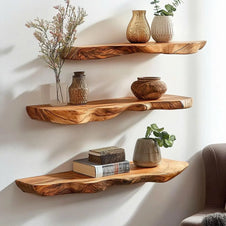
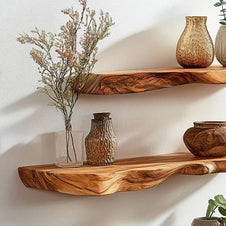
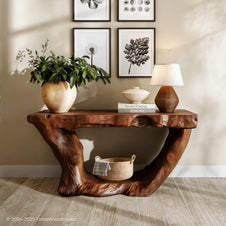
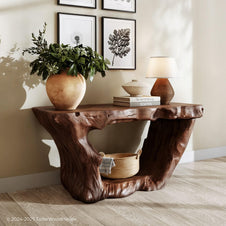
These pieces can also complement a natural or handcrafted interior. If you prefer furniture with the same sense of individuality, natural wood bookshelves from Tailor Wood Haven can provide a warm foundation for displaying books and one-of-a-kind objects.

One-of-a-kind decorative style from Tailor Wood Haven
Empty space may seem like an unusual answer to what to put on a bookshelf, but it is one of the most useful styling choices. Leaving part of a shelf empty gives the eye a place to rest and prevents the entire bookcase from feeling crowded.
You do not need to decorate every compartment. In many cases, a few intentional gaps can make the objects around them stand out more clearly.
The easiest way to avoid a cluttered bookshelf is to build the arrangement around a few larger pieces, vary heights and shapes, and leave some empty space. Rather than placing one small object after another, create visual groups and balance decorative pieces with books.
Begin with the larger elements you want to display, such as a large vase, framed artwork, sculpture, or horizontal stack of books. These pieces establish the visual structure of the shelf.
Once the larger objects are in place, add smaller items around them. This is usually easier than starting with many small decorations and trying to create balance afterward.
Using objects with different heights and shapes keeps a bookshelf from looking repetitive. Combine tall books with short stacks, round vases with rectangular frames, and organic objects with straight-edged furniture.
Avoid putting similarly sized objects next to one another across every shelf. Variation creates a more natural and visually interesting rhythm.

Arrange your bookshelf with different heights and shapes of items
Grouping related objects can make a bookshelf look more intentional. For example, you might place several travel souvenirs together or create a small collection of ceramics on one section of the bookcase.
However, avoid turning every shelf into a separate collection. Let some groups overlap visually with books or other neutral pieces to create continuity.
Books should remain an important part of a bookshelf, but they do not have to occupy every available section. Mix upright books with horizontal stacks and place a small decorative object beside or on top of them.
This creates different visual levels while keeping the bookcase functional. You can also vary the orientation of book groups without making the arrangement feel random.

Balance books with decorative pieces
The most interesting bookshelf decor ideas often include objects that have some personal meaning. A favorite photograph, travel souvenir, handmade piece, or small collection can make the shelves feel connected to the person who lives there.
Mix these meaningful objects with everyday books and simple decor. This creates a display that feels collected over time rather than styled entirely from a single store.
There is no fixed number of decorative items that works for every shelf. A better approach is to consider the size of the shelf and the objects you are displaying. One large object may be enough for a narrow shelf, while a wider shelf can support a small group of complementary pieces.
As a starting point, try combining two or three objects of different sizes rather than filling the shelf with many small decorations.
You can style a bookshelf on a budget by using items you already own, such as books, framed photos, plants, travel souvenirs, ceramics, and natural objects. Rearranging these pieces can create a completely different look without requiring new décor.
You can also use simple storage boxes, thrifted frames, secondhand ceramics, or handmade pieces to add texture and personality without spending much.

You can style a bookshelf on a budget by using items you already own
No. Leaving some shelves partially or completely empty can make a bookshelf look more balanced and intentional. Empty space gives the eye a visual break and prevents books and decorative objects from competing with one another.
If the bookcase feels too busy, try removing a few pieces before adding anything new. A simpler arrangement often creates a stronger overall effect.
The best things to put on a bookshelf are not necessarily the most expensive or decorative pieces. Books, plants, artwork, ceramics, personal collections, natural materials, and useful storage can all work together to create shelves that feel functional and personal.
When styling your bookcase, focus on variety, balance, and negative space rather than trying to fill every shelf. Start with larger pieces, mix different heights and shapes, and include a few objects that tell your story. A natural wood bookshelf from Tailor Wood Haven can also provide a warm, distinctive backdrop for books and carefully chosen decor.


