A hallway is often treated as a passage between rooms, but it can offer valuable space for book storage. With the right hallway bookshelf, an unused corridor can become a compact home library without needing an entire room. The key is choosing shelving that fits the hallway's width, keeps the walkway comfortable, and works with the style of your home.
Whether you have a long corridor, a narrow hallway, or an entryway with an unused wall, the ideas below can help you turn the space into a functional and inviting library.
Can a Hallway Really Work as a Home Library?
Yes, a hallway can work as a home library when the available wall space is used carefully and the bookshelf does not interfere with movement. Long hallways can be particularly useful because they often have extended sections of wall that are otherwise left empty.
A hallway library does not have to look like a traditional library. A few wall-mounted shelves can create a simple book display, while a longer built-in bookcase can hold a larger collection. You can also mix books with artwork, plants, and other decorative objects to make the space feel more like part of your home.
The main consideration is proportion. A bookshelf that is too deep or bulky can make a hallway feel tight, while a shallow or vertically oriented design can provide storage without taking over the space.
Your hallway can easily turn into a home library
How Do You Design a Hallway Bookshelf Without Making the Space Feel Narrow?
The best way to keep a hallway bookshelf from feeling bulky is to prioritize shallow shelving, vertical storage, and an open visual structure. The bookshelf should work with the hallway rather than compete with the space needed for everyday movement.
1. Choose Shallow Shelving for Narrow Hallways
A shallow bookshelf is often the better choice for a narrow hallway because it provides storage while taking up less space from the walking area. Wall-mounted shelves and slim bookcases can be particularly useful when floor space is limited.
You do not need deep shelves to create a useful book display. Standard books, smaller decorative objects, and framed pieces can work well on a more compact shelf.
Before choosing a shelf depth, measure the hallway and consider how people move through it. Doors, furniture, and other features can also affect how much space is actually available.
For a narrow hallway bookshelf, keeping the design visually simple can be just as important as keeping it physically shallow. Open shelving, lighter finishes, and some empty space can help the hallway feel more spacious.
Choose shallow shelving for narrow hallways
2. Use Vertical Space Instead of Floor Space
Using vertical space allows a hallway bookshelf to provide more storage without taking up additional floor area. This is particularly useful in narrow corridors where every inch of floor space matters.
A tall, narrow bookshelf can make use of unused wall height, while floor-to-ceiling shelving can create a stronger home-library effect. Wall-mounted shelves can achieve a similar result with a lighter visual appearance.
You can also keep less frequently used books on higher shelves and place your everyday favorites at a more comfortable height.
The goal is not simply to make the bookshelf as tall as possible. Its height should still feel balanced with the hallway and surrounding architecture.
Try to utilize the vertical space to make a hallway bookshelf
5 Hallway Bookshelf Ideas Layouts That Actually Work
The best hallway bookshelf layout depends on the shape and function of the space. A long corridor can support a full library wall, while a narrow hallway may work better with shelving at the end or around an existing doorway.
1. A Long Hallway Library Wall
A long bookshelf running along one hallway wall can turn an unused corridor into a compact home library. This layout works particularly well when the hallway has a long, uninterrupted wall.
You can use continuous shelving for a more built-in appearance or divide the wall into several sections. Mixing books with artwork and decorative objects can keep the display from looking too uniform.
For a more relaxed look, avoid filling every shelf. Leaving some sections open gives the wall more visual breathing room.
A natural wood finish can also add warmth to a long hallway, especially when the rest of the space uses neutral colors and simple furniture.
A long bookshelf running along one hallway
2. A Bookshelf at the End of the Hallway
Placing a bookshelf at the end of the hallway can create a natural focal point without taking space from the main walking path. This can be especially useful when the side walls are too narrow for shelving.
The end wall can accommodate a deeper or more distinctive bookcase because it does not project into the length of the corridor. You can use it for books, artwork, plants, or a statement decorative piece.
If you want the bookshelf to feel connected to the rest of the home, repeat materials or colors already used in nearby rooms.
A Bookshelf at the End of the Hallway
See more: Tree Bookshelf vs Standard Bookcase – Which One Fits Your Home Best?
3. A Hallway Bookcase Around a Doorway
A bookshelf around a doorway can turn the wall surrounding an entrance into useful storage. Built-in shelves can run vertically along both sides of the doorway and, where the layout allows, across the top.
This approach can make the bookcase feel like part of the architecture rather than a separate piece of furniture. It is particularly effective in homes with unused wall space around doors.
Because doorways come in different sizes, measurements are important. The design should leave enough room for the door to open and close comfortably and should work with nearby walls and furniture.
A Hallway Bookcase Around a Doorway
4. A Low Bookshelf as an Entryway Drop Zone
A low hallway bookcase can combine book storage with a practical entryway surface. The lower shelves can hold books or baskets, while the top can be used for small everyday items and decorative objects.
This layout works best when the entryway or hallway is wide enough to accommodate a low piece of furniture without making movement difficult.
You can use baskets to hide smaller items and keep books grouped by size or subject. A plant, framed artwork, or a small decorative object can also make the top surface feel more intentional.
A Low Bookshelf as an Entryway Drop Zone
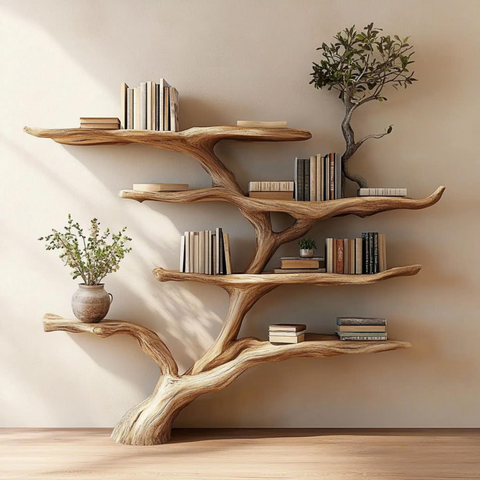
5. A Sculptural Natural Wood Hallway Bookshelf
A sculptural natural wood hallway bookshelf can turn a practical storage piece into a statement feature. Organic shapes, a branch bookshelf, and visible wood grain can give the hallway more warmth and personality than a standard rectangular bookcase.
Because the bookshelf already has a strong visual presence, keep the styling relatively simple. A few books, plants, or decorative objects are usually enough to complement the natural form.
A Sculptural Natural Wood Hallway Bookshelf
If you like this organic approach, Tailor Wood Haven also offers handcrafted furniture inspired by natural forms, including tree and branch-style designs. The brand's use of natural wood allows grain and other natural characteristics to become part of the furniture's overall appearance.
Is a Custom Hallway Bookshelf Worth Considering?
A custom hallway bookshelf can be worth considering when standard furniture does not fit the hallway's dimensions, layout, or design style. It gives you more control over the size, shape, material, and finish of the final piece.
This can be particularly useful for hallways because they often have unusual proportions. A standard bookcase may be too deep, too wide, or simply unable to fit around doors, corners, or other architectural features.
Frequently Asked Questions About Hallway Bookshelves
1. Is a hallway bookshelf a good idea for a narrow hallway?
Yes. A hallway bookshelf can work well in a narrow hallway when you choose a shallow, wall-mounted, or vertically oriented design that does not interfere with movement.
2. How deep should a hallway bookshelf be?
The ideal depth depends on the hallway's available space, the books you want to store, and how much clearance you need for comfortable movement. Measure the hallway before choosing the shelf rather than relying on a standard depth.
3. Can I turn a hallway into a home library?
Yes. A long wall can be fitted with continuous shelving to create a compact home library. You can also use a few floating shelves if you only want to display a smaller collection.
Easily turn your hallway into a home library
4. Where is the best place for a bookshelf in a hallway?
A bookshelf can work along a long wall, around a doorway, or at the end of the hallway. The best location depends on the hallway's width and where it is possible to add storage without interfering with traffic.
5. Is natural wood suitable for a hallway bookshelf?
Yes. Natural wood can add warmth and visual character to a hallway, particularly when combined with a simple or sculptural design. Its natural grain can also make the bookshelf feel more distinctive.
6. Can a hallway bookshelf be custom-made?
Yes. A custom bookshelf can be designed around specific hallway dimensions, shapes, wood choices, and finishes. This can be particularly helpful for narrow or unusually shaped spaces.
Tailor Wood Haven provides custom-made hallway bookshelves for your needs
A hallway does not have to be just a passage between rooms. With the right hallway bookshelf, it can become a useful storage area, a compact home library, or even a distinctive design feature.
For narrow spaces, shallow and wall-mounted shelves can help preserve the walking area, while long hallways can accommodate a full library wall. A bookshelf at the end of the corridor can create a focal point, and a low design can combine books with useful entryway storage. If you want something more distinctive, natural wood and sculptural designs can add warmth and personality.
When standard furniture cannot provide the right fit, customization can give you more control over the final result. Tailor Wood Haven can help tailor the size, shape, wood, and finish to create a bookshelf that suits both your hallway and your personal style.
 Skip to content


 Farmhouse Floating Shelves – Perfect handcrafted furniture
 Farmhouse Narrow Console Table with Storage for Entryway or Living Room
 Custom Rustic Console – Natural Wood, Made to Order