 Skip to content
Your cart (0)
Your cart is empty
Tax included and shipping calculated at checkout
Recommended products

Drawer menu
Tax included and shipping calculated at checkout
Your wishlist is empty.
Continue shopping


Adding a personal touch to your home decor can be challenging, especially when store-bought shelves often feel generic, overpriced, or flimsy. DIY live edge floating shelves offer a perfect solution, combining rustic beauty with modern functionality. These shelves showcase the natural charm of wood while allowing you to tailor size, finish, and style to your unique space.
Whether you want a statement piece in your living room or functional shelving in the kitchen, building these shelves yourself can save money, offer a satisfying DIY experience, and result in a one-of-a-kind design.
Many homeowners struggle to find shelving that looks good, feels sturdy, and fits their specific space. Pre-made options often fall short on durability, size, or aesthetic appeal. DIY live edge floating shelves solve these issues by letting you choose exactly the wood, finish, and size that matches your vision. The “live edge” style maintains the natural contours of the wood, giving each piece a unique character that can’t be replicated with mass-produced shelves.
These shelves are not just decorative; they are highly functional. You can adjust the depth to hold books, display plants, or store kitchen essentials without compromising on style. The floating design also creates a sleek, modern look by hiding brackets, giving the illusion that the shelf is effortlessly suspended on your wall. This combination of rustic charm and minimalist elegance makes live edge floating shelves a versatile addition to any home.
Before you begin, gathering the right tools and materials is crucial to ensure a smooth DIY process. Here’s what you’ll need:
Essential tools: A saw for cutting wood to size, sanders for smoothing surfaces, a drill for bracket installation, level, and measuring tape.
Wood types: Hardwood like oak or maple is sturdy and long-lasting, while reclaimed timber adds unique character and sustainability. Softwood options work if your shelves are lightweight.
Finishes and sealants: Polyurethane or tung oil protects the wood and enhances its natural color.
Safety equipment: Gloves, safety goggles, and a dust mask are essential to prevent injuries.
With tools and materials ready, you can move on to planning and preparing your shelf layout, ensuring precise measurements and a seamless installation.
Building diy live edge floating shelves may seem intimidating at first, but breaking the process into simple steps makes it manageable and enjoyable.
The first step in creating diy live edge floating shelves is choosing a wood slab that complements your space. Look for a piece that’s flat and free of major cracks or defects. If using reclaimed wood, inspect it carefully for nails, screws, or other debris. Once selected, clean the slab and lightly sand it to remove rough areas while preserving the natural edge. This preparation ensures a smooth surface for finishing and sets the foundation for your diy live edge floating shelves project.
Next, cut the wood to your desired length. Use a level and measuring tape to ensure accuracy. After cutting, sand the surface and edges to remove splinters and smooth any rough spots. Maintaining the live edge means you’ll want to avoid over-sanding the natural contours. Once sanded, apply a finish such as tung oil or polyurethane to protect the wood, enhance its color, and prevent warping over time. Proper finishing is crucial to achieve durable and visually appealing diy live edge floating shelves.
The hidden bracket system is what gives floating shelves their clean, modern appearance. Measure and mark the bracket positions carefully to ensure the shelf is level. Drill into the studs behind the wall to secure brackets safely. Insert the brackets into pre-drilled holes in the wood slab, making sure the shelf slides on easily but sits securely. This method supports the shelf’s weight while keeping the mounting hardware invisible.
Finally, lift the shelf onto the wall and check for level. Small adjustments can be made by loosening and retightening brackets. Ensure the shelf is firmly seated to prevent wobbling or sagging. Test its stability with lightweight items first before gradually adding heavier objects like books or decor. Once your shelves are mounted, it’s time to consider styling and placement, maximizing both functionality and aesthetic appeal for your diy live edge floating shelves setup.
Styling your diy live edge floating shelves can transform a simple wall into a focal point. Here are some popular approaches:
Rustic farmhouse style: Pair shelves with mason jars, pottery, and greenery for a cozy, homey look.
Modern minimalism: Keep decorations simple with a few books, framed photos, or geometric planters.
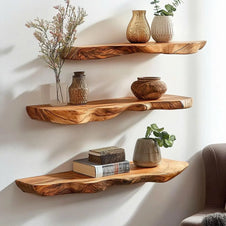
Layered shelves: Install multiple shelves at varying heights for a dynamic display, mixing plants, books, and decorative objects.
For larger wall layouts, consider exploring this set of 5 floating shelves that complements any space and provides cohesive styling.
Thoughtful styling enhances the room’s personality while making your shelves practical for everyday use.
Even small mistakes can compromise the functionality and safety of your shelves. Watch out for these common pitfalls:
Choosing wood that’s too thin or weak for the intended load.
Installing brackets incorrectly, which can lead to shelves falling.
Overloading shelves beyond their weight capacity.
By avoiding these errors, you ensure your shelves remain sturdy, safe, and visually appealing for years to come.
Finding quality wood and inspiration is essential for your DIY project. Hardware stores and reclaimed timber suppliers provide a range of options to suit your design needs.
For detailed guidance, check out this external resource on how to build live edge floating shelves, drop by Wilkerdos Guide. This guide offers tips for choosing wood slabs, finishing edges, and installing brackets correctly.
With the right resources, you can confidently select materials and start crafting shelves that perfectly fit your home.
If you prefer to skip the building process, high-quality pre-made options are available. For deeper storage or larger decor items, consider these deep rustic wood shelves.
These shelves offer the charm of live edge wood with the convenience of ready-to-mount functionality.
Reclaimed timber offers a sustainable, unique alternative for your home. Each piece carries natural variations, knots, and textures that add character and warmth. Discover floating rustic wood shelves built from reclaimed timber.
They are ideal for kitchens, living rooms, or any space where you want a natural, authentic feel without heavy DIY labor.
Reclaimed options are perfect for homeowners who want style, sustainability, and practicality combined.
For those who want a sleek, modern look without building from scratch, rustic wood floating shelves with hidden brackets.
These shelves maintain the natural beauty of wood while offering sturdy construction and easy installation. They are ideal for displaying books, plants, or decorative items in any room.
Building diy live edge floating shelves can be beginner-friendly if you follow a step-by-step guide. With basic tools like a saw, drill, and sander, plus some patience, even novice DIYers can create beautiful, functional shelves. Starting with a small project is recommended to gain confidence before tackling larger pieces.
Hardwoods such as oak, maple, or walnut are ideal for diy live edge floating shelves because they are sturdy, durable, and retain the natural edge beautifully. Reclaimed timber is also popular for its rustic character and eco-friendliness. Softwoods can be used for lightweight shelves but may warp under heavy loads.
Safety is crucial. Make sure to mount brackets into wall studs, use the correct size hardware for your shelf’s weight, and avoid overloading the shelves. Proper sanding, sealing, and finishing the wood also prevent cracks or splintering, ensuring your diy live edge floating shelves remain both functional and stylish.
Whether you choose to build your own or purchase ready-made options, diy live edge floating shelves offer a combination of rustic charm and modern functionality. They solve common home decor pain points by being customizable, durable, and visually striking. By following this guide, you can confidently select materials, install shelves safely, and style them beautifully. Start your project today or explore pre-made solutions to bring timeless beauty and practicality to your home.


