The way you place your shelves influences balance, flow, and the overall character of the room. This guide will show you where to hang shelves in living room, how to strike the right balance between function and style, and professional ideas to elevate your home design.
Why Shelf Placement Matters in Living Room Design
The strategic placement of shelves is a crucial aspect of living room design, significantly impacting the layout, flow, and overall aesthetic.
They are architectural elements that help define a space, guide the eye, and create balance. The right placement can also affect natural light, while a poor choice can make the space feel cluttered.

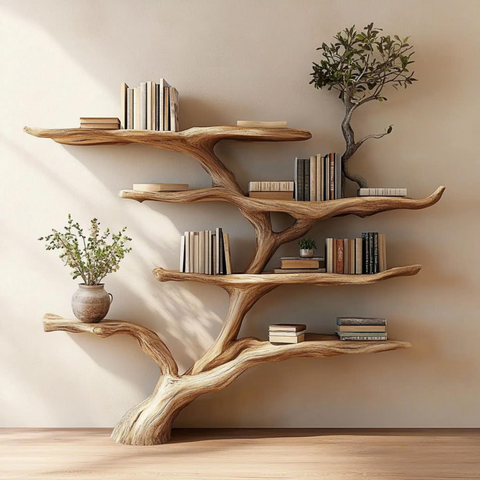
This shelf acts as an artistic centerpiece, transforming a blank wall into a dynamic focal point that complements the living room's modern design.
The key principle is "eye level and proportion", so shelves should be hung at eye level. When you're considering where to hang shelves in living room, take into account the height of surrounding furniture.
Placing shelves directly above a sofa or TV can create a cohesive vignette, but putting them too close to a window can block light.
By carefully considering these factors, you can ensure your shelves not only store items but also enhance the room's design.
Core Principles of Shelf Placement & Styling
Before deciding where to hang shelves in living room, it’s important to understand a few guiding principles. These ensure your shelves are not only practical but also enhance the overall design.
When placed correctly, shelves elevate your space; when misplaced, they can make the room feel chaotic or visually unbalanced.
1. Balance Proportion & Symmetry
-
Shelves should be proportional to the sofa, TV, or wall section where they’re installed.
-
Avoid hanging them too high or too low; eye-level placement creates balance.
-
A shelf that is too small on a wide wall looks lost, while an oversized shelf can overpower the entire room.
|
Common Mistake
|
Better Approach
|
|
Tiny shelf on a large wall
|
Choose a shelf at least 2/3 the width of the sofa or TV
|
|
Hanging shelves too high
|
Keep them around eye level (55-60 inches from the floor)
|
|
Oversized or bulky depth
|
Opt for shelves 6-10 inches deep for harmony
|

The minimalist white shelves create a sense of balance and clean symmetry, proving that simple shelves can be both functional and a stylish accent.
2. Function Meets Aesthetics
-
Ask yourself: Is this shelf for storage or decoration?
-
For storage: choose sturdy, weight-bearing designs.
-
For decoration: go with slim shelves styled with photos, plants, or artwork.
-
Striking the balance between function and style is at the heart of where to hang shelves in living room.
3. Negative Space & Breathing Room
-
Avoid filling 100% of the surface.
-
Leave 20-30% empty space to let the eye rest and highlight key objects.
-
This principle of “visual breathing room” transforms shelves from storage units into intentional design elements.
By applying these guidelines consistently, you’ll have a clear framework for deciding where to hang shelves in living room.
The result is not just a place to put things, but a carefully curated focal point that enhances the character of your entire living space.
Ideal Spots – Where to Hang Shelves in Living Room
A well-placed shelf can unify the space, create visual interest, and solve common storage challenges. Finding the right where to hang shelves in living room is the key to a polished, professional-looking space.
1. Above the Sofa
This is a classic choice, but it can be a tricky spot to balance. The simplest approach is to hang a single shelf that is either the same width or slightly wider than your sofa, which creates a sense of scale and purpose.
To prevent it from looking plain, you can combine it with framed art or even a wall-mounted lamp. This approach turns a simple shelf into a curated display, avoiding a one-dimensional feel.
2. Flanking the TV or Fireplace
The area around a TV or fireplace is often a natural focal point, making it an ideal place for shelving.
By placing shelves on both sides, you can create a perfectly symmetrical frame that draws the eye inward. A great option is to use vertical, built-in shelving to give the impression of a more permanent structure.
When exploring where to hang shelves in living room in this area, remember to keep the shelf depth shallow so it doesn't overpower the central element.
3. Near Windows & Corners
Don't let neglected areas like corners and the space around windows go to waste. A corner shelf is a smart way to transform a dead space into a functional storage or display area.
For a more artistic touch, you can use a tree bookshelf DIY design that mimics the natural shape of branches.
Similarly, hanging shelves around a window can create a cozy reading nook, blending natural light with a comfortable, stylish display.
4. Entryway to Living Room
A small shelf at the entryway to your living room is both a decorative and practical solution. It offers a convenient spot to drop off keys, mail, or sunglasses, helping you keep clutter at bay.
This is a subtle yet effective answer to where to hang shelves in living room for those seeking both style and functionality.
It serves as a warm welcome to your home while adding a touch of personality to an often-overlooked area.

This whimsical shelf turns a corner into a lively, imaginative space, perfect for a child's room or a playful living area.
By thinking about these specific locations, you can find the perfect spot for your shelves.
Styling Ideas – Turning Placement into Design Statements
Deciding where to hang shelves in living room is only the beginning; how you style them turns a simple installation into a design statement.
Placement provides the framework, but styling gives personality, transforming plain shelves into a curated feature that reflects your taste.
1. Blend with Wall Art
Shelves don’t have to stand alone. By combining them with framed prints or a gallery wall, you create layers of depth and interest.
For example, stagger shelves alongside artwork rather than aligning everything in a rigid line. This not only adds dimension but also breaks up visual monotony.
Tip: Mix vertical frames with horizontal shelves to create balance.
2. Anchor Above Furniture
One of the most effective answers to where to hang shelves in living room is directly above large furniture pieces like sofas, consoles, or sideboards.
The furniture anchors the shelves, making the arrangement feel grounded rather than floating aimlessly on a blank wall.
|
Placement
|
Why It Works
|
|
Above sofa
|
Frames the seating area, creates symmetry
|
|
Above console
|
Adds vertical interest without clutter
|
|
Beside TV
|
Balances the bulk of media units
|
3. Mix Decorative & Functional Items
Styling shelves is an art of balance. Too many purely decorative items can feel staged, while only practical items can appear dull.
A thoughtful combination, books paired with ceramics, plants alongside candles, creates a display that feels lived-in yet intentional.
-
Use a stack of books as a pedestal for smaller objects.
-
Introduce greenery for freshness and movement.
-
Balance heavier items with lighter accents for harmony.
4. Play with Negative Space
Another key consideration in where to hang shelves in living room is how much empty space to leave around them. Avoid wall-to-wall shelving unless you want a built-in look.
Leaving gaps between shelves, or framing them with lighting, ensures they feel like deliberate design elements rather than mere storage.
5. Seasonal Styling
Finally, remember that shelves can evolve. Swap items with the seasons - pastel ceramics in spring, warm-toned accents in autumn, holiday decor in winter. This flexibility keeps your living room dynamic and expressive without requiring a major redesign.
By combining smart placement with thoughtful styling, you’ll not only know where to hang shelves in living room, but also how to make them an extension of your personality and interior style.
What to Keep on Living Room Shelves
Knowing where to hang shelves in living room is just the first step - choosing what to display is equally important. The right mix of items adds depth, personality, and warmth to your space.
Instead of overloading shelves with random objects, focus on a few intentional pieces that balance beauty and function. A good rule of thumb is to let each shelf feature one or two highlights, supported by smaller accents.
|
Item
|
Why It Works
|
Styling Tip
|
|
Books
|
Add depth and personality
|
Mix vertical and horizontal stacks
|
|
Plants
|
Bring life and balance to hard lines
|
Use ivy, succulents, or snake plants
|
|
Art Frames
|
Enhance aesthetics, add story
|
Lean or layer frames sparingly
|
|
Baskets
|
Keep storage discreet and tidy
|
Choose natural materials like rattan
|
These small but thoughtful choices elevate both the style and function of your shelves, proving that mastering décor goes hand in hand with deciding where to hang shelves in living room.
Decorating Large Living Room Wall Organizers
A wide, empty wall can feel intimidating, but shelving offers one of the smartest ways to transform it into a functional and stylish focal point.
The question isn’t just where to hang shelves in living room, but how to divide and style the wall so it feels intentional.
A single long shelf across the wall often looks flat and uninspired. Instead, break the surface into sections using multiple shorter shelves or an asymmetrical arrangement.
Staggering shelves at varying heights creates rhythm and prevents the wall from feeling monotonous.
You can mix open shelves with framed artwork or mirrors for added dimension, then layer plants, books, and ceramics to bring depth and personality.
For more inspiration, explore The Spruce – Floating Shelves Ideas, which showcases layouts that demonstrate how hanging shelves in the living room can completely change the character of a large wall.
How to Avoid Common Placement Mistakes
Even a beautifully styled shelf can fail if it’s hung incorrectly. Here are some common mistakes and quick fixes:
-
Mistake: Hanging shelves too high → Better: Keep shelves around eye level for balance.
-
Mistake: Overcrowding with objects → Better: Leave at least 30% space.
-
Mistake: Placing shelves flush to windows → Better: Leave 6-8 inches for light flow.
-
Mistake: Not anchoring securely → Better: Always use wall anchors for stability.
By following these guidelines, you’ll avoid the pitfalls that often complicate decisions about where to hang shelves in living room.
In the end, knowing where to hang shelves in living room comes down to striking a balance between aesthetics and practicality.

This rustic, nature-inspired shelf beautifully utilizes a corner, turning a typically unused space into a cozy and practical display area.
Start with one wall, test different placements, and refine until the shelves feel both balanced and useful.
Done right, shelves won’t just hold objects - they’ll become defining features that give your living space personality, order, and style.
 Skip to content


 Farmhouse Floating Shelves – Perfect handcrafted furniture
 Farmhouse Narrow Console Table with Storage for Entryway or Living Room
 Custom Rustic Console – Natural Wood, Made to Order