 Skip to content
Your cart (0)
Your cart is empty
Tax included and shipping calculated at checkout
Recommended products

Drawer menu
Tax included and shipping calculated at checkout
Your wishlist is empty.
Continue shopping

A bookcase around TV can turn an otherwise simple media wall into a more functional and visually interesting part of the room. By combining books, decorative objects, storage, and entertainment equipment, you can create a media area that feels integrated with the rest of your interior rather than dominated by the screen. From full-wall built-ins to sculptural natural wood shelves, there are many ways to approach the design. These 20+ ideas for bookcase around TV below will help you to choose the right one for your needs.
Before building a bookcase around TV, consider the wall size, TV dimensions, viewing height, storage needs, cable management, and overall interior style. The shelving should frame the television without making the wall feel crowded. It is also important to leave enough ventilation around electronic equipment and choose materials and layouts that can accommodate both books and media accessories.
A few practical factors are worth considering:
Wall dimensions: Measure the entire wall before deciding between a narrow unit and a full media wall.
TV size and position: Keep the screen at a comfortable viewing height and make sure the surrounding shelves do not visually overwhelm it.
Storage needs: Decide whether you need space mainly for books, décor, gaming equipment, speakers, or closed storage.
Cable management: Plan cable routes before installation so wires can be concealed behind the shelving or wall.
Shelf depth: Avoid making shelves unnecessarily deep if the wall is already visually busy.
Material and finish: Choose a finish that complements your existing furniture rather than competing with the TV.
Flexibility: If you expect your TV or media equipment to change, avoid a layout that only works for one exact configuration.

There are 7 important things you should consider before building a bookcase around TV
The best bookshelves around TV designs balance the visual presence of the screen with storage and display space. The right arrangement depends on the size of your room, the wall available, and whether you want the TV to stand out or blend into the surroundings furniture. Here are 20 ideas ranging from simple open shelving to fully customized media walls.
Floor-to-ceiling bookcases on both sides of the TV create a strong architectural frame while adding plenty of vertical storage. This arrangement works particularly well on wide living room walls where shorter shelving might leave too much unused space.
Keep the shelves relatively simple so the television remains the visual center. Books can fill the lower sections, while artwork, plants, ceramics, and other decorative objects can break up the upper shelves. Matching the two sides creates a balanced and organized appearance.

Floor-to-ceiling bookcase on both sides of the TV
A full-wall built-in turns the entire media wall into one cohesive storage system. Instead of treating the TV as a separate object, the shelving connects it visually with the rest of the room.
This approach is useful when you have a large collection of books or want to combine open shelves with cabinets. Closed sections can hide electronics and everyday clutter, while open shelving provides room for books and decorative pieces.

A full wall of built-in shelves around TV
A low bookcase below the TV is a simple solution for rooms where floor-to-ceiling storage would feel too heavy. The long, horizontal shape can make the wall feel wider while providing useful storage underneath the screen.
Use the top surface for a few carefully selected decorative objects or media equipment. Drawers and cabinets can store remote controls, gaming accessories, DVDs, or other items that you would rather keep out of sight.

A low bookcase below the TV
Floating shelves offer a lighter alternative to a traditional bookcase around TV. Because the shelving does not extend all the way to the floor, the wall can maintain a more open and contemporary appearance.
You can install a few shelves above the television and continue them down one or both sides. Keep the arrangement relatively uncluttered, especially if the TV itself is large. A small number of books and decorative objects can be enough to create visual interest.

Floating shelves above and around the TV
>>> See more: Low Bookcase Under Window Ideas: How to Make the Most of the Space
Symmetrical bookshelves create a classic and orderly media wall by placing matching shelving units on both sides of the TV. This works particularly well in traditional, transitional, and contemporary interiors that benefit from visual balance.
The two sides do not have to be filled identically. Instead, use similar proportions while varying books and accessories slightly. This keeps the composition coordinated without making it look overly rigid.

Symmetrical bookshelf framing the TV
Asymmetrical shelving can make a TV wall feel more dynamic and contemporary. Instead of creating identical bookcases on both sides, use shelves with different widths, heights, or compartments to create visual movement.
This approach works best when the overall composition still feels intentional. Balance larger objects with smaller pieces and leave some empty space between displays. The irregular arrangement can become a design feature rather than simply a storage solution.

Asymmetrical shelving for a mordern look
A natural wood bookcase around TV can soften the technology-heavy appearance of a media wall. Wood introduces warmth, visible grain, and natural variation, helping the TV feel more connected to the rest of the interior.
Choose a finish that works with your flooring, furniture, and wall color. You can keep the shelving open for a lighter look or combine natural wood shelves with closed cabinets for additional storage.
If you like this organic approach, the natural wood bookshelf designs from Tailor Wood Haven would be the best fit for your demands.

A natural wood bookcase around the TV
Open shelving can create a minimalist media wall without making the space feel completely bare. The key is to keep both the structure and the objects displayed on it visually simple.
Use a limited selection of books, artwork, plants, or ceramics rather than filling every shelf. Leaving negative space around the TV also gives the screen room to breathe and prevents the entire wall from becoming visually overwhelming.

A minimalist TV wall with open shelving
Combining closed cabinets with open bookshelves gives you the best of both storage and display. Books and decorative objects can remain visible on open shelves, while cables, electronics, games, and less attractive items can be hidden behind doors.
This layout is especially practical for family living rooms. Consider placing closed storage toward the bottom of the unit and using open shelving around the TV to create a lighter upper section.

Close cabinet and open bookshelves combined
A bookcase around a TV and fireplace can bring several competing focal points together into one cohesive wall. Instead of treating each feature separately, use continuous shelving, cabinetry, or matching materials to visually connect them.
For a balanced result, consider the proportions of the fireplace and TV before designing the shelving. Built-in storage can help frame both elements while giving the wall a more intentional architectural appearance.

A bookcase around TV and fireplace
Corner bookshelves make use of wall space that might otherwise remain empty. This arrangement works particularly well when the TV is positioned near the corner of a living room rather than on a large central wall.
You can use a tall shelving unit on the main wall and continue shorter shelves around the adjacent wall. Keeping the shelving relatively shallow can prevent the corner from feeling cramped.

Corner bookcase around the TV
A wall-to-wall bookcase creates a dramatic media feature by treating the entire wall as one large composition. The TV can sit in the center while bookshelves and cabinets extend toward both edges.
This layout is particularly effective in spacious living rooms and home libraries. To avoid visual clutter, divide the wall into different zones and mix open shelving with occasional closed storage.

A wall-to-wall bookcase with central TV
A low and wide TV bookcase emphasizes horizontal lines and can make a room feel more spacious. It is a practical choice for smaller rooms where tall shelving might dominate the interior.
Place the television directly above the unit or mount it slightly higher on the wall. The bookcase can include a combination of books, drawers, cabinets, and open compartments depending on how much storage you need.

A low and wide TV bookcase
>>> See more: 15+ Bookshelves Behind Sofa Ideas for Different Living Room Layouts
Dark wood shelving creates a richer and more dramatic backdrop for a television. Deep brown tones can add warmth and contrast, particularly against lighter walls and neutral furniture.
Because dark finishes naturally have more visual weight, avoid filling every compartment. Leave some shelves partially empty and use lighter-colored books, ceramics, artwork, or plants to create contrast.

Dark wood shelving bookcase for a dramatic look in your house
Light natural wood can make a media wall feel warm without becoming visually heavy. Pale oak-like tones and other light finishes work especially well with white, beige, cream, and other neutral interiors.
Use the same wood tone across the shelving for a cohesive appearance. You can also introduce plants, woven accessories, or simple ceramics to reinforce the natural character of the design.

Light natural wood will make the space feel warmer and softer
Hidden storage is useful when you want the media wall to look clean while still accommodating everyday items. Cabinets or drawers can be integrated underneath and beside the open shelving.
Use the concealed sections for gaming consoles, remotes, cables, speakers, or other equipment that does not need to remain visible. This approach allows the decorative parts of the bookshelves around TV to stay organized.

Bookshelf and TV wall with hidden storage
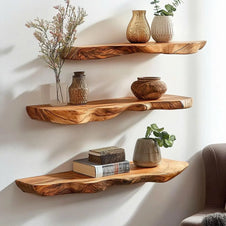
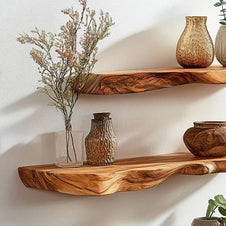
Sculptural shelving can turn a functional media wall into a stronger design feature. Instead of relying only on straight, repetitive compartments, consider shelves with organic edges, unusual proportions, or tree branch shelf forms.
This style works particularly well when the rest of the room has a simple interior. The shelving becomes an artistic element while still providing space for books and objects.

Sculptural shelving can make your house look more interesting
If you prefer furniture with a more organic character, Tailor Wood Haven can create natural wood pieces with distinctive shapes, sizes, and finishes to suit the space.
Modular shelving gives you more flexibility when your storage needs change. Individual shelves, cabinets, or compartments can often be rearranged or expanded without replacing the entire system.
This is a practical choice if you expect to add more books, change your media equipment, or move the TV in the future. Keep the initial structure simple enough that new elements can be incorporated without disrupting the overall design.

Modular shelving gives you more flexibility
A built in bookcase around TV creates a highly integrated media wall by designing the shelving specifically around the screen. The TV can be mounted directly onto the wall while the surrounding shelves provide storage and visual framing.
Before installation, plan the position of electrical outlets, cables, speakers, and other equipment. This prevents the finished shelving from having to accommodate visible wires or awkwardly placed electronics.

Built-in bookcase as a wall-mounted TV
A custom bookcase gives you the most control when the wall has unusual dimensions or you have specific storage requirements. Instead of adapting a ready-made unit to the TV, the entire composition can be designed around the room.
You can customize the height, width, shelf configuration, wood, finish, and combination of open and closed storage. This makes it easier to create a media wall that feels like part of the architecture rather than a separate piece of furniture.
Tailor Wood Haven can help tailor the size, shape, wood, and finish of a handcrafted bookshelf to suit both your space and personal style.

Tailor Wood Haven can help tailor the bookshelf due to your own style and demand
Yes, a TV can be integrated into a bookcase as long as the design provides enough space around the screen and allows proper ventilation for electronic equipment. The TV should not be tightly enclosed by shelves or cabinets unless the unit is specifically designed for that purpose.
For a cleaner appearance, many homeowners choose to wall-mount the TV within an open section of the bookcase. This creates the appearance of an integrated media wall while keeping the screen accessible.
The exact space depends on the TV size, the shelving design, and the equipment being used. As a general design principle, leave enough visual breathing room around the screen so bookshelves do not make the TV feel boxed in.
Also consider practical clearance for ventilation, cables, speakers, and maintenance. If you are designing built-in shelving, determine the TV and equipment dimensions before finalizing the compartments.

You should check the TV size before making the shelf
No, bookshelves around TV do not have to be symmetrical. Symmetrical shelving creates a balanced and traditional appearance, while asymmetrical layouts can feel more contemporary and visually dynamic.
The important factor is overall visual balance. If one side has a large, heavy-looking cabinet, balance it with another substantial element rather than trying to make every shelf identical.
Yes, a bookcase can be designed around a wall-mounted TV. In fact, wall mounting can make it easier to create an integrated media wall because the shelving does not need to support the television itself.
Plan the mounting height, wall structure, electrical outlets, cable routes, and shelf dimensions before construction. This is especially important for a fully built in bookcase around TV.

Bookcase around a wall-mounted TV is a really good idea for your home
Cables can be hidden by planning cable routes behind the shelving, using concealed channels, or incorporating openings at the back of cabinets and shelves. The best approach should be decided before the bookcase is installed.
Leave accessible routes for power, HDMI cables, speakers, and future equipment. Avoid permanently sealing cables into inaccessible areas, as media equipment may eventually need to be replaced or upgraded.
A well-designed bookcase around TV can do much more than store books. It can frame the screen, organize media equipment, display personal objects, and turn an ordinary wall into a meaningful part of the room's design. Whether you prefer symmetrical built-ins, minimalist floating shelves, warm natural wood, or a fully custom media wall, the best solution is one that balances function, proportion, and visual character.
For a more distinctive result, consider natural wood, sculptural details, or customized dimensions that respond to your space. Tailor Wood Haven offers handcrafted furniture with customizable size, shape, wood, and finish, making it possible to create a bookshelf that feels personal rather than mass-produced.


