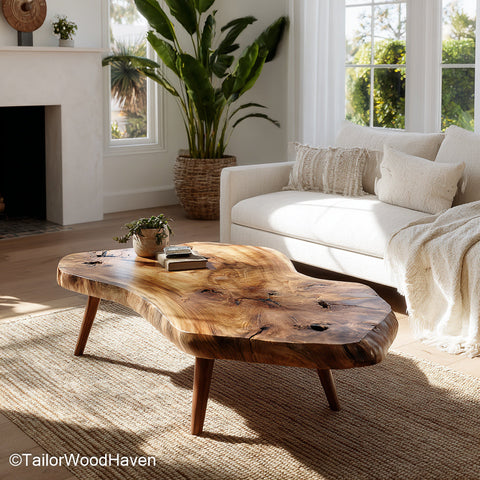
A Japandi coffee table combines the simplicity of Japanese design with the warmth of Scandinavian interiors. Natural wood, clean lines, and balanced proportions create a relaxed look that feels both timeless and practical.
Whether you're furnishing a small apartment or updating your living room, the right Japandi coffee table should complement your sofa, fit your space, and reflect your everyday needs.
What Makes a Japandi Coffee Table Unique?
Japandi coffee tables focus on simplicity, natural materials, and thoughtful design. Rather than relying on elaborate details, they use texture, shape, and proportion to create visual interest.
Natural Materials and Clean Lines
Wood is a popular choice for Japandi furniture. A natural wood coffee table in light oak brings an airy feel, while walnut adds warmth and depth. Simple silhouettes, subtle wood grain, and understated finishes help the table feel connected to nature without overwhelming the room.
Rounded corners, tapered legs, and sculptural bases can add character while keeping the overall design clean and balanced.
A Calm Mix of Light and Dark Tones
Beige, cream, and natural wood tones work well in bright, minimalist interiors. However, a Japandi coffee table doesn't have to be light-colored. Walnut and matte black finishes can create contrast against pale walls and soft upholstery.
The key is to balance colors and textures throughout the room rather than matching every piece of furniture.
How to Choose the Right Japandi Coffee Table
The best coffee table should suit your seating arrangement, available space, and daily routine. Consider these factors before choosing a design.
Choose the Right Height and Shape
A coffee table around the same height as your sofa seat or slightly lower is a useful starting point. Low-profile designs can complement low sofas, but comfort matters more than following a fixed height.
Shape also affects how the table fits into your living room:
- Round: Softens straight lines and works well in compact seating areas.
- Oval: Offers a longer surface with rounded edges, making it useful for many sofa arrangements.
- Rectangular: Pairs naturally with straight sofas and provides plenty of room for everyday essentials.
Measure your space before buying, and leave enough room between the table and surrounding seating for comfortable movement.
See more: Coffee Table Size Guide: Standard Dimensions and Spacing
Select a Material and Finish
Your choice of material can change the entire feel of a Japandi living room.
-
Oak: Creates a light, natural look that pairs well with neutral fabrics.
-
Walnut: Adds rich brown tones and warmth to minimalist interiors.
- Stone or matte finishes: Introduce texture or contrast without relying on decorative details.
Consider maintenance as well as appearance. Wood may need protection from moisture and heat, while stone surfaces can require specific cleaning methods depending on the material.
Decide Whether You Need Storage
A simple tabletop creates a clean, uncluttered look, while additional storage can make everyday living easier.
An open shelf works well for books and magazines, whereas drawers help keep remote controls and small items out of sight. Choose the option that suits your routine without making the table feel too bulky for the room.
Japandi Coffee Table Ideas for Different Living Rooms
The same design doesn't work equally well in every space. Consider your room's size, lighting, and existing furniture before settling on a particular style.
For Small Living Rooms
A round or oval Japandi coffee table can help a compact living room feel easier to navigate. Look for a design with a modest footprint and a base that doesn't appear too heavy for the space.
If storage is limited, a table with a lower shelf can hold a few everyday essentials. Just avoid choosing a table that's too large for the seating area, even if you like the extra surface space.
For Bright, Minimalist Spaces
A light oak coffee table pairs naturally with cream sofas, pale walls, and neutral textiles. The wood grain adds visual interest without introducing a strong contrast, helping the room feel warm rather than stark.
For a more layered look, combine different natural textures, such as linen, wool, wood, and handmade ceramics. Small variations in texture can make a restrained color palette feel more inviting.
For Warm, Moody Interiors
A walnut or black coffee table can anchor a living room with deeper colors or create contrast against a light sofa. These finishes work particularly well when balanced with natural wood accents, soft upholstery, and warm lighting.
To keep the space from feeling too heavy, mix darker surfaces with lighter textiles or a neutral rug. The contrast adds depth while preserving the calm, considered feel associated with Japandi design.
How to Style a Japandi Coffee Table
You don't need many accessories to make a Japandi coffee table feel complete. A ceramic vase, a small stack of books, or a shallow tray can add personality without creating clutter.
Natural materials such as wood, linen, and handmade ceramics help connect the table to the rest of the room. A small branch or a touch of greenery can introduce a subtle organic element.
Keep the arrangement simple and leave some tabletop space clear for everyday use. The goal is to create a balanced look that feels welcoming rather than overly styled.
Ultimately, a Japandi coffee table should balance natural beauty with everyday function. Focus on the right proportions, materials, and shape for your space rather than following rigid design rules. A thoughtfully chosen table can bring warmth and simplicity to your living room without adding unnecessary clutter.
 Skip to content


 Farmhouse Floating Shelves – Perfect handcrafted furniture
 Farmhouse Narrow Console Table with Storage for Entryway or Living Room
 Custom Rustic Console – Natural Wood, Made to Order