 Skip to content
Your cart (0)
Your cart is empty
Tax included and shipping calculated at checkout
Recommended products



Drawer menu
Tax included and shipping calculated at checkout
Your wishlist is empty.
Continue shopping

Choosing a coffee table is about more than finding a design you like. The right table should fit your sofa, leave enough room to move around, suit the way you use your living room, and complement the rest of your furniture.
From size and shape to material and storage, a few practical decisions can make a big difference. Use this guide to find a coffee table that fits your space comfortably and works well for everyday living.
Getting the size right should be your first step. A coffee table that is too large can make a room feel cramped, while one that is too small may look disconnected from the seating area.
Before shopping, measure your sofa, the available floor space, and the distance between your seating and other furniture.
As a general starting point, choose a coffee table that is about two-thirds the length of your sofa. This creates a balanced look without making the table extend too far beyond the seating area.
For example, a 90-inch sofa can work well with a coffee table around 54 to 60 inches long. The exact size depends on your room layout and the amount of walking space available.
For smaller sofas, loveseats, or compact living rooms, a shorter table may be more practical. The goal is to keep the coffee table proportional to the seating rather than simply choosing the largest table that fits.

A coffee table generally works best when its height is close to the height of your sofa seat or slightly lower. A table that sits noticeably higher than the cushions can feel awkward to use and may interrupt the visual balance of the room.
A lower coffee table can create a relaxed, modern look, while a table closer to sofa height can be more convenient for eating, working, or reaching drinks.
Measure the actual seat height of your sofa before choosing a table, especially if you have a low-profile or unusually tall sofa.
See more: How Tall Should a Coffee Table Be?
Your coffee table should leave enough clearance for people to move comfortably around it. As a practical guideline, aim for roughly 24 to 30 inches of walking space around the outer edges of the table where people regularly pass.
You may need more space in a main walkway and less in a quiet corner of the room.
Avoid pushing the table so close to other furniture that opening drawers, reclining chairs, or walking through the room becomes difficult. A coffee table should define the seating area without blocking it.

Leave around 14 to 18 inches between the edge of the sofa and the coffee table as a useful starting range. This gives you enough legroom while keeping drinks, books, and other everyday items within easy reach.
The ideal distance can vary depending on the depth of your sofa and how you use the room. If you frequently stretch your legs toward the table, a little more space may be comfortable. If the room is compact, you may need to work closer to the lower end of the range.
The important thing is to maintain a comfortable balance between accessibility and movement.
See more: How far should coffee table be from couch?
The shape of your coffee table should work with both your seating arrangement and the overall layout of the room. The right shape can make a space easier to navigate and help the furniture feel more connected.
A rectangular coffee table is a versatile choice for long sofas and larger living rooms. Its elongated shape follows the lines of a standard sofa and provides plenty of surface area for drinks, books, trays, and everyday items.
It also works well when you have a long seating arrangement or want the coffee table to visually anchor the center of the room.
Choose a rectangular table when you have enough space to accommodate its longer footprint without restricting movement.
Round coffee tables are particularly useful when you want to soften a room filled with straight lines and sharp corners. The curved edge also makes it easier to move around the table, which can be helpful in smaller or busy living spaces.
A round table can work especially well with sectional sofas, multiple chairs, or seating arranged around a central point.
If your room has young children, a round design can also eliminate exposed sharp corners around the main seating area.

An oval coffee table combines some of the benefits of rectangular and round designs. It offers a longer surface while maintaining curved edges that make the table feel less bulky.
This shape works well with longer sofas when you want more usable tabletop space without the sharper corners of a rectangular table.
An oval table can also help maintain a smoother traffic flow through a narrow seating area.
A square coffee table can be a good match for symmetrical seating arrangements, large sectionals, or sofas positioned opposite each other.
Because all four sides have equal proportions, square tables work particularly well when seating surrounds the table from multiple directions.
Before choosing one, make sure the room has enough open space around all four sides. A square table can quickly feel oversized if the surrounding seating area is too compact.
Sectional sofas give you more flexibility, but their larger footprint makes proportion especially important.
For an L-shaped sectional, a rectangular, oval, or round coffee table can work depending on the open space in front of the seating. A round table can soften the angular shape of the sectional, while a rectangular table can make better use of a longer open area.
For a U-shaped sectional, consider a round or square coffee table if the seating surrounds a central space fairly evenly.
Measure the open area inside the sectional before shopping. The table should fit comfortably within that space while leaving enough room for people to get in and out of the seating.

Looks matter, but your coffee table also needs to work with the way you actually use your living room.
Think about what normally happens around the table. Do you serve drinks and snacks, keep books nearby, work from the sofa, store remotes, or need extra space for everyday clutter?
A coffee table with storage can be useful when you want to keep the living room organized without adding another piece of furniture.
Shelves can provide an easy place for books, baskets, or decorative objects, while drawers or enclosed compartments can hide remotes, games, and other small items.
If your room already has plenty of storage, however, a simple tabletop may be all you need. Avoid choosing extra compartments simply because they are available.
A lift-top coffee table can make sense if you regularly work, eat, or use a laptop from the sofa. The raised surface can provide a more comfortable working position than a traditional low tabletop.
For a living room used primarily for relaxing and entertaining, a standard coffee table may be simpler and more visually streamlined.
Think about your daily routine rather than choosing a feature based solely on appearance.

If you have children or pets, consider durability, stability, and the shape of the table before choosing a design.
Rounded corners can reduce sharp edges in high-traffic areas. A sturdy construction can help prevent the table from shifting easily, while a durable finish makes everyday spills and scratches easier to manage.
You should also consider how easy the surface is to clean. A beautiful coffee table that requires constant maintenance may not be the most practical choice for a busy household.
The material affects more than appearance. It influences durability, maintenance, weight, texture, and how the table fits into the rest of your room.
Wood is a versatile choice for living rooms because it brings natural warmth and texture into the space. Solid wood coffee tables can also work across a wide range of interior styles, from rustic and farmhouse to modern and transitional.
When choosing a wood table, look at the species, grain pattern, finish, construction, and overall thickness. Natural wood can have variations in grain and color, which gives each piece its own character.
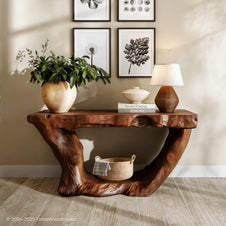
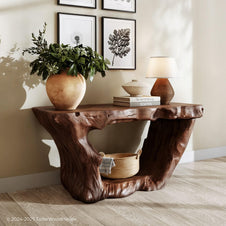
For shoppers who want a more distinctive centerpiece, a live edge wood coffee table preserves the natural edge of the slab and highlights the character of the wood.
Glass can make a living room feel visually lighter because the transparent surface takes up less visual space.
It can be a useful option for smaller rooms where a heavier tabletop might make the seating area feel crowded. However, glass requires more frequent cleaning and may show fingerprints, dust, and smudges more easily.
Consider your household and maintenance preferences before choosing it.

Marble and other stone surfaces can add substantial visual weight and a refined natural texture to a living room.
They are a good option when you want the coffee table to become a strong focal point. However, stone tables can be heavy and may require more attention to spills, stains, and surface care depending on the material and finish.
Think about both appearance and maintenance before making your choice.

Metal coffee tables can work well in modern, industrial, and minimalist interiors. They are available in a wide range of finishes and can be paired with wood, glass, or stone for a mixed-material look.
A metal base can also provide a lighter visual profile than a solid wood or stone base, depending on the design.
Choose a finish that works with the existing hardware and materials in your room rather than trying to match every piece exactly.

Once you have narrowed down the size, shape, and function, you can focus on how the table works with your existing furniture.
The goal is not necessarily to make every piece match. A well-chosen coffee table can either complement the room or introduce enough contrast to give the space more character.
Start with the colors already present in your living room. A wood table in a warm natural finish can complement neutral upholstery, while a darker finish can create contrast against a lighter sofa.
You do not need to match the coffee table exactly to your TV stand, side tables, or flooring. Instead, look for colors and undertones that feel connected.
Natural wood is especially versatile because variations in grain and tone can add visual interest without overwhelming the room.
Your sofa is usually the largest piece in the seating area, so use it as the starting point for choosing your coffee table.
Consider three things together:
Proportion: The table should feel appropriately sized for the sofa.
Shape: Curved tables can soften angular furniture, while rectangular designs can reinforce clean lines.
Material: Similar materials create cohesion, while contrasting materials can add depth.
For example, a natural wood coffee table can bring warmth to a neutral fabric sofa, while a metal-and-wood design can complement a more industrial space.

Choose a style that supports the overall character of the room rather than following a trend that does not suit your furniture.
Rustic and farmhouse spaces often work well with natural wood, visible grain, and substantial construction. Modern rooms may benefit from cleaner lines and simpler finishes, while transitional interiors can combine traditional materials with more contemporary shapes.
The coffee table does not have to look identical to the rest of your furniture. It simply needs to feel intentional within the room.
A coffee table can look perfect in a product photo and still feel wrong in your living room. Avoiding a few common mistakes can make the selection process much easier.
Do not choose a table based only on how much tabletop space you want. A large table can overwhelm a small seating area, while a very small table can look disconnected from a large sectional.
Measure your sofa and available floor space first, then choose a size that maintains comfortable proportions.
The most attractive shape is not necessarily the right shape for your layout.
A rectangular table may work beautifully with a long sofa but feel awkward in a compact room. Likewise, a square table may need more open space than your layout provides.
Choose the shape based on your seating arrangement and traffic flow.

A table that sits too close to the sofa can make the room uncomfortable and restrict movement. One placed too far away may be difficult to reach.
Leave enough room for comfortable legroom while keeping the tabletop accessible from the main seating positions.
A coffee table is both a design element and a piece of everyday furniture. If you need storage, choose a design that provides it. If you work from the sofa, consider a lift-top. If you have children or pets, prioritize practical construction and easy maintenance.
The right coffee table should look good in your living room and make the space easier to use.


