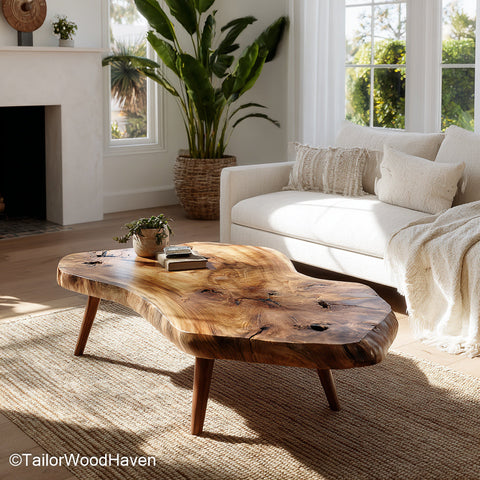
Building a DIY coffee table is a practical woodworking project that lets you create a piece of furniture suited to your living room. With basic tools, affordable materials, and a straightforward design, you can build a sturdy wooden coffee table without advanced woodworking skills.
This guide walks you through each step, from choosing the dimensions and preparing the wood to assembling the tabletop and applying a protective finish. Whether you're making your first coffee table or looking for a simple weekend project, these instructions will help you get started.
Before starting, prepare all the materials and tools you'll need. For a basic rectangular wooden coffee table, you can use solid wood boards, ready-made table legs, and standard woodworking hardware.
Materials:
- Wood boards for the tabletop
- Wood pieces for the apron and support structure
- Four table legs
- Wood screws and suitable fasteners
- Wood glue
- Sandpaper in different grits
- Wood stain, if you want to change the wood color
- Protective wood finish, such as polyurethane
Tools:
- Measuring tape and pencil
- Circular saw or miter saw
- Drill and screwdriver
- Clamps
- Orbital sander or sanding block
- Carpenter's square
- Safety glasses and hearing protection
Choose straight, dry boards without major cracks, warping, or signs of damage. Solid wood is a good option for a durable coffee table, while reclaimed wood can add character if it is properly cleaned and prepared.
How to Build a DIY Coffee Table Step by Step
For this project, we'll focus on a simple rectangular coffee table with a wooden top and four legs. This design is relatively easy to build and can be adapted to different room sizes and decorating styles.
Step 1 - Choose Your Coffee Table Design and Dimensions
Start by deciding on the shape, height, and overall size of your coffee table. A rectangular design is a practical choice because it is straightforward to measure, cut, and assemble.
Consider the size of your sofa and the available floor space. Your coffee table should be easy to reach from the seating area without blocking walkways. If you're unsure about the proportions, refer to our guide to Standard coffee table size for common dimensions and sizing considerations.
You should also decide whether you want a simple tabletop with four legs or a design with an apron and additional support underneath. Keep the first project simple to make the construction process easier.
Step 2 - Measure and Cut the Wood
Once you've finalized the design, measure each wooden component according to your plan. Mark the cutting lines clearly with a pencil and use a square to keep the lines straight.
For a basic coffee table, you'll generally need:
-
Several boards for the tabletop
-
Four legs of equal length
-
Wood pieces for the apron and support frame
Cut the boards carefully using a circular saw or miter saw. Make sure the tabletop pieces have consistent lengths and that the legs are cut to the same height. Uneven cuts can make assembly more difficult and affect the table's stability.
Always wear appropriate safety equipment and secure the wood before cutting.
Step 3 - Prepare the Coffee Tabletop
Before assembling the tabletop, inspect the cut boards and arrange them in the order you want. Pay attention to the grain direction, color variations, and natural patterns so the finished surface looks balanced.
Check that the edges fit together without large gaps. If necessary, trim the edges to create a cleaner joint.
Remove loose splinters and rough spots, but avoid extensive sanding at this stage if the boards still need to be joined. Keeping the surfaces aligned will make it easier to create a flat tabletop.
Step 4 - Assemble the Tabletop
Lay the boards on a flat, level surface with their edges aligned. Apply an even layer of wood glue along the adjoining edges, then press the boards together.
Use clamps to hold the boards firmly while the glue dries. Keep the tabletop flat and check that the boards remain aligned throughout the process.
Follow the adhesive manufacturer's recommended drying time before removing the clamps. Once the glue has cured, inspect the surface for gaps or uneven joints. Minor imperfections can be corrected through sanding, while larger gaps may require additional repair.
Step 5 - Attach the Table Legs and Support Structure
With the tabletop assembled, it's time to build the base. Attach the apron pieces or support rails between the legs to create a stable frame. These components help distribute the table's weight and reduce movement.
Position the four legs evenly beneath the tabletop. Use a measuring tape and carpenter's square to check their placement before drilling pilot holes.
Apply wood glue to the joints where appropriate, then secure the components with suitable screws or fasteners. Avoid overtightening, as this can damage the wood or strip the screw holes.
After assembling the base, attach it to the tabletop. Make sure the legs are properly aligned and the frame sits evenly before moving on.
Step 6 - Sand the Wood Surface
Sanding removes rough edges, minor imperfections, and marks left by cutting or assembly. Start with medium-grit sandpaper to smooth the surface, then move to finer grits for a more even finish.
Sand the tabletop, legs, edges, and corners. Pay particular attention to areas that people may touch, making sure there are no splinters or sharp edges.
After sanding, wipe away all dust with a clean, dry or slightly damp cloth, following the finish manufacturer's preparation instructions. The wood should be clean and free of dust before staining or sealing.
Step 7 - Apply Wood Stain and Protective Finish
If you want to change the wood's color, apply a wood stain that complements your living room. Test it on a small leftover piece first to see how it looks on the selected wood.
Apply the stain evenly with a brush or clean cloth, following the product instructions. Remove excess stain as directed and allow it to dry completely.
Next, apply a protective finish such as polyurethane to help protect the surface from everyday spills, scratches, and moisture. Follow the recommended application and drying instructions, and lightly sand between coats if the product requires it.
If you're updating an existing table rather than building a new one, our guide on how to refinish a coffee table explains the process of refreshing an old finish.
Step 8 - Check Stability and Complete Your Coffee Table
Once the finish has fully cured, inspect the entire table before putting it to use.
Place the coffee table on a flat floor and check for wobbling. If it feels unstable, inspect the leg connections, support rails, and fasteners. Tighten loose screws and correct any uneven contact points.
Check the tabletop for rough areas, unfinished edges, or missed spots in the protective coating. After confirming that all joints are secure and the surface is properly finished, your DIY coffee table is ready for your living room.
Tips for Building a Durable DIY Coffee Table
A good-looking coffee table should also withstand regular use. Keep these tips in mind to improve the strength and lifespan of your project:
- Choose quality wood: Use dry, straight boards without serious cracks or warping. The wood should be suitable for furniture construction.
- Build a solid support frame: Secure apron pieces or support rails properly to reduce movement and help distribute weight.
- Use the right fasteners: Select screws and wood glue appropriate for your materials and joint design. Drill pilot holes when needed to help prevent splitting.
- Keep the tabletop level: Check the alignment of the boards during assembly and make sure the base sits evenly.
- Protect the surface: Apply a suitable finish to help guard against spills, stains, and everyday wear.
- Allow enough drying time: Do not rush the glue or finish. Using the table before these materials have fully cured can affect the final result.

Building your own coffee table takes some preparation, but a simple design and careful assembly can produce a functional piece of furniture that lasts for years. If you'd like to explore more designs, materials, and styles before starting your next project, browse our wood coffee table collection for additional inspiration.
 Skip to content


 Farmhouse Floating Shelves – Perfect handcrafted furniture
 Farmhouse Narrow Console Table with Storage for Entryway or Living Room
 Custom Rustic Console – Natural Wood, Made to Order