Your cart (0)
Your cart is empty
Tax included and shipping calculated at checkout
Recommended products




Drawer menu
Tax included and shipping calculated at checkout


A coffee table is a small thing, but its size really changes how your living room feels. If it's too big, the room looks crowded. If it's too small, it looks incomplete. That's why knowing the average width of a coffee table is so important for making the space look balanced and feel comfortable.
To make sure your furniture looks right, you need the correct sizes. This guide will teach you the average width of a coffee table, along with how the height, length, shape, and material all change how it looks in your room. You will find the perfect size for your home.
So, what is the average width of a coffee table? In general, most coffee tables measure between 20 and 30 inches wide, depending on the room size and the sofa’s dimensions.
Small tables: 18-20 inches wide – perfect for apartments or compact spaces.
Medium tables: 20-24 inches wide – the most common range for standard living rooms.
Large tables: 24-30 inches wide – ideal for spacious setups or sectional sofas.
The average width of a coffee table should feel proportionate to your seating arrangement. A good rule of thumb: your coffee table should be roughly half to two-thirds the width of your sofa. This creates visual balance while leaving enough room to walk around comfortably.
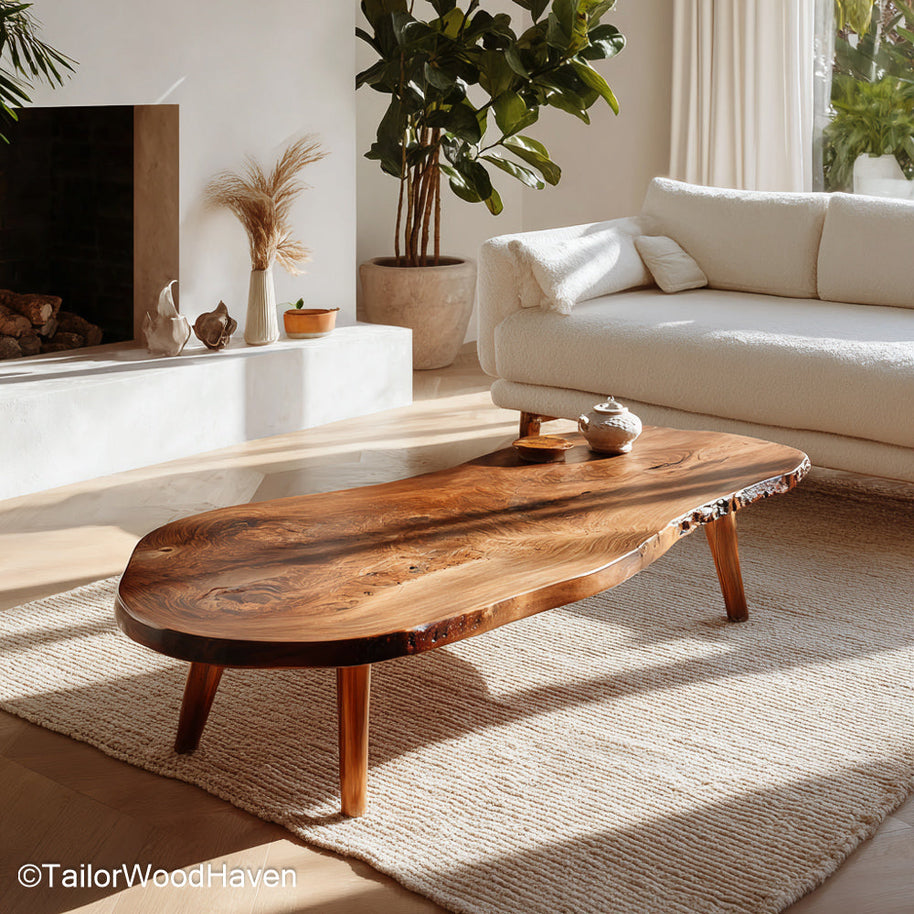
Instead of guessing at balance, choose our live edge coffee table. Its natural, unique beauty makes it the perfect centerpiece that feels proportionate and stunning.
The average width of a coffee table matters a lot, but don't forget the length and height. These sizes help your table fit in and work well with your other pieces.
Most tables fall between 40 and 60 inches long, depending on the size of the couch. However, to get the right size for your room, keep these rules in mind:
Rule of Two-Thirds: The length of your coffee table should be about two-thirds the length of your sofa. For example, a 90-inch sofa looks great with a table that is 54 to 60 inches long.
Match Your Space: A long, narrow table works well with a sectional sofa. Shorter, wider tables are best for smaller living areas. Just like the average width of a coffee table, the length must fit the size of your whole room.
When the height is correct, your table is both comfortable and useful.
Standard Height: The average height for a coffee table is 16 to 18 inches.
The Rule of Thumb: Your table should be the same height as your sofa's seat cushion, or up to 2 inches lower. This makes it easy to reach your drink or book.
Heights for Different Sofas:
High or Deep Sofas: If your sofa is tall or deep, look for a table around 19 to 21 inches high.
Low Sofas: For very low, modern seating, a table around 15 inches keeps the look sleek.
Knowing the average width of a coffee table is important, and so is the height – both affect how comfortable and balanced your room feels. For more insight on coffee table dimensions, you should check out this guide.
After you've decided on the average width of a coffee table, you need to choose the material. Wood is a popular choice because it's warm, versatile, and classic. The material you pick affects the table's durability and how big and heavy it looks in the room.
Oak and Maple: These strong, durable woods (like oak) last a long time and have a clear grain. They are great for thick, large tables, like live edge designs, where the width is important. Even if the actual size is near the average width of a coffee table, the thick wood makes the table look much bigger and heavier.
Walnut and Cherry: These woods offer richer colors and finer, less pronounced grain patterns. They tend to be used in more formal, delicate, or mid-century modern designs. These woods are suitable for tables on the narrower side of the average width of a coffee table spectrum (18–20 inches), as the color, rather than the bulk, is the primary visual feature.
Reclaimed or Pine: While popular, these tables tend to have a rougher texture and greater visual density. They can easily overwhelm a small space, even if the average width of a coffee table size is maintained. If opting for a rustic style, select a leg design that is thin or open (like hairpin legs) to reduce the overall visual weight.

Looking for a quality coffee table? Choose this oak live edge coffee table to bring the strength, durability, and bold visual weight needed to truly anchor your living room design.
Shape determines not just style, but how the average width of a coffee table fits within a room.
Rectangular coffee tables: The most traditional and versatile, averaging 22-28 inches wide. They suit long sofas and provide ample surface for decor or entertaining.
Square coffee tables: Work best in large or symmetrical seating areas. Their width usually matches their length, typically 36-40 inches.
Round coffee tables: Soften angular layouts and enhance traffic flow. The average diameter (or effective width) is 30-36 inches.
Oval coffee tables: Blend the best of both worlds – the elegance of round shapes with the practicality of a rectangle, typically 24-28 inches wide.
Choosing the right shape helps maintain harmony. In tight spaces, a round or oval table feels lighter and more fluid, even if its average width is similar to a rectangular one. In larger rooms, a rectangular or square table grounds the layout effectively.
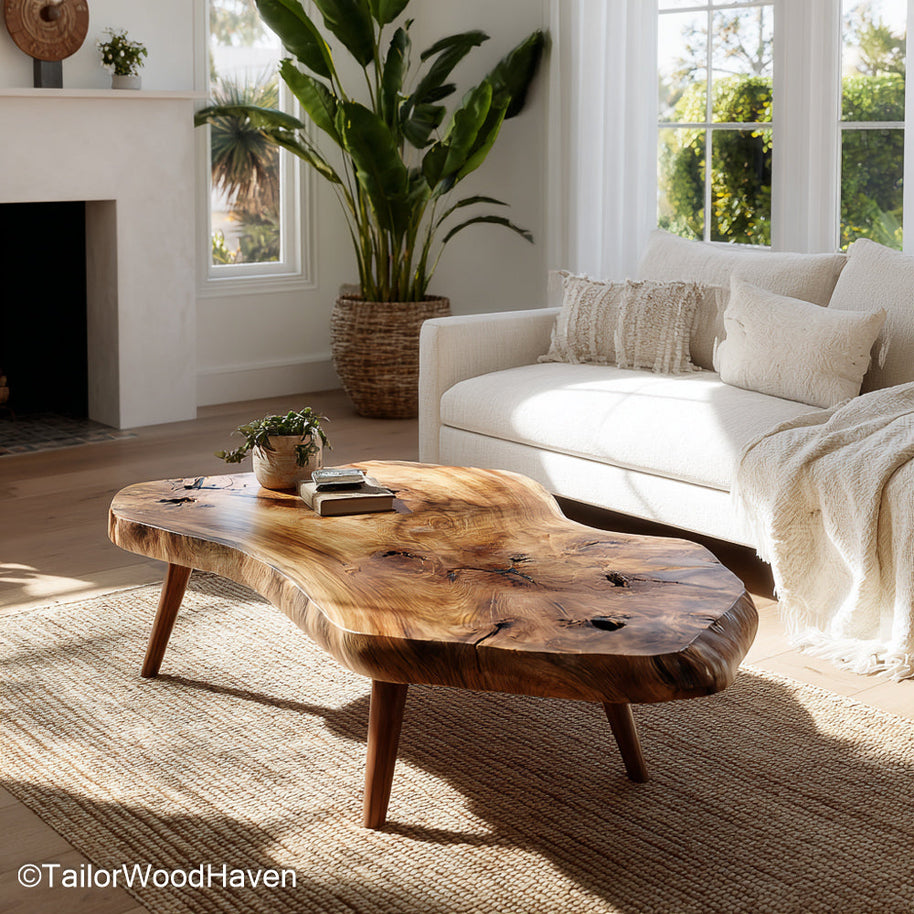
Stop trying to force a standard shape! This live edge coffee table comes in both rectangular and round forms, offering unique organic shapes that feel fluid and harmonious in any size room.
Selecting the perfect coffee table goes beyond size – it’s about proportion, purpose, and personality. Here’s how to get it right:
Measure first: Before doing anything else, measure the length of your sofa and the height of your cushions. Use these measurements to calculate your target length (two-thirds the sofa length) and your target height (within 1-2 inches of the cushion height).
Prioritize Clearance: This is non-negotiable. Use a tape measure to ensure you can maintain a minimum of 18 inches between the sofa and the table. This 18-inch gap often dictates the maximum usable average width of a coffee table.
The Mock-Up Test: Use painter's tape or cut-out cardboard to map the chosen dimensions onto your living room floor. Walk around the space, sit on the couch, and visually confirm that the size allows for easy movement and proportional balance. This step alone can prevent a costly sizing mistake.
Prioritize Function over Form: Decide if the table's primary purpose is storage (needs drawers/shelves), display (needs a clear surface), or eating/working (needs greater height or a lift-top mechanism). The function often determines the final acceptable average width of a coffee table for your needs.
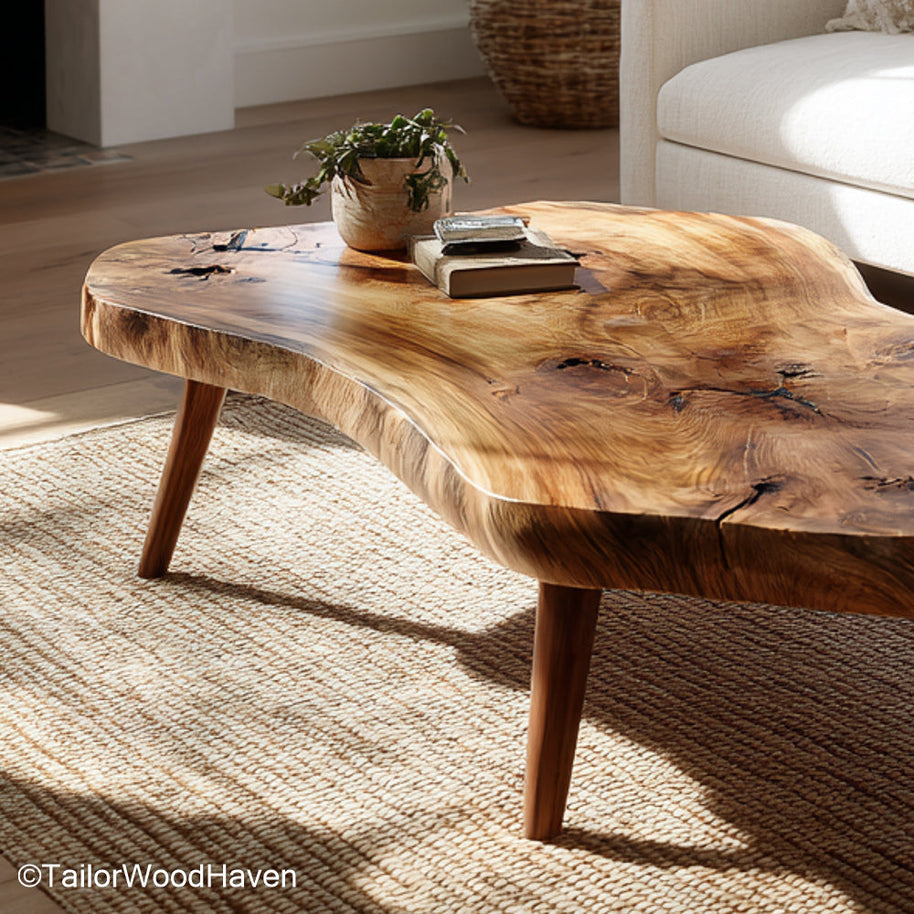
Choosing a live edge coffee table is a stylish way to match the perfect average width of a coffee table with the charm of natural wood.
Ideally, a coffee table should be the same height or slightly lower than the couch seat – usually around 16-18 inches. A higher table can work if it complements your space, but going more than 2 inches above the seat height can make the setup look awkward.
A round or oval table works best, usually one with a diameter of 30 to 36 inches. Since it has no sharp corners, it makes moving around the table easier, even if the table is slightly wider than normal.
The "perfect size" for a coffee table is based on two simple rules, not a set number. The length should be about two-thirds the length of your sofa. For the width, you must ensure an 18-inch clearance from the sofa for walking room. The height should also match your sofa cushion height. For most normal-sized sofas, a table 45-50 inches long and 18-24 inches wide usually works best.
Depth depends on your layout, but most coffee tables are around 20 to 30 inches deep. Choosing a depth that allows for at least 18 inches of legroom between the sofa and the table ensures both comfort and proportion.
When it comes to interior design, proportions make all the difference. The average width of a coffee table (usually 20 to 30 inches) is the best starting point for comfort and style. But remember, the correct size truly depends on your sofa, room shape, and your personal taste. Always measure your space, leave clear walking paths, and pick a shape that fits the room's flow. Understanding this size guide makes sure your table looks perfectly proportioned every time.


