A 1950s living room is known for its clean lines, warm wood furniture, playful colors, and comfortable layouts. Inspired by mid-century design, this style combines simple shapes with eye-catching details to create a space that feels both functional and inviting.
Whether you love authentic vintage interiors or prefer a modern take on retro design, there are plenty of ways to bring this look into your home. From tapered-leg furniture and geometric patterns to colorful accents and wooden coffee tables, these 1950s living room ideas will help you create a space with timeless character.
1950s Living Room Ideas to Inspire Your Space
A 1950s-inspired living room can take many forms, from colorful retro interiors to understated mid-century spaces. The key is choosing furniture, colors, and decorative details that reflect the era while matching your personal style.
Classic 1950s Living Room Ideas
A classic 1950s living room combines comfortable furniture, warm wood finishes, and playful decorative accents. Look for low-profile sofas, tapered-leg chairs, wooden coffee tables, and simple storage pieces that keep the room feeling open.
For an authentic vintage look, combine muted green, mustard yellow, or burnt orange with walnut furniture and patterned upholstery. A starburst clock, ceramic lamp, or geometric rug can add personality without making the space feel crowded.
The goal is to create a welcoming room that feels lived-in rather than overly decorated.

Mid-Century Modern Living Room Ideas
Mid-century modern design is one of the most recognizable influences on 1950s interiors. It emphasizes clean lines, functional furniture, organic shapes, and natural materials.
Choose a streamlined sofa with exposed wooden legs and pair it with a walnut sideboard or a simple coffee table. Furniture with tapered legs helps maintain an open appearance, while curved armchairs soften the room's overall look.
Keep accessories relatively simple. A sculptural floor lamp, abstract artwork, and a few decorative objects can bring the style together without distracting from the furniture.

Colorful Retro Living Room Ideas
If you enjoy bold interiors, use the playful color combinations associated with 1950s home decor. Turquoise, coral, orange, mustard yellow, and avocado green can add energy and personality to a living room.
You do not need to use every color at once. Start with a neutral sofa and introduce brighter shades through accent chairs, throw pillows, rugs, or artwork.
Geometric patterns and contrasting upholstery can make the room feel more authentic. For a balanced result, combine colorful accessories with warm wood furniture and simple wall finishes.

Neutral 1950s Living Room Ideas
A 1950s living room does not have to rely on bright colors. Neutral shades such as cream, beige, warm gray, and soft brown can create a more relaxed interpretation of retro design.
Choose a light-colored sofa, natural wood coffee table, and understated rug to establish a warm foundation. Walnut or teak-inspired furniture adds depth, while linen curtains and textured cushions make the room feel comfortable.
You can still introduce vintage character through tapered furniture legs, curved silhouettes, and retro lighting. This approach works especially well if you prefer a timeless interior over a strongly vintage appearance.

Small 1950s Living Room Ideas
The streamlined furniture associated with 1950s design makes this style a practical choice for smaller living rooms. Slim legs, compact proportions, and simple silhouettes help prevent the space from feeling visually heavy.
Choose a small sofa or loveseat with raised legs to create a greater sense of openness. A round or oval coffee table can make movement easier, especially when the room has limited floor space.
Wall-mounted shelving, compact side tables, and multifunctional storage also help keep clutter under control. Instead of filling every corner, leave some open space around the main furniture pieces.

Modern 1950s Living Room Ideas
A modern 1950s living room blends retro details with contemporary comfort. Rather than recreating an entire vintage interior, focus on a few recognizable design elements.
For example, pair a modern neutral sofa with a walnut coffee table, a vintage-inspired accent chair, and a geometric rug. Contemporary lighting and simple window treatments can keep the space feeling current.
This combination gives you the character of 1950s design without making your living room look like a period display. It is also an easy way to incorporate vintage furniture into an existing home.

What Defines a 1950s Living Room?
A 1950s living room reflects a shift toward more relaxed, functional, and modern home interiors. Furniture became lighter in appearance, decorative colors became more expressive, and living spaces were increasingly designed for everyday family activities.
Several design features help distinguish this style.
Clean Lines and Low-Profile Furniture
Furniture in the 1950s often featured simple silhouettes, smooth surfaces, and low-profile proportions. Sofas and armchairs typically had streamlined shapes rather than bulky frames or elaborate ornamentation.
This design approach made rooms feel more open while keeping furniture comfortable and practical. Look for sofas with straight arms, gently curved backs, and visible legs.
Low-profile furniture also pairs well with open floor plans because it maintains clear sightlines across the room.

Warm Wood Tones and Tapered Legs
Natural wood played an important role in 1950s furniture design. Walnut, teak, birch, and maple were popular choices, bringing warmth and texture to otherwise simple interiors.
Tapered legs are another recognizable feature. They give sofas, chairs, cabinets, and tables a lighter appearance while adding a subtle sense of elegance.
Wooden furniture with visible grain and clean finishes works particularly well in this style. A well-chosen coffee table or sideboard can become a focal point without requiring additional decoration.

Bold Colors and Geometric Patterns
Although neutral interiors were also common, many 1950s living rooms featured cheerful colors and distinctive patterns.
Popular shades included turquoise, coral, avocado green, mustard yellow, pink, and orange. These colors often appeared on upholstery, curtains, cushions, and decorative accessories.
Geometric shapes, abstract prints, and atomic-inspired motifs were also widely associated with the era. Using these patterns in small doses can give your living room a retro feel without overwhelming the space.

Functional Layouts and Open Spaces
Practicality was central to 1950s interior design. Living rooms were arranged to support conversation, family gatherings, entertainment, and relaxation.
Sofas and armchairs were often positioned around a central coffee table, creating a comfortable seating area. As television became more common in American homes, furniture arrangements also began to accommodate viewing.
To recreate this layout, keep the main seating area connected and leave enough room for people to move comfortably. Avoid placing too many large furniture pieces close together.

Essential Furniture for a 1950s Living Room
Furniture is one of the most important elements of a 1950s living room. The right combination of streamlined seating, natural wood, and functional storage can establish the style before you add any decorative accessories.
Low-Profile Sofas and Armchairs
A low-profile sofa with clean lines is a natural starting point for a 1950s-inspired living room. Look for designs with slim arms, simple upholstery, and exposed wooden legs.
Armchairs can introduce a different shape or color while providing additional seating. Curved backs, compact frames, and tapered legs are particularly suitable for this style.
For a balanced arrangement, pair a neutral sofa with one or two accent chairs in a complementary color. This creates visual interest while keeping the seating area cohesive.

Wooden Coffee Tables
A wooden coffee table is both a practical centerpiece and an important design feature in a 1950s living room. Walnut and teak-inspired finishes work particularly well because of their warm tones and natural grain.
Look for tables with tapered legs, rounded corners, oval tops, or simple geometric shapes. These details complement the streamlined furniture commonly associated with mid-century interiors.
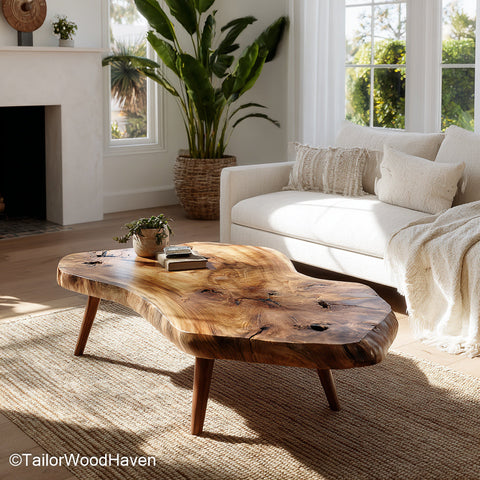
If you prefer a more organic appearance, a live edge coffee table can introduce natural wood character through its irregular edges and distinctive grain. Although it is a contemporary interpretation rather than a defining feature of original 1950s furniture, it can work beautifully in a modern retro-inspired space.
You can also explore a rustic coffee table if you want to balance clean-lined furniture with a warmer, more textured focal point.

Mid-Century Sideboards and Storage
Sideboards and low cabinets were practical additions to many mid-century living rooms. Their simple shapes and generous storage made them useful for organizing household items while keeping the room tidy.
Choose a wooden sideboard with sliding doors, tapered legs, or understated handles. Walnut and teak finishes are particularly effective for creating a warm vintage atmosphere.
A sideboard can also serve as a display surface for ceramic vases, table lamps, framed photographs, and small decorative objects. Keep the arrangement simple to preserve the clean look of the room.

Vintage-Inspired Accent Chairs
An accent chair adds personality and extra seating without requiring a major change to your living room layout.
Look for designs with sculpted wooden frames, curved backs, tapered legs, or colorful upholstery. These details help capture the character of 1950s furniture while allowing you to experiment with different textures and shapes.
A single statement chair in turquoise, mustard, or burnt orange can stand out against a neutral sofa. Alternatively, choose a wooden-frame chair with understated upholstery for a more subtle vintage look.

Popular 1950s Living Room Color Schemes
Color played an important role in 1950s interior design. While some homes featured bright and playful combinations, others used softer shades balanced with natural wood and neutral backgrounds.
Here are four color combinations that can help you recreate the look.
Avocado Green and Warm Wood
Avocado green is one of the most recognizable colors associated with mid-century interiors. Its earthy tone pairs naturally with walnut, teak, and other warm wood finishes.
Use avocado green on an accent wall, armchair, or decorative cushions. Balance it with cream walls, brown furniture, and a neutral rug to keep the room from feeling too dark.
This combination creates a relaxed vintage atmosphere with plenty of natural warmth.

Burnt Orange and Cream
Burnt orange adds warmth and energy, while cream provides a softer background that prevents the color from becoming overwhelming.
Consider using orange on an accent chair, throw pillows, or patterned artwork. Pair these details with a cream sofa, light walls, and a walnut coffee table.
This palette works especially well if you want a colorful retro living room that still feels comfortable and inviting.

Turquoise and White
Turquoise and white create a fresh, cheerful combination that reflects the playful side of 1950s home decor.
Use white for the walls and larger furniture pieces, then introduce turquoise through an accent chair, cushions, curtains, or decorative accessories.
Chrome details, geometric patterns, and light wood finishes can complete the look. This palette is particularly effective in smaller living rooms because the lighter background helps the space feel open.

Mustard Yellow and Walnut
Mustard yellow brings a rich vintage character to a room, especially when combined with darker walnut furniture.
You can introduce this color through an upholstered chair, patterned rug, or a few decorative accents. Keep the remaining surfaces relatively neutral so the yellow becomes a focal point rather than competing with other colors.
Walnut furniture adds depth and contrast, making this combination suitable for both classic and modern 1950s-inspired interiors.
1950s Living Room Decor and Accessories
Once the main furniture and color palette are in place, decorative accessories help complete the look. The best approach is to choose a few recognizable retro details rather than filling every surface with vintage objects.
Retro Wall Art and Starburst Clocks
Wall decor can introduce 1950s character without taking up valuable floor space. Abstract prints, geometric artwork, vintage advertisements, and atomic-inspired designs are all suitable options.
A starburst clock is another recognizable decorative feature. Its sculptural shape makes it an eye-catching addition above a sofa, sideboard, or fireplace.
For a more balanced arrangement, choose artwork that complements your room's existing colors. A few coordinated pieces usually look better than covering every wall.

Geometric Rugs and Patterned Cushions
Geometric rugs and patterned cushions add texture and visual interest to a 1950s living room.
Look for designs featuring circles, abstract shapes, diamonds, or repeating lines. Colors such as orange, turquoise, mustard, and cream can reinforce the retro aesthetic.
If your sofa or armchairs already have bold upholstery, choose a simpler rug to avoid visual clutter. On the other hand, a neutral seating area can benefit from a more colorful floor covering.
Vintage-Inspired Table and Floor Lamps
Lighting helps create the warm, comfortable atmosphere associated with vintage interiors.
Consider tripod floor lamps, cone-shaped shades, sculptural table lamps, and designs with metal or wooden details. These styles complement the simple silhouettes of mid-century furniture.
Place a table lamp on a sideboard or side table to create a softer lighting layer. A floor lamp beside an armchair can also establish a comfortable reading corner.
Warm-white bulbs are a good choice for making the room feel inviting, especially in the evening.

Ceramic Vases and Decorative Accessories
Small decorative objects add personality and help connect different elements of the room.
Ceramic vases, sculptural bowls, vintage-inspired planters, and simple figurines all work well with 1950s decor. Choose pieces with rounded shapes, interesting textures, or understated colors.
Arrange a few objects on a coffee table or sideboard rather than displaying everything at once. Mixing different heights and shapes creates a more natural arrangement.
See more living room decoration ideas:
- 80s living room
- 70s living room
How to Create a 1950s Living Room in a Modern Home
You do not need authentic vintage furniture or a complete renovation to achieve a 1950s-inspired look. A few carefully selected pieces and thoughtful decorating choices can bring the style into a contemporary home.
Choose a Balanced Retro Color Palette
Start by selecting two or three main colors that work well together. For example, combine cream with avocado green and walnut, or use turquoise alongside white and natural wood.
Keep larger surfaces such as walls, sofas, and rugs relatively neutral if you want a more subtle result. Then introduce stronger colors through accent furniture and accessories.
A balanced palette makes it easier to incorporate retro details without making the room feel outdated or overly busy.

Mix Vintage and Modern Furniture
Combining vintage-inspired pieces with contemporary furniture is one of the easiest ways to create a comfortable 1950s living room.
You might pair a modern sofa with a vintage wooden sideboard, or place a retro accent chair beside a contemporary coffee table. The contrast between old and new keeps the interior interesting.
Natural wood furniture is particularly useful for connecting different styles. A distressed coffee table, for example, can add character to a relaxed vintage-inspired space, although its weathered finish is more rustic than traditional mid-century design.
If you enjoy warmer, more natural interiors, you can also borrow elements from farmhouse living room ideas or a boho living room. Just keep the furniture silhouettes and overall color palette consistent so the room does not lose its retro identity.
Arrange Furniture for Comfort and Conversation
A good furniture layout makes your living room feel welcoming and easy to use.
Start by positioning the sofa as the main seating piece. Place armchairs opposite or beside it to create a natural conversation area, then add a coffee table within comfortable reach.
Leave enough space between furniture pieces for walking and everyday activities. In smaller rooms, consider a round or oval coffee table to improve movement around the seating area.
If you want more practical tips, explore our guide on how to decorate a living room for additional ideas on arranging furniture and making the most of your space.

Add Retro Details Without Overdoing It
You only need a few distinctive accessories to establish a 1950s atmosphere. A starburst clock, geometric rug, sculptural lamp, or colorful accent chair can make a noticeable difference.
Pay attention to materials as well. Natural wood, ceramic, metal, and textured fabrics help create depth while maintaining a cohesive appearance.
Avoid combining too many bold patterns, colors, and decorative objects in one area. Leaving some surfaces uncluttered allows the furniture and statement pieces to stand out.
The best 1950s-inspired living rooms balance vintage character with modern comfort, creating a space that feels personal, functional, and timeless.
 Skip to content


 Farmhouse Floating Shelves – Perfect handcrafted furniture
 Farmhouse Narrow Console Table with Storage for Entryway or Living Room
 Custom Rustic Console – Natural Wood, Made to Order